In this short film Bert Haanstra gives his vision - from the water – of a tranquil Holland. During filming he held the camera upside down and afterwards put the images ‘up right’ again in the film. By doing this, we see the ‘usual’ waterfront, but transformed by the rippling of the water. In this way Mirror of Holland became a modern looking experimental film. However this did not devalue the Dutch sentiment regarding waterfronts that are so trusted to so many.
The river and nature are placed in the forefront of the film, taking on the role of the main character. Through rare archival materials in addition to personal and social stories, we reveal the importance of the connection between society and its land, between nature and man. This is a portrait of one small river that flows in the heart of the Israeli society and reflects the Israeli narrative through an entirely new lens.
Pepedrilo and his peculiar connection with nature are embodied by the care and protection of a crocodile sanctuary, whose stability is put in danger day by day by the threat of men.
Bas Jan Ader rides his bike into a canal in Amsterdam.
Bas Jan Ader hangs from the branch of a tall tree, until he loses his grip and falls into a river below.
On a journey through the interior of the earth, we learn about the life and dreams of a swiss explorer who searches for caves and underground rivers in a sector marked by violence and armed conflict in Colombia. This underground labyrinth is a metaphor about a dark past, buried deep within the soul, where old war wounds heal with the infinite passage of time.
'Guadalquivir' is a feature length documentary directed by Joaquín Gutiérrez that features a fox, an animal that has adapted, living in packs and alone and that is a carnivore, vegetarian and even carrion. The camera follows the path of the fox by the Sierras de Cazorla, Segura and Las Villas.
Un fleuve invisible
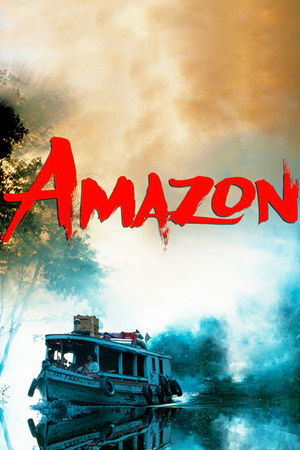
Explore the mysterious Amazon through the amazing IMAX experience. Amazon celebrates the beauty, vitality and wonder of the rapidly disappearing rain forest.
"Was it the President who ordered the rivers to be six meters deep?" In 2008, under President Lee Myung-bak's administration, South Korea's Four Major Rivers Restoration Project turned the country's beautiful rivers into scenes of devastation. What were once pristine first-grade waters became lifeless rivers, choked with toxic green algae emitting foul odors. Crops irrigated with this contaminated water are now served on the table of Korean people. The government disguised a grand canal project as river restoration, and the media turned a blind eye — together enabling one of the greatest environmental destructions in Korean history. The consequences of this deception will be borne by future generations. To ensure that future generations can once again run freely along the rivers, we must act—now. We must make Korea's rivers flow again.
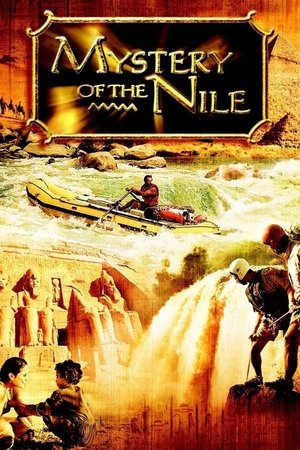
Filmed in IMAX, a team of explorers led by Pasquale Scaturro and Gordon Brown face seemingly insurmountable challenges as they make their way along all 3,260 miles of the world's longest and deadliest river to become the first in history to complete a full descent of the Blue Nile from source to sea.
This short film from canoeist Bill Mason illustrates the joy and poetry of paddling solo. All the basic strokes used to control the canoe are rendered with perfect clarity through animated lines. Part of 'Path of the Paddle: Quiet Water', in Bill Mason's Path of the Paddle Series.
This short film from canoeist Bill Mason demonstrates the basic doubles paddling strokes and how to apply them in various combinations. The application of each stroke in rapids is shown briefly and the emphasis is always on working as a well-coordinated team. Part of 'Path of the Paddle: Quiet Water', in Bill Mason's Path of the Paddle Series.
The river Yamuna, known to the locals as 'Jamna', the lifeline of Delhi, is going through a major crisis due to pollution, mismanagement and sheer ignorance. A documentary crew tries to make sense of the situation by talking to different stakeholders and Shyam - a boatman who relies on the river for his livelihood.
This short film from canoeist Bill Mason explains clearly how to locate a deep water channel by reading the rapids and how to apply paddling strokes and manoeuvres to steer the canoe where you want it to go. It also depicts what happens if you "wipe out" in a turbulent rapid and shows you how to survive the swim. Part of 'Path of the Paddle: Whitewater', in Bill Mason's Path of the Paddle Series.
This short film from canoeist Bill Mason shows how to read the rapids and plan a course and follow it, with complete control of the boat, using the basic paddling strokes. Running rapids will always be a calculated risk, but risk diminishes with skill and knowledge. The strokes can be used in endless combination to reduce the risks of whitewater canoeing and increase the sheer joy and exuberance. Part of 'Path of the Paddle: Whitewater', in Bill Mason's Path of the Paddle Series.
In the haunting stillness of post-Soviet suburbia, a lone man walks with purpose — toward the river. With each heavy step across the gray, lifeless field, he carries not only his own weight, but the burdens of an entire generation. He does not speak. He does not turn back. We do not know his name. But we know where he’s going. The River awaits. A meditation on isolation, purpose, and the absurdity of existence, "Идущий к реке" captures the Slavic soul in a single low-res frame. What started as a simple clip from a local Russian TV segment became a viral icon of stoicism, despair, and meme-worthy introspection.
Quando i tedeschi non sapevano nuotare
A ferry drifts along the Weser. Slow 16mm images of boats, railings, industrial shores, and cranes—scarred and clouded by the river itself, hand-processed with its water, marked by sediment and rust—dissolve into Annina Mossoni’s text: some people want the world on a string.
Reclaiming what was once stolen from him, a man journeys back to the place of his childhood nearly 80 years after his world came crashing down.