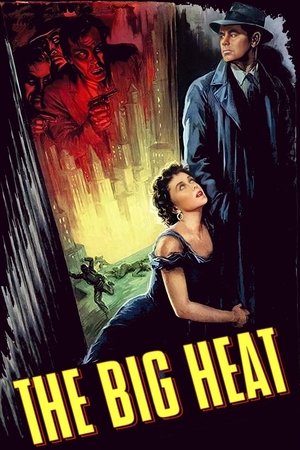
Jury foreman Edward Weldon's questioning leads to the death sentence for Ethel Saxon. His daughter Stella claims to have killed her lover, the gangster Garboni, just as Saxon was to sit in the electric chair.
Three stories with three central female characters linking the stories together. The first one concerns an orphan girl who grows attached to the postmaster she is caring for after he teaches her to read and write. The second one is a supernatural tale about a woman obsessed with the jewels her husband buys for her. The final one follows a young man who falls for an unconventional girl from his new village instead of his arranged bride, the daughter of a respectable family.
A devout upper-class Hindu has a vision in a dream that his daughter-in-law is the human incarnation of the Goddess Kali and begins worshipping her.
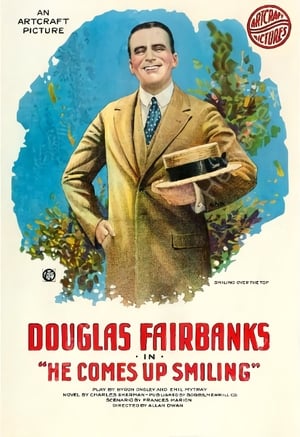
Don Diego Vega pretends to be an indolent fop as a cover for his true identity, the masked avenger Zorro. Preserved by the Academy Film Archive in 2012.
A teenage girl from a traditional family goes on a date with a pilot and ends up having sex with him. After the pilot dies in a plane crash, the girl discovers she is pregnant with his child.
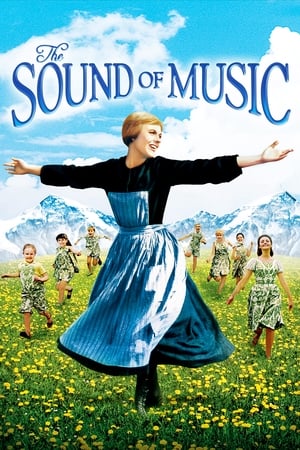
Huw Morgan, the academically inclined youngest son in a proud family of Welsh coal miners, witnesses the tumultuous events of his young life during a period of rapid social change. At the dawn of the 20th-century, a miners' strike divides the Morgans: the sons demand improvements, and the father doesn't want to rock the boat.
The Big Show, the only feature-length motion picture produced by the Miller Brothers, is a behind-the-scenes melodrama set within their show. The story: Bill, a war veteran who has been defrauded by his brother, rescues Ruth, the elephant girl, and joins the company. Secretly engaged to Bill’s “bad brother” Norman—allegedly an oil millionaire—Ruth rebuffs her rescuer’s affection. Her elephant, however, knows a villain when he smells one and eventually gives Norman his just deserts. Preserved by the Academy Film Archive in partnership with the National Film Preservation Foundation New Zealand Project in 2012.
“After wishing for years to be given the opportunity of filming some of the more “mystical” occupations of our Times – which the average imagination turns into “bogeyman”… viz: Policemen, Doctors, Soldiers, Politicians, etc. – I was at last permitted to ride in a Pittsburgh police car, camera in hand” - Stan Brakhage. Preserved by the Academy Film Archive in partnership with The Film Foundation in 2011.
In a Medieval castle, a marauder tries to kidnap the twin infant sons of the lord. He makes off with only one, whom he drops about a mile away. A pig rescues this baby, so one brother grows up high on the hog, the other down with the swine; one is lazy, his lost brother is industrious. Years later, when a neighboring prince declares war, the brother in the castle is too soft to fight. Through happenstance, the twins are united just before the final battle. Will the upper-class brother let his humble sibling lead the troops to certain defeat and death? Preserved by the Academy Film Archive.
Odds & Ends is a sly comment on the collage film and Beat culture. To discarded travel and advertising footage found at a local film laboratory, Belson Shimane added a mélange of animation—assemblages, cutouts, color fields, and line drawings—and faux hipster narration by Jacobs (credited via the anagram Rheny Bojacs) punctuated by a bongo backing. Strung together with doublespeak and non sequiturs, the monologue skirts the edge of nonsense as Jacobs waxes on about poetry, jazz, “reaching the public,” “having a good time,” and—although “money doesn’t count”—the “possibility of subsidy” through grants. Footage of champagne, tropical beaches, and exotic peoples intermingle with rhythmic drawings and stop-motion flights of fancy. The visuals race on through dazzling transformations, both amplifying and undercutting the patter. —National Film Preservation Foundation. Preserved by the Academy Film Archive in partnership with Iota Center Collection in 2006.
An intoxicated man trespasses into an art gallery after hours.
Why do dogs bark at such innocent creatures as pigeons and squirrels... what are they afraid of? This film answers that eternal question.
Beckett cycles through a limited number of drawings, but adds new information to each drawing every time we see it, giving the sense of a world that is infinitely rich and also obviously contained tightly within the edges of the paper. Preserved by the Academy Film Archive in partnership with iotaCenter and National Film Preservation Foundation in 2007.
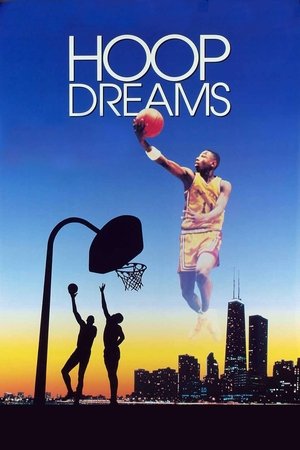
Follows a crusading lawyer as he embarks on a campaign to save an African-American man, Paul Crump, from the electric chair. Preserved by the Academy Film Archive in partnership with The Film Foundation in 2007.
A truly major work, I Don’t Know observes the relationship between a lesbian and a transgender person who prefers to be identified somewhere in between male and female, in an expression of personal ambiguity suggested by the film’s title. This nonfiction film – an unusual, partly staged work of semi-verité – is the first of Spheeris’s films to fully embrace what would become her characteristic documentary style: probing, intimate, uncompromising. Preserved by the Academy Film Archive in 2014.
Resentful after an ugly divorce from her unfaithful husband, Judith McGuire moves to Los Angeles. Adrift and detached, she spends her days and nights wandering through her new city, cynically remarking on the hypocrisy, vanity and brutality of the modern world and humanity's alienation from themselves and each other.
Middle-aged Ohio secretary Jane Hudson has never found love and has nearly resigned herself to spending the rest of her life alone. But before she does, she uses her savings to finance a summer in romantic Venice, where she finally meets the man of her dreams, the elegant Renato Di Rossi.
A direct-cinema portrait of Indianapolis 500 driver Eddie Sachs, filmed before, during, and after the 1960 race as he competes from pole position. Using pioneering mobile camera and sound techniques, the film captures the psychological intensity of racing and the personal cost of high-speed competition.
Part documentary, part expose, this film follows one-time child evangelist Marjoe Gortner on the "church tent" Revivalist circuit, commenting on the showmanship of Evangelism and "the religion business", prior to the start of "televangelism". Preserved by the Academy Film Archive in 2005.
Documentary short film depicting the disastrous result of runaway prices following the First World War and warning Americans against repeating the crisis as the Second World War nears an end. Preserved by the Academy Film Archive in 2012.