After World War II, Antonia and her daughter, Danielle, go back to their Dutch hometown, where Antonia's late mother has bestowed a small farm upon her. There, Antonia settles down and joins a tightly-knit but unusual community. Those around her include quirky friend Crooked Finger, would-be suitor Bas and, eventually for Antonia, a granddaughter and great-granddaughter who help create a strong family of empowered women.
Elisabeth leaves her abusive and drunken husband Rolf, and goes to live with her brother, Göran. The year is 1975 and Göran lives in a commune called Together. Living in this leftist commune Elisabeth learns that the world can be viewed from different perspectives.
A unique hybrid of documentary, silent film, drama and dance, 'Breaking Plates' puts revolutionary women of the past on the screen with present day filmmakers. Contemporary women talk to characters from 100 years ago, reanimate their antics and emulate their mayhem moves. As early 21st century performers step into the clothes of their early 20th century counterparts, battling their haywire machines, exploding gags, and eruptive bodies, they learn to wield humour as a weapon against the structures that contain them today.
This Surrealist film, with a title referencing the Communist Manifesto, strings together short incidents based on the life of director Luis Buñuel. Presented as chance encounters, these loosely related, intersecting situations, all without a consistent protagonist, reach from the 19th century to the 1970s. Touching briefly on subjects such as execution, pedophilia, incest, and sex, the film features an array of characters, including a sick father and incompetent police officers.
Unemployed Antonio is elated when he finally finds work hanging posters around war-torn Rome. However on his first day, his bicycle—essential to his work—gets stolen. His job is doomed unless he can find the thief. With the help of his son, Antonio combs the city, becoming desperate for justice.
A young man spurs romance and helps his friend and himself go through the struggles of their ordinary life in Denmark.
A portrait of Rita, who claims that her mother was never a mother for her. Rita gives birth to her own five children and forces her mother to take the role of a mother.
Fous de Musique by Jean-Charles Carlus (1957) is a musical comedy featuring Rouiched, Mahieddine Bentir and the famous Bendaoud orchestra. Shot during the Algerian War, the film was not released until after independence and was probably shown in Paris in cinemas intended for immigrant workers around 1967. Sources: Archives Numériques du Cinéma Algérien
In a small, conservative Scottish village, an oilman is paralyzed in an accident. His wife, who prayed for his return, feels guilty; even more, when he urges her to have sex with another.
A journalist (Alekos Alexandrakis), working together with a young director (Peris Michailidis), tries to gather information about a family that was separated due to political turmoil. They locate some of its members, who tell their dramatic stories that began with the Civil War. The two men’s search is interrupted when a key person refuses to speak
Would-be feminist Yoanna, running her own company, is insulted in a phone booth by a stranger named Yong-ho. While searching for a job, Yong-ho applies to a magazine named 'The Modern Woman,' not knowing that the company's boss is in fact Yoanna. She hires him with the intention of paying back the humiliation she received. But his masculine attitude captivates her and she ends up marrying him. She resigns her post and becomes a housekeeper, handing over the company to her husband.
In 1971, a young woman moves from the French countryside to Paris and begins a passionate love affair with a feminist leader.
The lives of two lovelorn spouses from separate marriages, a registered sex offender, and a disgraced ex-police officer intersect as they struggle to resist their vulnerabilities and temptations.
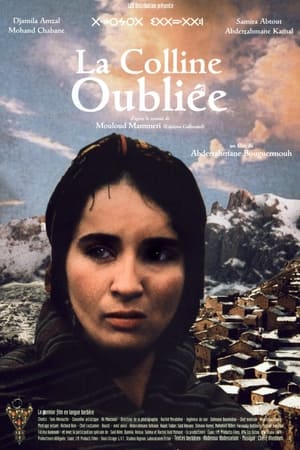
Néfissa, a student in Algiers, returns to her village in the south in the summer. Her father wants her to marry the mayor but she wants to continue her studies. Confronting her father and the opinion of the villagers who do not understand her, she decides to flee to Algiers. The shepherd Rabah discovering her wounded and lost in the mountains, has her treated by her mother. In contact with Nefissa, Rabat becomes aware of his exploited condition and discovers the possibilities offered to him by the cooperatives of the agrarian revolution. The two young people will go through the decisive stage together which will allow them to escape obscurantism and exploitation. Based on the novel "Le vent du sud" by Abdelhamid Benahouga
When a secretary's idea is stolen by her boss, she seizes an opportunity to steal it back by pretending she has her boss' job.
The true story of Frances Farmer's meteoric rise to fame in Hollywood and the tragic turn her life took when she was blacklisted.
In 1911, a willful and determined man from peasant stock named Charles Saganne enlists in the military and is assigned to the Sahara Desert under the aristocratic Colonel Dubreuilh.
Ms Norris meets with students, goes a little batty, has dinner with her boyfriend, and revelations ensue.
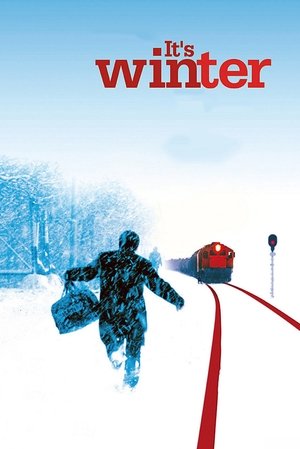
Unemotional, restrained cinematographic poem, situated in a wintry and poor suburb of Tehran. A man is dismissed and his lack of prospects for the future make him decide to seek his happiness abroad. He leaves his wife and child behind and for a long time nothing is heard of him. Then a stranger turns up, a car mechanic looking for a job. The attractive single mother can’t resist his attentions. Very subtly, a struggle ensues that reflects that of a whole generation of young doubting Iranians who may want to leave the country, but hardly know how to start.
Porcupine evokes the fragmented tale of a young man who breaks into an empty hospital to set up his online broadcast of poses and provocations; his audience includes real-life participants with anonymous tags like ‘bigballnz’ and ‘romeoazteca’.