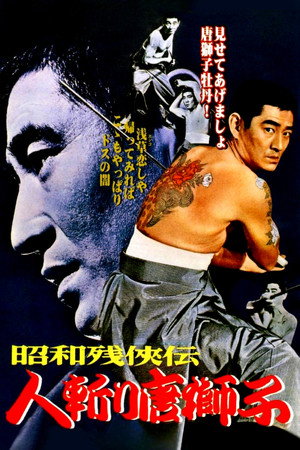
This is the sixth film in the Brutal Tales of Chivalry series
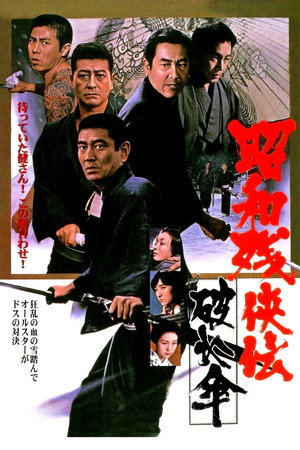
The ninth and final film in the Contemporary Tales of Chivalry series.
Amagi Goe, based on Seicho Matsumoto's novel, has created numerous stars through its visualizations. Erika Ikuta will take on the difficult role of the main character in this adaptation.
A Yokohama shoe executive faces a wrenching choice when kidnappers mistakenly seize his chauffeur’s son but demand the ransom anyway.
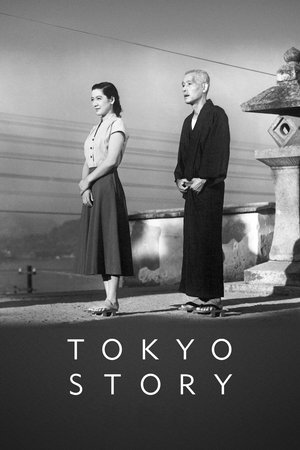
The elderly Shukishi and his wife, Tomi, take the long journey from their small seaside village to visit their adult children in Tokyo. Their elder son, Koichi, a doctor, and their daughter, Shige, a hairdresser, don't have much time to spend with their aged parents, and so it falls to Noriko, the widow of their younger son who was killed in the war, to keep her in-laws company.
Yakuza
A passionate telling of the story of Sada Abe, a woman whose affair with her master led to an obsessive and ultimately destructive sexual relationship.
A Japanese intelligence officer faces personal crises in the years preceding the Manchurian conflict.
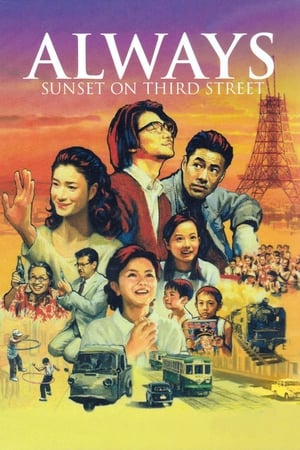
Teenage Mutsuko comes to Tokyo for work but ends up at a repair shop. She befriends the owner's family. Neighbors Hiromi, writer Chagawa with admirer Junnosuke strive alongside them in postwar Tokyo's evolution.
After her mother runs away from home, Tomoko is raised to be a geisha. One day Tomoko meets her mother in a red-light district in Tokyo and her life deeply gets in trouble.
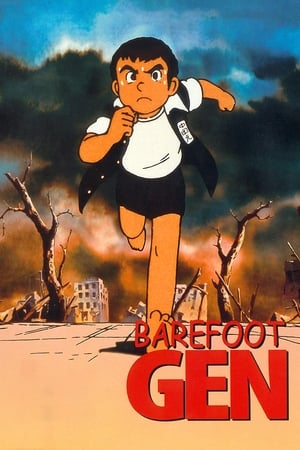
In the teeming black markets of postwar Japan, Shozo Hirono and his buddies find themselves in a new war between factious and ambitious yakuza.
Noriko is perfectly happy living at home with her widowed father, Shukichi, and has no plans to marry -- that is, until her aunt Masa convinces Shukichi that unless he marries off his 27-year-old daughter soon, she will likely remain alone for the rest of her life. When Noriko resists Masa's matchmaking, Shukichi is forced to deceive his daughter and sacrifice his own happiness to do what he believes is right.
Taking the Chilean coup as an example, a group of young officers plan to overthrow the Japanese government on V-J Day. They aim to abolish the post-war constitution, restore the national army and revive the traditional spirit of Japan. As the conspiracy is exposed, the coup squadrons are wiped out one by one. The remaining squadron takes over a night train bound for Tokyo.
When Keiji Takama returns to Nagasaki, he finds many changes. The rights of the entertainment field that had been held by his family have been taken over by the Matsui Group, a new gangster setup. So he becomes head of the Takama Group to regain lost territory. With the cooperation of all the Bosses from Tokyo to Nagasaki, who had known his father, Keiji recovers the rights to put on shows at the City Hall. As he had feared, however, Matsui begins to interfere with his plans. Keiji's men are furious, but he knows better than to take up the cudgels with Matsui at this important time. Whatever Matsui does, Keiji goes one better. Frustrated and bitter, Matsui calls in the help of Koiwa, a killer. Now, having tried his best to oust Keiji but finding that he is made of sterner stuff than he had counted on, he decides to have Koiwa do away with him for good.
Komatsu Takioka is boss of a Yakuza group rival to Masakichi Kijima boss of the Kikuya group which supports the town vendors unlike Takioka, who will stop at nothing to undermine the vendors and take over the territory. Masakichi will do all he can to protect and support the people. Ryutaro Kijima is senior son to Masakichi, though disowned, he keeps interest in the family from a distance. He will be there for his father and his hot tempered younger brother Katsuo, if they should need his loyal help.
Terajima Mikako became a boys volleyball team coach at a junior high school she has been assigned to. As an incentive for the team members who do not show the slightest enthusiasm, she promises to show them her boobs if they win a game.
Two different students—a successful but aloof academic and a rebellious but kindhearted delinquent—form a friendship through their love of jazz music.
The story depicts the interaction of the children of the island and their teacher, Yoshioka Makotoware, who is unable to speak because of a childhood accident. Based on the best-selling novel by Shizuka Ijuin.
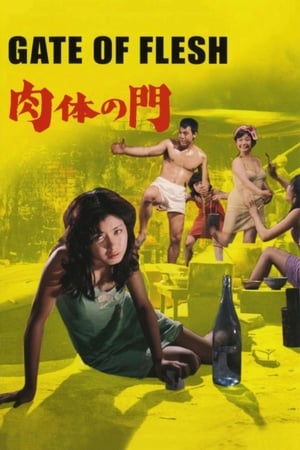
The background is Yuraku-cho in Tokyo and the film shows how desperately the women, who had led sheltered lives before the war, struggled to keep alive and the innate strength of post-war women.
Set in Tokyo in 1940, the peaceful life of the Nogami Family suddenly changes when the father, Shigeru, is arrested and accused of being a Communist. His wife Kayo works frantically from morning to night to maintain the household and bring up her two daughters with the support of Shigeru's sister Hisako and Shigeru's ex-student Yamazaki, but her husband does not return. WWII breaks out and casts dark shadows on the entire country, but Kayo still tries to keep her cheerful determination, and sustain the family with her love. This is an emotional drama of a mother and an eternal message for peace.