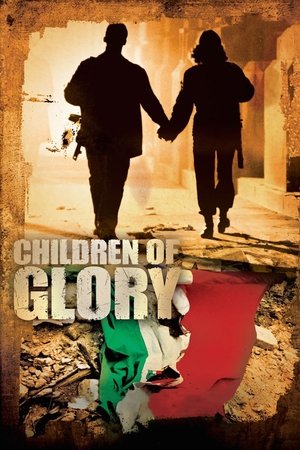
NEW YORK CITY. 1989. While Hungary remains under Communist control, two Hungarians escape to the United States in search of a new life, or at least new friends.
A naive young man witnesses an escalation of violence in his small hometown following the arrival of a mysterious circus attraction.
British army sergeants Ballantine, Cutter and MacChesney serve in India during the 1880s, along with their native water-bearer, Gunga Din. While completing a dangerous telegraph-repair mission, they unearth evidence of the suppressed Thuggee cult. When Gunga Din tells the sergeants about a secret temple made of gold, the fortune-hunting Cutter is captured by the Thuggees, and it's up to his friends to rescue him.
The story of Auschwitz's twelfth Sonderkommando — one of the thirteen consecutive "Special Squads" of Jewish prisoners placed by the Nazis in the excruciating moral dilemma of assisting in the extermination of fellow Jews in exchange for a few more months of life.
A film about the historical uprising of the seamen in Kiel: During the Russian October Revolution of 1917, German and Russian soldiers start to solidarize with each other. By disarming the officers, machinist Henne Lonke and stoker Jens Kasten prevent the attack on a Russian freighter. When German admiralty gives out orders for operation "Nibelungen", which would lead the German fleet into a suicidal attack against England and quell the revolutionary spirit, seamen and soldiers from different political backgrounds unite in protest.
A surreal exploration of queer identity in the face of immigration; following teenager Hajnal as they grapple with the demands of leaving behind their post-Soviet country in favour of a new life in England.
The film depicts the momentous and tragic history of the Poznan uprising of 1956. The memory of the director, who was a nine-year-old boy at the time, is the only canvass of the script. The main characters of the black-and-white film are two boys aged ten and twelve. From their perspective, the viewer follows the development of events. From the depths of the gates, through the rails of fences and cluttered backyards, through the eyes of the children we watch the street riots. The film, without action in the literal sense of the word, was made using a reportage technique that perfectly captures the spontaneity of the Poznan uprising. Among other things, the author of the picture depicts the adventures of a young worker Zenek, who becomes the unwitting leader of the protest, and five professors, who by chance find themselves in the very center of events.
Forced into exile by the English after being crowned King of Scotland, legendary warrior Robert the Bruce fights to reclaim the throne.
During the ill-fated Hungarian revolution of 1956, Karcsi Szabo, star player on the water polo team, is torn between his love for a revolutionary student and his training for the Melbourne Olympics.
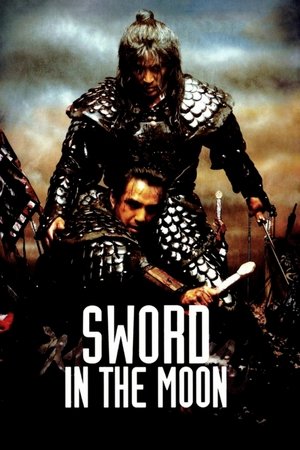
Kingdom of Joseon, ancient Korea. A usurper has conquered the throne. His ministers are being systematically eliminated by a mysterious assassin. An arrogant master swordsman is in charge of putting an end to the carnage.
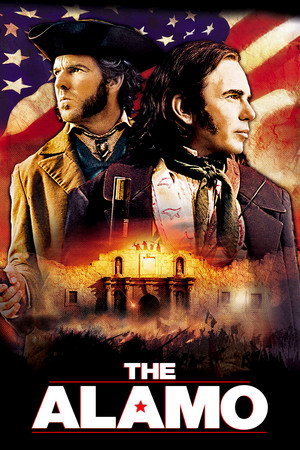
Based on the 1836 standoff between a group of Texan and Tejano men, led by Davy Crockett and Jim Bowie, and Mexican dictator Santa Anna's forces at the Alamo in San Antonio, Texas.
Do zbrane, kuruci
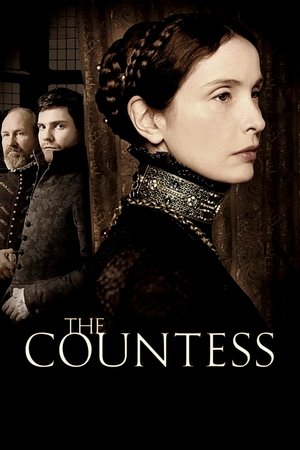
Kingdom of Hungary, 17th century. As she gets older, powerful Countess Erzsébet Báthory (1560-1614), blinded by the passion that she feels for a younger man, succumbs to the mad delusion that blood will keep her young and beautiful forever.
Entering a seamy underground world of peep shows, nude clubs, and live Internet sex is David Huxley, an aspiring politician who has everything to lose. Secretly filmed in a steamy three-way with his fiancée Tish and a gorgeous young model, David is desperate to find the extortionist who's demanding an exorbitant amount of money for the negatives. But when the blackmail trail ends in murder and David is kidnapped, Tish must come up with $5 million ransom or her fiancé's once-promising career, and life, may come to a dead end.
A Communist officer falls hard for a married woman trying to escape from Hungary.
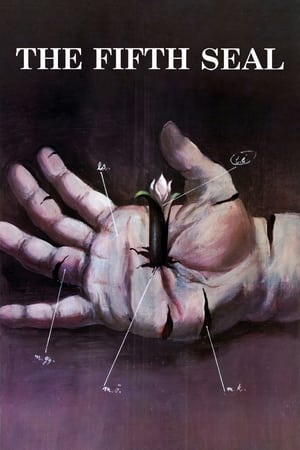
In 1944 Budapest, a watchmaker, a book seller and a carpenter are drinking in a bar with the owner, when they are joined by a stranger. The watchmaker poses a hypothetical that will change their lives forever.
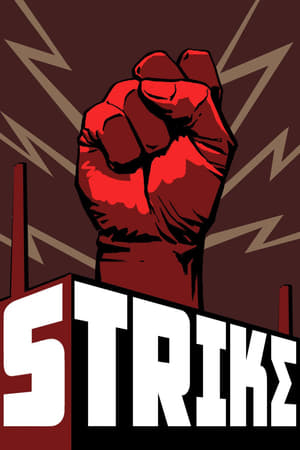
Just before the 1905 Bolshevik Revolution, factory workers strike against their oppressive factory bosses. When a worker is accused of stealing a piece of machinery, he commits suicide, and his colleagues revolt against the overarching Czarist regime. As the strike drags on and government officials grow increasingly desperate to end it, their methods of dealing with the rebellious workers become more and more aggressive.
Karcsi, a Roma policeman, lives with Eva, a Swede. One day he is called to the scene of the murder of a wealthy trafficker named Schulter. He begins to investigate the crime, interrogate neighbours and suspects, and untangle a complex situation - one that he, himself, complicates even further. For he is a gypsy, who despite being adopted and raised by "regular" Hungarians, has his nose rubbed in his minority status every day. The film, which is based on the novel by Ákos Kertész, is a shrewd genre work full of dusky humour and surreal situations. Tabló follows a vivid succession of strange images that eventually lead to the emergence of the central story about a charismatic police officer on a tireless quest for the truth, though he must fight against virtually everyone and is just as fallible as the next person. Tabló makes a statement on the issue of race and racism - or, indeed, relations between any minority and majority.
Anthology film made as an act of protest against Hungarian government of Viktor Orban.
The story takes place at the time of the defeat of the Hungarian War of Independence, when Csákberény came under the terror of the imperial soldiers. Two priests from the village are arrested overnight for reading the Hungarian Declaration of Independence. Although the Austrian soldiers enjoy their power, they are unable to identify with the repression. The purpose of the trial of a military imprisonment court is to obtain a confession, to prove that a violation of sovereignty has been committed.