Gudrun has modeled her amateur German terrorist group after the 1970s Red Army Faction (Baader-Meinhof Gang). She attempts to imitate her heroes by kidnapping the son of a wealthy industrialist and hopes to negotiate leftist demands from the father. When Gudrun’s not spouting leftist verses (including during a hilariously brilliant fuck session), she’s trying to convince her all-male gang to abandon their heterosexuality, which she believes is the result of mass delusion.
When German police viciously quell a protest against the shah of Iran, popular journalist Ulrike Meinhof rebels against her dishonest marriage, walks away from her children and joins radical anarchist Andreas Baader. Together with Baader's girlfriend, Gudrun Ensslin, they form the violent Red Faction Army, and together perpetrate a slew of terrorist attacks as a way of disrupting the fabric of what they see as an increasingly fascist state.
Frau Emma Küsters prepares dinner late one seemingly-ordinary afternoon in her seemingly-ordinary Frankfurt kitchen. She wants to add canned sausages to the stew; her irritating daughter-in-law thinks otherwise. But the point is moot: Ernst Küsters has not only murdered the personnel director at the soap factory where he's employed but succeeded that by committing suicide.
In the early 60s, Bernward Vesper and fellow university student Gudrun Ensslin begin a passionate love in the stifling atmosphere of provincial West Germany. Dedicated to the power of the written word, Bernward and Gudrun found a publishing house whose first publication is, paradoxically to many, a controversial past work of Bernward's ostracized father, an infamous Nazi author. Bernward defends his father's writing ability, even if he is haunted by his father's suspicious past.
Do Útero Ao Túmulo
The personal stories lived by the Uncle, the Father and the Son, respectively, form a tragic experience that is drawn along a line in time. This line is comparable to a crease in the pages of the family album, but also to a crack in the walls of the paternal house. It resembles the open wound created when drilling into a mountain, but also a scar in the collective imaginary of a society, where the idea of salvation finds its tragic destiny in the political struggle. What is at the end of that line? Will old war songs be enough to circumvent that destiny?
Leftist extremist groups operating in Europe have chosen violence as a political tactic: they attack the right-wing parties offices, attack the police, provoke riots in demonstrations. Although leftist violence is increasing, it receives almost no public attention. An investigation into the alleged good violence exercised in the name of a supposedly just cause.
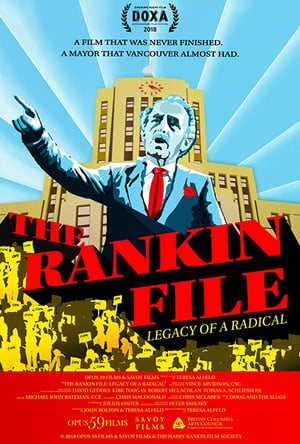
A feature documentary investigation into the colourful and sometimes controversial life of Vancouver lawyer, city councillor and socialist icon Harry Rankin.
Young student runs away from a 1984-esque dictatorship, lives for a while with a crazy girl in a surrealistic “igloo” in snowy wilderness and then returns to lead a revolution against the oppressive system. Sci-fi tale consistent with the political climate of May 68.
Every American who has listened to the radio knows Guthrie's "This Land Is Your Land." The music of the folk singer/songwriter has been recorded by everyone from the Mormon Tabernacle Choir to U2. Originally blowing out of the Dust Bowl in Depression-era America, he blended vernacular, rural music and populism to give voice to millions of downtrodden citizens. Guthrie's music was politically leftist, uniquely patriotic and always inspirational.
Michel Recanati was a militant leader in the May, 1968 riots in Paris, organizing many groups to meet, discuss, and act on leftist principles both before and after the disturbances. He was imprisoned for a short while in 1973. Disillusioned after the failure of the demonstrations and the death of the only woman he had loved, his life seems to have changed from a period of hope and activism to one of bottomless despair. His friend, Romain Goupil wrote and directed this biographical documentary. Death at 30 received the 1982 Cannes Film Festival's Golden Camera Award for "Best First Feature-Length Film."
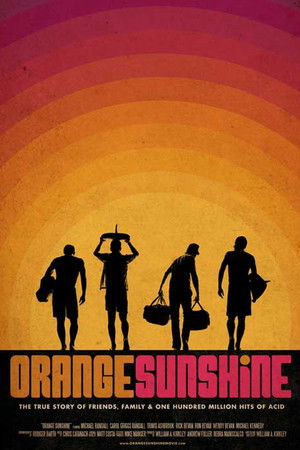
The never-before-told story of the Brotherhood of Eternal Love – a spiritual group of surfers and hippies in Southern California that became the largest suppliers of psychedelic drugs in the world during the 1960s and early 1970s. Bonded by their dreams to fight social injustice and spread peace, this unlikely band of free-spirited idealists quickly transformed into a drug-smuggling empire and at the same time inadvertently invented the modern illegal drug trade. At the head of the Brotherhood, and the heart of this story, is the anti-capitalistic husband and wife team, who made it their mission to change the world through LSD.
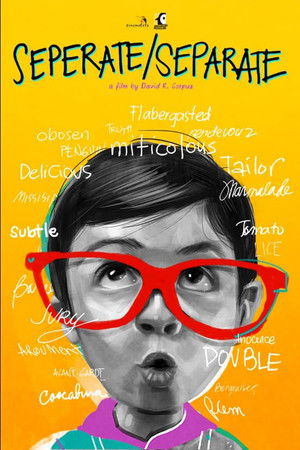
Satirizes the relationship between a young Hispanic-American leftist and his girl friend, a punk-rock artist.
An ambitious mobster plans an elaborate diamond heist while seducing the daughter-in-law of a ruthless mob patriarch as a determined police commissioner closes in on all of them.
Amy and Bill are on a romantic getaway when they come across an old second-hand store. Amidst the clutter, Amy unearths a beautiful antique mirror and immediately is overcome by a deep inner desire to caress and explore her luscious body in ways she never thought possible. Amy quickly buys the mirror only to discover the ghostly legend of the sexually insatiable whorehouse madame trapped inside it. Powerless to control herself, Amy indulges her naughtiest fantasies when standing before the shimmering mirror. Soon all her female friends are introduced to its seductive supernatural energy, and none of them can deny the lesbian urges that overtake their sweet young bodies, transforming them into writhing sex-machines that cannot be satisfied. But amidst the moans of pleasure, how could Amy possibly realize the terrifying consequences of her actions, and the fate the ghost in the mirror has in store for each of them. Will it be infinite ecstasy or endless erotic longing?
Friendships and business do not mix, that's what we find with Theresa, Catherine and Alain, three longtime friends. Freshly graduated, they decided to start their own business, but work is scarce and a fight breaks out between the trio. Separated, married and scattered all over France, the once inseparable trio no longer keep in touch. But four years later, they decided to organize a big party for their reunion which serves as an opportunity for them to put things right and confess everything they have in their hearts.
In a dysfunctional family where the mother is a heroin addict and prostitute, beaten by her son, and the father is an ex-TV reporter, sleeping with his daughter and filming his son being beaten up, ‘Q’, a complete stranger enters the bizarre family, changing their lives for the better, finding a balance in their disturbing natures.
A romantic comedy that brings together three interrelated tales of gay men seeking family, love and sex during the holiday season.
Francois the Tree Man is far from his wife and three small children in Quebec, selling Christmas trees and living in a van on the streets of New York City. He does it for them. But this is home, too. Like the hundreds of Christmas tree sellers who descend upon the city from Canada, New England and even Europe, Francois delivers the magic of the season over a grueling month in his adopted neighborhood. He's a star, a storyteller, a Santa Claus in a sap-stained coat, a confidant, a friend, and a father figure to the local characters who are his New York family. They also need him. TREE MAN is the story of Francois's journey, how he arrived here, what holds him, and the conflict that will cause him to leave. As one of Francois' long-time customers says: "This has nothing to do with the trees anymore."