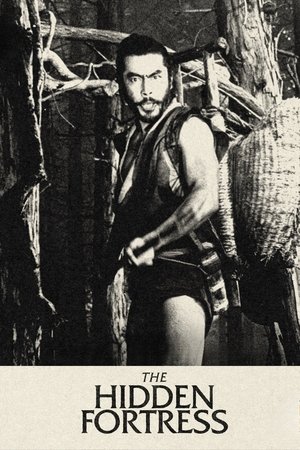
Warlords Kagetora and Takeda each wish to prevent the other from gaining hegemony in feudal Japan. The two samurai leaders pursue one another across the countryside, engaging in massive battles of cavalry and infantry. Younger and less brutal, Kagetora must find the strength to be as brutal as his opponent, but at what cost?
A story about a tomboy, Otoshi, who is good at singing, dancing and fencing.
The film depicts carnivalesque atmosphere summed up by the cry "Ei ja nai ka" ("Why not?") in Japan in 1867 and 1868 in the days leading to the Meiji Restoration. It examines the effects of the political and social upheaval of the time, and culminates in a revelrous march on the Tokyo Imperial Palace, which turns into a massacre. Characteristically, Imamura focuses not on the leaders of the country, but on characters in the lower classes and on the fringes of society.
Masa hires rental actress and aspiring dancer, Kanako, to pose as his fiancée to impress his estranged, terminally-ill father. But as his father's death delays, Masa is forced to confront the spiraling web of lies and to learn to follow his heart.
Fukuzawa Yukichi opens a school for samurai, who aim to learn Dutch language, most common for overseas trading. But when he was in Yokohama he learned that English language is one way more global one. His struggle against patriarchal mindset leads his school to become one of the oldest universities in Japan.
A thief, a murderer, and a charming lady-killer, Iwao Enokizu is on the run from the police.
ER doctor Tsuyoshi Matsuoka receives a patient with a virus unlike anything he's seen before. His symptoms include high fever, convulsions, vomiting of blood and multiple organ failure. Could this be a new form of influenza or is it some other variety of virus? As the situation worsens and more cases begin arriving, a medical officer from the World Health Organization named Eiko Kobayashi is dispatched to the area. At the rate the virus is spreading, the entire city’s transportation system and infrastructure would be brought to a halt within 3 months. Within 6 months it could spread to tens of millions of people--reaching a death toll far worse than any war.
The happy home life of a high school student who lives with her loving stepfather is put in jeopardy by a painful family secret.
In their last year of high school, two girls in the brass band club perform a song inspired by a fairy tale that parallels their friendship.
A year has passed in postwar Tokyo, and struggling writer Chagawa enters the Akutagawa Prize competition in hopes of securing a better future for the boy in his care, while the Suzuki family unexpectedly take in a new relative who looks down on their humble way of life.
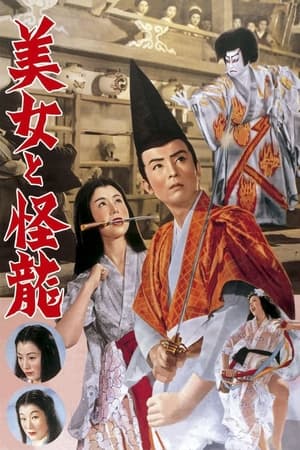
In the third, and final chapter of this epic tale, handsome swordsman Genji helps a vulnerable princess who is in search of a missing scroll that belongs to the Shogun. This is one of the most highly regarded trilogies featuring a youthful Nakamura Kinnosuke in one of his best roles. This was Kinnosuke at the height of his career, with charm, honor and a vicious sword. If you enjoyed the first two films in the series, you can't miss the exciting conclusion. Even without know-ledge of the first two films, this movie stands on its own with great action throughout!
In the last days of the Tokugawa shogunate, there was a cute warrior, Souji Okita, who belonged to the armed police of the shogunate in Kyoto. Very few knew that Souji was not a boy, but a woman. Souji loved the vice-leader of the armed police, Toshizou Hijikata. Souji suffered from pulmonary tuberculosis and coughed up blood during a battle. Toshizou helped her but said that he did not care for the girl with a smell of blood. Souji had a real talent for swordsmanship and no one but Ryouma Sakamoto could compete with her. Ryouma was a liberal intellectual and tried to carry out a revolution without blood. However, the bloody Meiji Restoration broke out and Souji killed Ryouma who lost his dream. Because a friendship had sprung up between Toshizou and Ryouma, Toshizou got angry and slashed at Souji with a sword. Unwillingly, she unsheathed her sword and thought that she might get love if she was killed by the man she loved.
Amagi Goe, based on Seicho Matsumoto's novel, has created numerous stars through its visualizations. Erika Ikuta will take on the difficult role of the main character in this adaptation.
Devastated at the death of her four-year-old daughter, a grieving middle school teacher is horrified to discover that her students aren't as innocent as she thinks.
Zatoichi comes upon the town of Tonda, overrun by gangsters. Using one of his favorite techniques, Zatoichi proceeds to win 8 ryo in a rigged gambling game. Of course, the local gangsters attempt to kill him, and the adventure begins. It turns out a blacksmith named Senzo examines Zatoichi's cane sword, and discovers it to be forged by his old mentor. Senzo discovers the sword is at the end of its usefulness and will break when it is used next.
One day, Shiro's all-time favorite idol Mami Mitsuya suddenly appears right in front of him! Even though this meeting left him excited, his partner Kenji ends up unhappy. Moreover, the appearance of a new partner and Shiro's work situation have led to the relationship between the two changing...
Drafted to shoot a new film, Tadashi Kobayashi, a director with festival marketability, is strong-armed by the studio into hiring two famous actresses as leads. The cast of self-unaware weirdos that constitute the budding players become increasingly overwhelmed and emboldened until they stage their own micro-revolution.
Ichi is staying at an inn when a woman dies. Her dying wish is that Ichi take her son to his father, an artist living in a nearby town. After arriving in the town, Ichi finds out that the father has been forced by a local boss to create illegal pornography to pay off his gambling debts. Ichi makes it his mission to save the man and reunite the family, even though it brings him into conflict with a samurai he sort of befriended on his way to the town.
Master swordsman and loyal 'Hatamoto' (direct vassal to the Shogun), Saotome Mondonosuke, is sent to investigate an intrigue centering on the Date Clan. The 300th film in the long and illustrious career of Ichikawa Utaemon, one of the most popular Japanese film stars of the period; it brought out an all-star cast as well.
Ooshima Shino is a 1st-grade high school student. She has difficulties pronouncing words that start with vowels in front of people. Because of her speech impediment, she does not get along with others. Shino meets Kayo who likes music, but she is tone-deaf. They decide to start a band and Shino begins to change.