David and Judith MacDougall are exploring the marriage rituals and roles of Turkana women in this ethnographic documentary. The film's biggest part is taken up by talks between the Turkana people. As one of the first ethnographic documentaries "A Wife Among Wives" subtitles these talks so that the viewer can get a better and probably more personal understanding of the life of the Turkana.
In the northeast corner of the Democratic Republic of the Congo, a ‘red zone’ remains, designated as such since the second war of the Congo, (1998–2002), where no foreigners have entered since 1999. The biologist Anne Laudisoit and her team of Congolese scientists embark upon a scientific exploration to identify species that dwell in one of the last virgin territories of Central Africa. In the lush yet inaccessible valleys of the Blue Mountains thrives an amazing startling biodiversity. Rumor has it that there are even chimpanzees.
A historical epic that chronicles the Guineans’ long struggle against French colonialism and for their country’s independence.
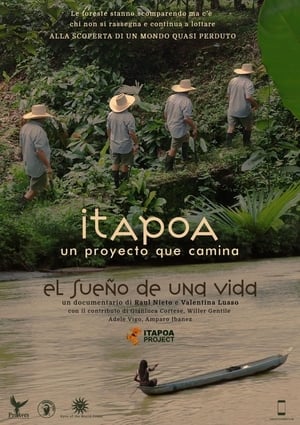
Itapoa - Un proyecto que camina
Deep in Papua's tropical forests, the Northern Cassowary (New Guinea's largest native animal) remains an enigma—a creature rarely seen, yet vital to the ecosystem. Often regarded as dangerous, this large, flightless bird is crucial for forest regeneration through seed dispersal. With habitat loss and hunting threatening their survival, efforts to protect cassowaries are more urgent than ever.
With 30 football fields of forest lost each minute in the world, we need to know now if we can save nature. This is the story of one conservation project, Restorasi Ekosistem Riau (RER). After decades of land-clearing and burning across Sumatra, the remote Kampar Peninsula is now the last great peatland rainforest on the island. But protecting this vast ecosystem pushes the RER team to the limits
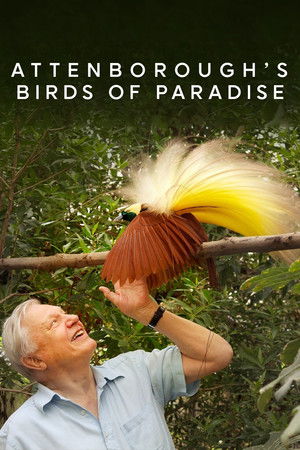
Living in the depths of the New Guinean Rainforest are birds of unimaginable colour and beauty. When Europeans first saw the plumes of these fabulous creatures they believed they must be from heaven and called them Birds of Paradise. David Attenborough introduces a team of New Guinean naturalists as they embark on a gruelling expedition to try and film ten birds of paradise deep in the heart of the rainforest.
The same submarine which successfully captured the world's first moving images of a giant squid in its natural habitat is used for exploring the deep sea cliffs off the coast of New Guinea. The team encounters true living fossil species one after another. Join this exciting deep sea adventure!
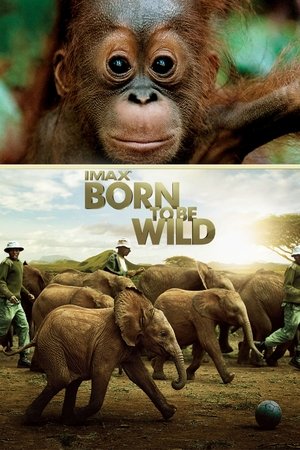
Born to Be Wild observes various orphaned jungle animals and their day-to-day behavioural interactions with the individuals who rescue them and raise them to adulthood. The film unfurls in two separate geographic spheres. Half of it takes place in the rain forests of Borneo, where celebrated primatologist Dr. Birute Galdikas assists baby orangutans; the other half takes place on the arid savannahs of Kenya, where zoologist Dame Daphne Sheldrick works with baby elephant calves.
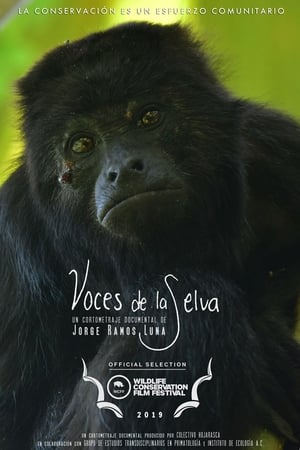
A group of conservationists take on the task of revitalizing the Balancán, Tabasco, research station and protect the howler monkey.
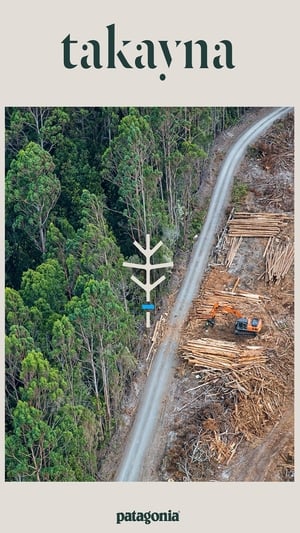
takayna / Tarkine in northwestern Tasmania is home to one of the last undisturbed tracts of Gondwanan rainforest in the world, and one of the highest concentrations of Aboriginal archaeology in the hemisphere. Yet this place, which remains largely as it was when dinosaurs roamed the planet, is currently at the mercy of destructive extraction industries, including logging and mining. Weaving together the conflicting narratives of activists, locals and Aboriginal communities, and told through the experiences of a trail running doctor and a relentless environmentalist, this documentary, presented by Patagonia Films, unpacks the complexities of modern conservation and challenges us to consider the importance of our last truly wild places.
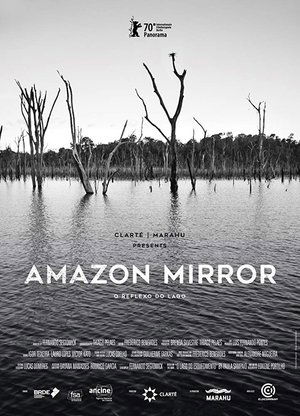
A black and white film about the people who live near one of the world’s largest hydroelectric plants in Amazonia. In the shadow of this environmentally destructive project, they eke out involuntarily meagre lives, without electricity or infrastructure.
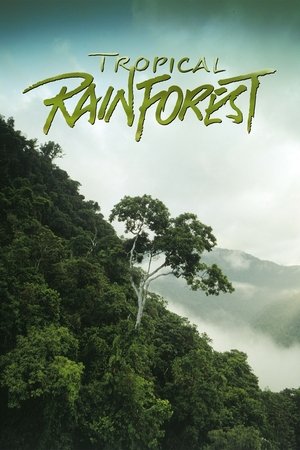
The story of the evolution of tropical rain forests, their recent and rapid destruction, and the intense efforts of scientists to understand them even as they disappear. This film gives viewers a better appreciation of the importance of tropical rain forests on a global scale.
AMAZON 3D
Save the Sumatran Forest
A New Yorker journeys to the jungle in the Darien Gap of Panama to reconnect with an indigenous tribe he met and photographed 20 years ago. Their reunion highlights the profound power of photos and the human connection that transcends cultural barriers.
Explore the mysterious Amazon through the amazing IMAX experience. Amazon celebrates the beauty, vitality and wonder of the rapidly disappearing rain forest.
David Attenborough tells the remarkable story of how these " birds of paradise " have captivated explorers , naturalists, artists, filmmakers and even royalty.
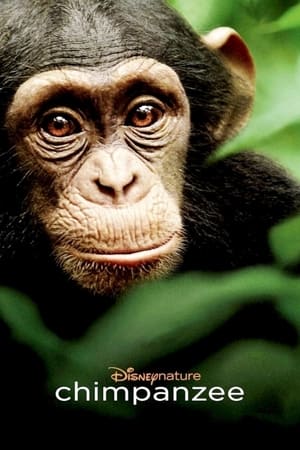
A nature documentary centered on a family of chimps living in the Ivory Coast and Ugandan rain forests. Through Oscar, a little chimpanzee, we discover learning about life in the heart of the African tropical forest and follow his first steps in this world with humor, emotion and anguish. Following a tragedy, he finds himself separated from his mother and left alone to face the hostility of the jungle. Until he is picked up by an older chimpanzee, who will take him under her protection.
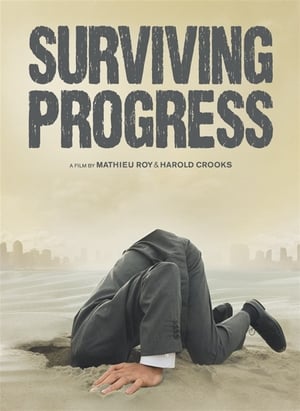
Humanity’s ascent is often measured by the speed of progress. But what if progress is actually spiraling us downwards, towards collapse? Ronald Wright, whose best-seller, “A Short History Of Progress” inspired “Surviving Progress”, shows how past civilizations were destroyed by “progress traps”—alluring technologies and belief systems that serve immediate needs, but ransom the future. As pressure on the world’s resources accelerates and financial elites bankrupt nations, can our globally-entwined civilization escape a final, catastrophic progress trap? With potent images and illuminating insights from thinkers who have probed our genes, our brains, and our social behaviour, this requiem to progress-as-usual also poses a challenge: to prove that making apes smarter isn’t an evolutionary dead-end.