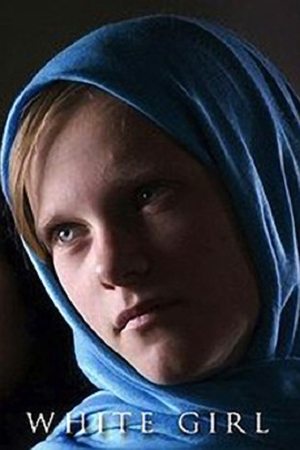
The love story of an abused English girl and a Chinese Buddhist in a time when London was a brutal and harsh place to live.
In a dystopian future, the Brazilian government decrees a measure that forces black citizens to migrate to Africa in an attempt to return to their origins. Seeing themselves in the center of terror, two cousins take refuge in an apartment, where they debate social and racial issues, and share the same yearning for the change of country.
60 years ago, in the Algerian desert, an atomic bomb, equivalent to three or even four times Hiroshima, exploded. Named the “Blue Gerboise”, it was the first atomic bomb tested by France, and of hitherto unrivaled power. This 70 kiloton plutonium bomb was launched in the early morning, in the Reggane region, in southern Algeria, during the French colonial era. If this test allowed France to become the 4th nuclear power in the world, it had catastrophic repercussions. France had, at the time, certified that the radiation was well below the standard safety threshold. However, in 2013, declassified files revealed that the level of radioactivity had been much higher than announced, and had been recorded from West Africa to the south of Spain.
As usual, Slim goes to the Point Ephémère bar in Paris to have a last drink. As is often the case, he finds Lily there, an eccentric and intriguing character, then Seiko, whom he knew as a child soldier, once in Sierra Leone. While he listens to Lily tell him a few stories, Slim watches the Seiko ride, tracked and soon arrested by two plainclothes police officers.
Sal is the Italian owner of a pizzeria in Brooklyn. A neighborhood local, Buggin' Out, becomes upset when he sees that the pizzeria's Wall of Fame exhibits only Italian actors. Buggin' Out believes a pizzeria in a black neighborhood should showcase black actors, but Sal disagrees. The wall becomes a symbol of racism and hate to Buggin' Out and to other people in the neighborhood, and tensions rise.
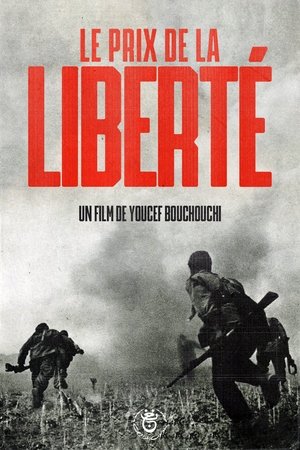
This film retraces the combat journey of Krim Belkacem, one of the leading figures of the Algerian War. When he left the Dellys barracks in October 1945, the day after the Second World War, Krim Belkacem was 23 years old. He is a man revolted by the May massacres in Sétif, Guelma, Kherrata and several other localities in the ravaged country. But it is also and above all a young Algerian who questions the future of Algeria. On March 21, 1947, Krim at the age of 25, he dug up his "Sten" submachine gun, he took action against the boss of his douar who was none other than his cousin. He goes into hiding with six companions. He meshes this entire part of Algeria with a dense and dense network with the sole objective of taking action which will lead to the outbreak of the armed struggle on November 1, 1954.
In a village on the edge of the Sahara, Rima, a 19-year-old orphan, dreams of learning, of discovering, of living free while the men of the salt mine go on strike. The authorities react by sending the army, Rima decides to help the strikers by trapping the soldiers. Co-produced with the Office des Actualités Algériens and shot in the region of Téhouda, 50 kilometers from Biskra, this Franco-Algerian film is fully part of the cinematographic heritage of both shores of the Mediterranean. Bertuccelli adopts the technique of cinema verite, with non-professional actors from the village itself, giving the film a striking documentary texture and a rare force of authenticity. Carried by the moving interpretation of Leila Shenna in the role of Rima, the actor Krikèche and lulled by the music of Taos Amrouche, the film questions female emancipation, social resistance and the relationship with the territory.
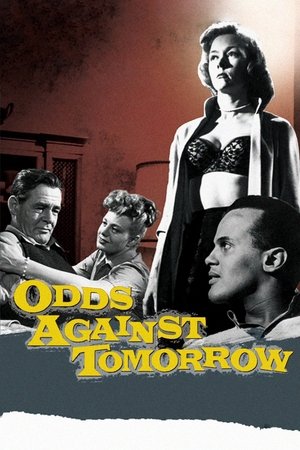
Ralph Burton is a miner who is trapped for several days as a result of a cave-in. When he finally manages to dig himself out, he realizes that all of mankind seems to have been destroyed in a nuclear holocaust. He travels to New York City only to find it deserted. Making a life for himself there, he is flabbergasted to eventually find Sarah Crandall, who also managed to survive. Together, they form a close friendship until the arrival of Benson Thacker who has managed to pilot his small boat into the city's harbor. At this point, tensions rise between the three, particularly between Thacker, who is white, and Burton, who is black.
The Three Cousins is a comedy-drama by René Vautier released in 1970 about the living conditions of three Algerian immigrant cousins looking for work in Paris. Housed in a narrow construction shed, the coal stove will cause them to suffocate. The Three Cousins won the Best Human Rights Film Award in Strasbourg in 1970.
Lasse is an old racist who has lives in an apartment block filled with a selection of refugees and immigrants. Kamal is a 16-year old boy who's fed up in his life in Finland, and dreams of moving to Nairobi to live with his father. Only problem is that he doesn't have the money to buy the ticket.
The neighbors of a frontier family turn on them when it is suspected that their beloved adopted daughter was stolen from the Kiowa tribe.
A low-ranking thug is entrusted by his boss to dispose of a gun that killed corrupt cops, but things spiral out of control when the gun ends up in wrong hands.
Shudra: The Rising is a Hindi language film with a storyline based on the caste system in ancient India, and more specifically the Hindu Varna system. It is directed by Sanjiv Jaiswal and dedicated to Bhim Rao Ambedkar. The film depicts the four basic units of the caste system - the Brahmins, Kshatriyas, Vaishyas and the Shudras. The film shows various rules imposed on the Shudras such as waking with a bell around their ankles and a long leaf behind their back,and a pot hanging around their neck.
A Mexican immigrant struggles to fit into a small town in Wisconsin until he discovers ice fishing.
The Oath, a TV film produced by Algerian television in 1963 following the end of the war of independence, tells the story of young Algerians who joined the resistance after the bloody repressions of May 1945 in Constantinois by the French colonial army .
An East Indian man served 20 years in prison for standing up to racism. Upon his release, while attempting to reconcile with his son, he realizes the world has not changed. Dayton has been dealing with the same hate and discrimination from a local group of boxers. As he attempts to rebuild his relationship with his son, they must decide if fighting is the only option.
Shots fired inside a club frequented by black Brazilians in the outskirts of Brasilia leave two men wounded. A third man arrives from the future in order to investigate the incident and prove that the fault lies in the repressive society.
Georges Lajoie is a Parisian café owner. As every summer, Georges, his wife Ginette and grown-up son Léon go on holiday to Loulou's campsite, where they meet up with the Schumacher family (whose father is a bailiff) and the Colin family (who sells bras in the markets). This year, their peace is slightly disturbed by the proximity of a construction site where foreign workers are employed. Xenophobic comments are made. One evening at the ball, a fight breaks out between Lajoie, Albert Schumacher and two algerian immigrant workers...
In a Canadian mountain resort, Vixen Palmer resides with her naive pilot husband Tom. While he's away flying in tourists, she sleeps with practically everybody including a husband and his wife, and even her biker brother. However, the only one she won't bed is her brother's friend... who is Black.
After saving a Black Panther from some racist cops, a black male prostitute goes on the run from "the man" with the help of the ghetto community and some disillusioned Hells Angels.