Two filmmakers try to create a film venturing on the life of Jose Rizal. Before they do that, they try to investigate on the heroism of the Philippine national hero. Of particular focus is his supposed retraction of his views against the Roman Catholic Church during the Spanish regime in the Philippines which he expressed primarily through his two novels Noli Me Tangere and El Filibusterismo. The investigation was done mainly by "interviewing" key individuals in the life of Rizal such as his mother Teodora Alonso, his siblings Paciano, Trinidad, and Narcisa, his love interest and supposed wife Josephine Bracken, and the Jesuit priest who supposedly witnessed Rizal's retraction, Fr. Balaguer. Eventually, the two filmmakers would end up "interviewing" Rizal himself to get to the bottom of the issue.
Set in Spanish colonial Philippines. Pedro is tasked to wed a wife whilst his activist friend is considering him to join the revolution. Through a raunchy and campy path of winning the love of his life, Pedro is met with a daunting revelation.
Produced by the Army Pictorial Service, Signal Corps, with the cooperation of the Army Air Forces and the United States Navy, and released by Warner Bros. for the War Activities Committee shortly after the surrender of Japan. Follow General Douglas MacArthur and his men from their exile from the Philippines in early 1942, through the signing of the instrument of surrender on the USS Missouri on September 1, 1945. Preserved by the Academy Film Archive in 2013.
A short film about Antonio Luna’s aides-de-camp Jose and Manuel Bernal during the aftermath of Luna’s assassination.
Don Victorino Hernandez, a creole secular priest from Manila, has two passions: botany and the total conversion of the native population particularly the Agtas, who in spite of the rigorous undertakings of Spanish colonialism continue to live in the hinterlands, giving them a notorious reputation in the minds of the lowlanders as well as the colonizers.
Meet Duewand Collier Jr.-Male, 68 years old, American Citizen, a child conceived in the backdrop of the Philippines-American Mutual Defense Treaty, born and raised with Catholic guilt. He has made peace with his past and now tells his story-a story of love.
Pedro Calungsod, a young Filipino man, leaves his Visayan native roots to join the Spanish Jesuit priest Fr. Diego de San Vitores in his mission to the Marianas Islands (Guam) in 1668. The San Diego Mission arrives in the Marianas where the young Pedro, a trained catechist and mission assistant, begins work for Fr. Diego de San Vitores in baptizing the Chamorro natives, preaching the holy gospel and spreading the good news of salvation through the Christian faith amidst paganism, doubt and disbelief. Despite the longing for his father and the threats to their lives, even at the peril of death, Pedro and Fr. Diego continued their missionary work. They roamed the dangerous islands and baptized many more natives and continued to enlighten them about Christianity.
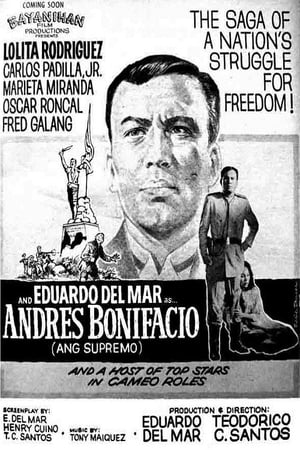
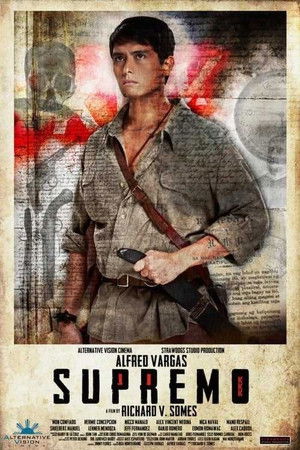
A film about Andres Bonifacio.
A disillusioned and suicidal Rizal, a cross-dressing Bonifacio gripped with paranoia, an ex-Katipunero who joins the US army to save his own neck, and a widow whose sex-for-food errands lead her to become the first ever Makapili. These are the historical mosaics that will form a singular hypothesis as to why we are like this as a people and up to now still reeling from our damaged culture.
Philippines, 1570, the early years of the Spanish colonial regime. Marta, a Native Priestess, convinces her Spanish master that she is possessed by the spirit of his dead bride, in order to manipulate him into returning the farmland that the Spaniards seized from the native community.
In 1898, a band of Spanish soldiers heroically defended Baler against Filipino forces for 337 long and grueling days. The battle, now referred to as the Siege of Baler, is the setting of a forbidden love between a Mestizo soldier and a Filipina lass who lived at the end of the 19th century.
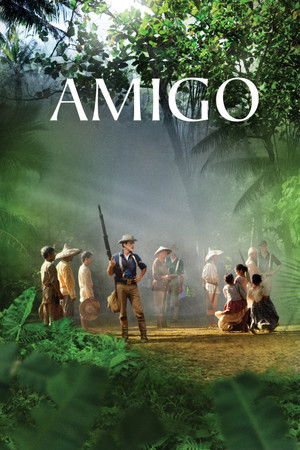
Rafael is a village mayor caught in the murderous crossfire of the Philippine-American War. When U.S. troops occupy his village, Rafael comes under pressure from a tough-as-nails officer to help the Americans in their hunt for Filipino guerilla fighters. But Rafael's brother is the head of the local guerillas, and considers anyone who cooperates with the Americans to be a traitor. Rafael quickly finds himself forced to make the impossible, potentially deadly decisions faced by ordinary civilians in an occupied country.
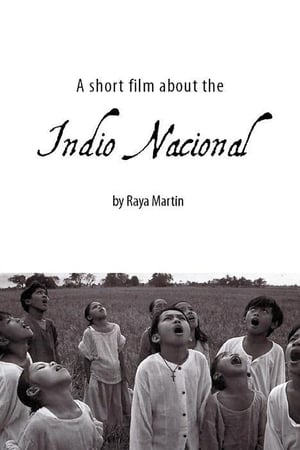
What follows is a black-and-white silent film set in the 1890s during the brewing Filipino revolution against Spanish colonialism. A series of tragic and comic sequences tells the Three Ages of an Indio (“common man”) as he progresses from boy bell ringer in a village church to teenage revolutionary to adult theater actor rehearsing a popular Spanish play.
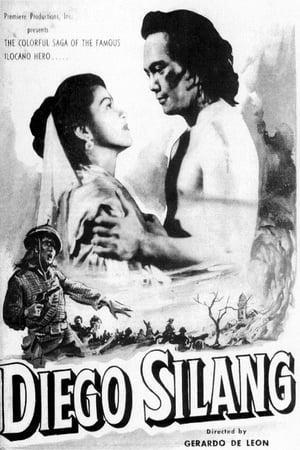
This movie captures the core and colorful saga of the famous Ilocano hero Diego Silang.
Gabriela Silang a Filipino revolutionary leader best known as the first female leader of a Filipino movement for independence from Spain
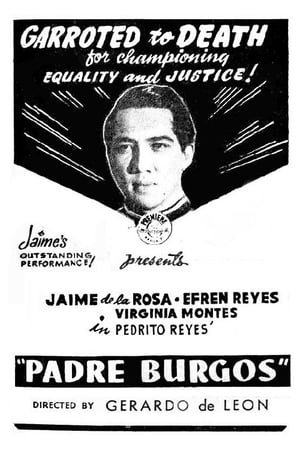
This film reenacts the martyrdom of the Gomburza, high-lighting the events and occurrences prior to their execution. The movie focuses on the story of Fr. Jose Burgos and his involvement in the Cavite Mutiny of 1972.
Accused of treason, Dr. Jose P. Rizal awaits trial and meets with his colonial government-appointed counsel, Luis Taviel de Andrade. The two build the case and arguments for the defense as significant events in the central figure's life prior to his incarceration unfold. Upon hearing Rizal's life story, Taviel begins to realize that the accused not just is innocent but exhibits in fact all the qualities of an extraordinary man. When the mock trial unreels, Taviel is all set to act as the prime advocate for his client as Rizal himself is about to give an earth-moving speech to defend his honor and address his countrymen. Meanwhile, the Spanish authorities have worked out the vast political machinery to ensure a guilty verdict. A revolution waits in the wings.
A mother’s life is destroyed when her two sons, both altar boys, are accused of a crime they didn't commit. As the local authorities hunt them down and her family is torn apart, the trauma drives her into a state of madness as she wanders the town searching for them.
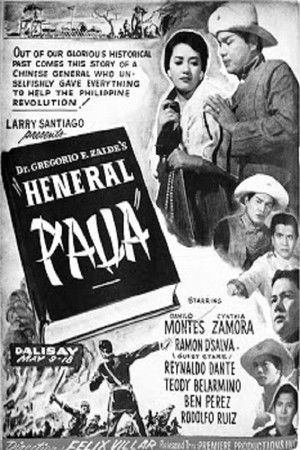
The true story of Andres Bonifacio, a man who rose as a leader in the fight against the Spanish oppressors, and would gain the enmity of even those fighting for the same cause.
Dr. Jose Rizal was exiled in Dapitan from 1892-1896. These were his last four years. Dapitan served as his prison cell. He always compared it to “a beautiful cage” where he is imprisoned. This was the longest imprisonment Rizal ever had. He became so lost by those times, but still he did not lose his mind. Even there, he continued studying and discovering things. He continued his conversation with his friends, scientists and doctors outside the country.