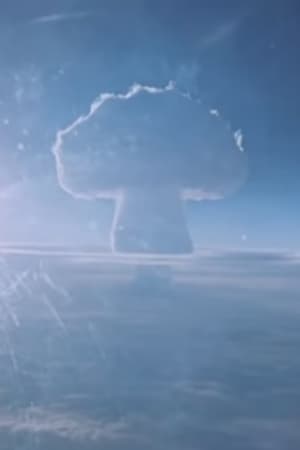
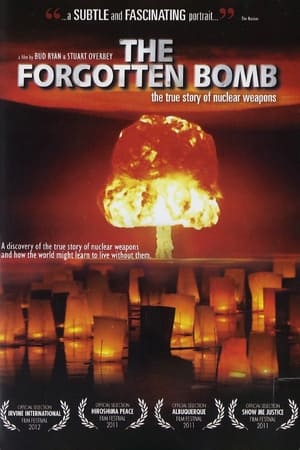
Documentary movie about testing of the largest nuclear weapon in history, the Tsar Bomba. Declassified and made available to the public in 2020.
Drawing upon eye-witness accounts from survivors and participants in the bombing of Hiroshima, this programme shows how both Japan and the United States are still facing enormous problems in coming to terms with the legacy of that fateful August day.
Hidden in the heart of Russia, there is a Soviet-era city where thousands of people live and work behind barbed-wire fences monitored by armed guards. It is Ozyorsk (Ozersk), located in the Chelyabinsk Oblast, one of the most polluted places on the planet and home to the largest stockpiles of nuclear material. Its code name: City 40.
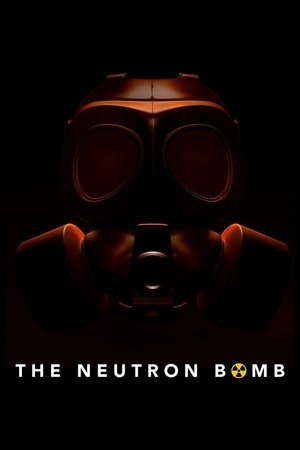
We've all heard of the atomic bomb, but in the late 1950s, an idea was conceived of a bomb which would maximize damage to people, but minimize damage to buildings and vital infrastructure: perfect for an occupying army. This is the story of a man and his bomb: a melding of world events and scientific discovery inspire the neutron bomb, one of the most hated nuclear weapons ever invented.
This captivating documentary on J. Robert Oppenheimer, the architect of the atomic bomb, explores his journey before the historic test and reveals the burden he carried after. De-classified documents, rare film footage and exclusive interviews, including Oppenheimer's grandson, show an intimate exploration of the burden Oppenheimer carried and the profound global impact still being debated today.
J. Robert Oppenheimer and other key figures involved in the decision to drop the first atomic bomb discuss their motivations in this NBC News documentary. Originally produced and televised in 1965, two decades after the bombings of Hiroshima and Nagasaki, it was re-released in 2023 with an epilogue by Michael Beschloss, NBC News Presidential Historian.
This rare documentary is one of the very last efforts from preeminent documentarist/activist Susumu Hani best known for his feature films. This one is a short documentary about the 1945 atomic bombing and its devastating consequences. The film came out of the "10 Foot Movement". A movement organized by the Japan Peace Museum, which mobilized Japanese citizen activists to buy back small segments of film footage of the effects of the atomic bomb from the U.S. National Archives. The film combines recent footage of survivors of the atomic bomb with American archival footage, portraying the sorrow of atomic bomb survivors in the Cold War period.
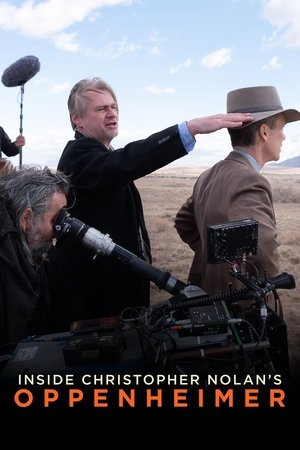
A look behind the scenes of Christopher Nolan's film "Oppenheimer" about an American scientist and his role in the development of the atomic bomb.
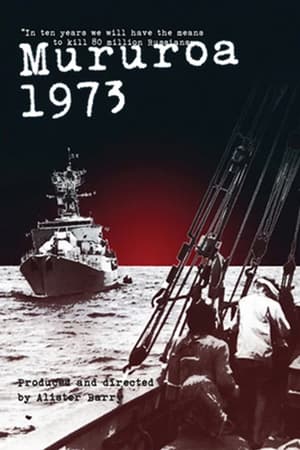
In 1973 Alister Barry joined the crew of a protest boat (The Fri) to Mururoa Atoll, where the French Government were testing nuclear weapons. Barry records the assembly of the crew, the long journey from Northland, and their reception in the test zone; when The Fri was boarded and impounded by French military he had to hide his camera in a barrel of oranges.
El principio del fin de las armas nucleares
This documentary examines unidentified aerial phenomenon. With testimony from high-ranking government officials and NASA Astronauts, Senator Harry Reid says it "makes the incredible credible."
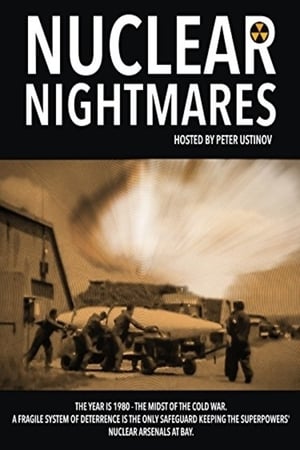
Peter Ustinov hosts this haunting 1980 documentary exploring the world's nuclear weaponry and the fragile system that deters either side from initiating the first nuclear strike. Although the world's political climate has mellowed since the Cold War era, Nuclear Nightmares takes the viewer back in time to gain a perspective of what it was like to live under a very real nuclear threat.
Le IIIe Reich n'aura pas la bombe
Based on testimony by Ethel’s brother, David Greenglass, the Rosenbergs are arrested by the FBI. The couple is accused of passing secret information about the atomic bomb to the USSR. Though the Rosenbergs maintain their innocence from the start, the media and public opinion seem to have condemned them from day one. The trial does nothing to change this and ends in a death sentence. On Friday June 19, 1953, Julius and Ethel Rosenberg are executed in the electric chair. Julius first, then Ethel. 30 years later, the truth finally comes out. Declassified FBI archives reveal that Ethel was not guilty of being a spy; she was merely married to one. Julius did indeed commit espionage for the Soviet Union, though primarily as a recruiter, nothing at all like the fictional James Bond. This documentary, made entirely of archival footage and animated illustrations, offers a tale of espionage as well as a complex family tragedy.
Explore how one man's relentless drive and invention of the atomic bomb changed the nature of war forever, led to the deaths of hundreds of thousands of people and unleashed mass hysteria.
The A-Bomb, the H-Bomb, Cold War, Kennedy, Khrushchev, Yeltsin, Reagan...Who said that the world was a safe place?
Twenty-two prominent American women discuss their activism for nuclear disarmament and their motivations in seeking the end of the arms race.
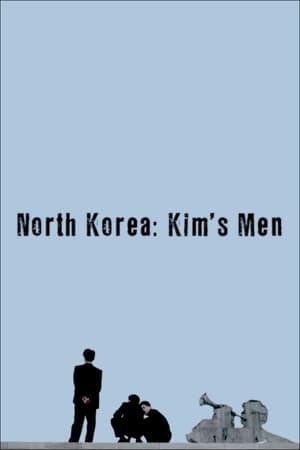
North Korea has nuclear weapons. How did it manage to get them quietly? Donald Trump is under the impression that as US president he could convince Kim Jong-un, the North Korean leader, to disarm his nuclear weapons and make peace with South Korea. But how was it possible that one of the poorest countries in the world could acquire the knowledge to produce nuclear-tipped rockets?
Documentary about the nuclear industry.
Stories of the people who built the first atomic weapons are well known. But what about those who provided the uranium? We look at a mysterious man who derived huge profits from the business of war.