William Hart McNichols is a world renowned artist, heralded by Time magazine as "among the most famous creators of Christian iconic images in the world". As a young Catholic priest from 1983-1990 he was immersed in a life-altering journey working as a chaplain at St. Vincent's AIDS hospice in New York city. It was during this time that he became an early pioneer for LGBT rights within the Catholic church. "The Boy Who Found Gold" is a cinematic journey into the art and spirit of William Hart McNichols. The film follows his colorful life as he crosses paths with presidents, popes, martyrs, and parishioners, finding an insightful lesson with each encounter. McNichols' message as a priest, artist and man speaks to the most powerful element of the human spirit: Mercy.
Spotlighting 30 years of the Israeli metal band's career, A Heaven You May Create explores not only their immense discography but also the impact they left on the music industry.
Le mystère des reliques de saint Pierre
Epic account of the thief Barabbas, who was pardoned for his crimes and spared crucifixion when Pilate offered the Israelites a choice to pardon Barabbas or Jesus. Struggling with his spirituality, Barabbas goes through many ordeals leading him to the gladiatorial arena, where he tries to win his freedom and confront his inner demons, ultimately becoming a follower of the man who was crucified in his place.
A historical drama set in Roman Egypt, concerning philosopher Hypatia of Alexandria and her relationship with her slave Davus, who is torn between his love for her and the possibility of gaining his freedom by joining the rising tide of Christianity.
Social media phenomenon Deive Leonardo reflects on God's love, sings and tells stories about the disciple Peter's spiritual journey in this special.
A chronicle of the first nine years of Pope Francis' pontificate, including trips to 53 countries, focusing on his most important issues - poverty, migration, environment, solidarity, and war - while also giving rare access to the public life of the pontifical.
America has long been called a Christian nation. In fact, over 70% of adults in America identify themselves as Christian. Yet when filmmaker Brandon McGuire heads to the streets to ask a few clarifying questions about how Christianity is defined within our culture, he is shocked by the answers he finds. This provocative documentary takes us deep within the American mind and brings to the surface the big ideas that have influenced the way we think about ourselves and about God.
Ten years after establishing New Heights, the pastors, their families, and other influential members of the church sit down for roundtable discussions to look back on the past decade and forward toward their future plans for the congregation.
The young Jeremiah grows up in a priest's family in the village of Anathoth, near Jerusalem. God appears to Jeremiah in different human guises on several occasions, and makes it clear that he has been selected to announce God's message to the people of Jerusalem.
When a Spanish Jesuit goes into the South American wilderness to build a mission in the hope of converting the Indians of the region, a slave hunter is converted and joins his mission. When Spain sells the colony to Portugal, they are forced to defend all they have built against the Portuguese aggressors.
As played out by a theatre troupe, the last days of Jesus Christ are depicted from the perspective of Judas Iscariot, his betrayer. As Jesus' following increases, Judas begins to worry that Jesus is falling for his own hype, forgetting the principles of his teachings and growing too close to the prostitute Mary Magdalene.
This documentary explores the three major views on hell and God’s judgements that have been held by Christians throughout history: eternal torment, annihilation, and universal salvation. The movie emphasizes the idea that universalism is taught in the Bible, was a popular view held by many Christians in the early church, and makes the most sense of the love and justice of God.
Escaping death, a Hebrew infant is raised in a royal household to become a prince. Upon discovery of his true heritage, Moses embarks on a personal quest to reclaim his destiny as the leader and liberator of the Hebrew people.
What is the connection to Satanist Aleister Crowley, Satanism, the ancient heresy of Gnosticism and Doctor Strange? To truly understand the spiritual foundation of Marvel cosmology, one must first understand the influence behind many of the comic book writers. These same influences were brought into the first iterations of Doctor Strange beginning in 1961, when he was first introduced as Dr. Droom, and then Dr. Druid in 1976. Journey with us as we pull back the curtain further in Part 2 of Marvel & DC’s War on God to discover how the top movie franchises are continuing to indoctrinate and perpetuate Satanic lies to hundreds of millions of young people among their unsuspecting audience.
Why would two New York-based filmmakers dedicate five years of their lives to following three white, Jesus-loving, spandex-clad men from the Bible Belt, particularly when the world of documentary filmmaking has generated its fair share of films concerning sensationalistic religious expression and contact sports in recent years? Because it's not about wrestling, and it's not about Jesus. Against a bizarre and entertaining backdrop, and through a motley cast of characters, we are reminded of what connects us all, lest we forget what it means to be human.
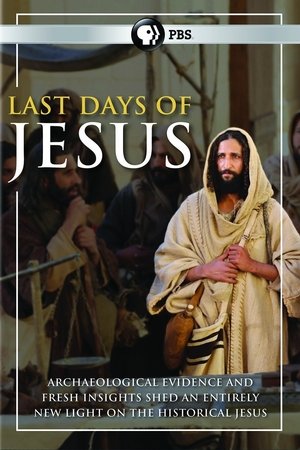
For almost two thousand years, the story of Jesus’ final days has been celebrated by Christians the world over. From Jesus’ triumphant entry into Jerusalem, through to his eventual crucifixion six days later, the key moments have been immortalized in countless films, pieces of music, and works of art. But in recent years, some historians have begun to question inconsistencies in the Gospels’ version of events. They believe that the Gospels could hide a very different story; one that casts the historical Jesus in an entirely new light. Based on a new interpretation of contemporary historical events in Rome, "Last Days of Jesus" peels back thousands of years of tradition, to explore a new political context to the events in Jerusalem. "Last Days of Jesus" explores how dramatic political events in Rome could have played a crucial role in shaping Jesus’ destiny, and examines an extraordinary political alliance that altered the course of history.
A falsely accused nobleman survives years of slavery to take vengeance on his best friend who betrayed him.
11-year-old Nina and her mother Birgit move to the countryside. But while Birgit seems to cope very well with the upheaval, the shy young girl only feels accepted when she joins a girl guide group. Nina's new teacher for Religious Education, the organizer of the group, and the parson belong to the fanatically pious "Legion Of The Holy Angels", a sect preparing its members for the final battle between demons and angels. As Birgi's behaviour doesn't conform to her daughter's ideas, Nina sacrifices a black kitten which allegedly has a bad influence on Birgit. But this only makes things worse, for Birgit eventually forbids her daughter to go to the scouts' sessions and thereby loses her trust. Nina's friend Miriam is having a hard time being accepted by the scouts and leaves them when she isn't allowed to participate in an important ceremony. Nina is faced with a difficult decision...
William Friedkin attends an exorcism with Father Gabriele Amorth, as he treats an Italian woman named Cristina for the ninth time. Prior to filming, Cristina had purportedly been experiencing behavioural changes and “fits” that could not be explained by psychiatry, and which became worse during Christian holidays.