Take a trip to the amazing Chinese capital without leaving your own home. Not content with a tourist-only view of Beijing, this documentary hangs with the locals in roadside food stalls and antique flea markets. But the big landmarks -- such as the Great Wall and the Forbidden City -- are showcased amply as well. Like any good vacation, this whirlwind of culture, history, shopping and food will leave you satisfied and reluctant to return home.
At the end of 1918 while civil war is raging on in Russia, antagonism is slowly spreading to the East, between the Oral mountains and Shanghai. Stuck between a desire to save what's left of the great Imperial Russia, and starting from a clean slate, old generals, secret organizations, and mercenaries attracted by gold, struggle to take advantage of the events. As Corto Maltese returns to Shanghai, he barely gets time to cross paths with his old friend/nemesis Rasputin, and escape a murder attempt before being contacted by members of a Chinese secret organization called "The Red Lanterns". In the heart of violent Manchurian horizons, Corto and Rasputin launch themselves into a fabulous treasure hunt, following the tracks of the mysterious armor-plated train of Kolchak. A steel monster spiked with canons and machine guns, this trains protects the counter-revolutionaries gold...
Draussen bleiben
As the 'one country two systems' policy in Hong Kong has slowly eroded, resentment among the territory's citizens has steadily grown. What began as a series of spontaneous protests against an extradition law in March 2019 has now escalated in to a full-blown popular uprising that shows no signs of abating. ABC Four Corners reports from the frontline of the action, capturing extraordinary footage of the growing tension and violence.
Mr. Deng Goes to Washington
A representation of queer and feminist imagery that was mainly shot in the Qinghai-Tibetan Plateau, remote and developing areas in southwest China, and metropolitan cities like Beijing from 2000 to 2004 to document the social changes in contemporary China. The director sympathetically and erotically represents a variety of women, including women as laborers, women as prayers, women in the ground, women in marriage, and women who lie on the funeral pyre with their dead husbands. Her camera juxtaposes the mountains and rivers in old times, the commercialized handicrafts as exposition, the capital exploitation of the elders’ living space, and the erotic freedom of the young people in a changing city.
Undercover in Tibet reveals the regime of terror which dominates daily life and makes freedom of expression an impossibility. Tash meets victims of arbitrary arrests, detention, torture and ‘disappearances’ and uncovers evidence of enforced sterilizations on ethnic Tibetan women. He sees for himself the impact of the enormous military and police presence in the region, the hunger and hardship being endured by many Tibetans and hears warnings of the uprising taking place across the provinces now.
The feature introduces a fictional golden-colored flower, which possesses the magical ability to debauch humans who get too close to it. As the flower only chooses kindhearted people as hosts, a group of martial artists who want to eradicate the plants face a dilemma: should one kill good people for rescuing men from sin?
Railroad of Hope consists of interviews and footage collected over three days by Ning Ying of migrant agricultural workers traveling from Sichuan in China's interior, to the Xinjiang Autonomous Region, China's northwest frontier.[1] Through informal interviews aboard the cramped rail cars, Ning Ying explores the hopes and dreams of the workers, many of whom have never left their homes before.
Amidst the grand walls of the Forbidden City, the film takes us on a deep journey through the ceremonial life of the Chinese emperor, unveiling the secrets and intrigues of concubines, eunuchs, and palace maids. As the West begins to influence China in the late 19th century, the dynamics within the city shift dramatically. The film highlights the preservation and restoration of invaluable treasures and paintings, culminating in the creation of the Palace Museum. With insights from renowned China scholar, Jonathan Spence, this is an intimate exploration of the rich cultural and historical tapestry that makes up the heart of ancient China.
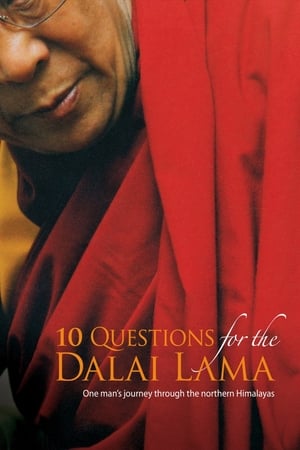
The Tibetans refer to the Dalai Lama as 'Kundun', which means 'The Presence'. He was forced to escape from his native home, Tibet, when communist China invaded and enforced an oppressive regime upon the peaceful nation. The Dalai Lama escaped to India in 1959 and has been living in exile in Dharamsala ever since.
True story of Norman Bethune, a medical doctor who fought for justice in China during Mao's rise to power.
The battle of Red Cliff continues and the alliance between Xu and East Wu is fracturing. With Cao Cao's massive forces on their doorstep, will the kingdoms of Xu and East Wu survive?
The film uses a documentary approach to tell the stories of 12 Chinese pioneers, chosen from the fields of business and the arts. The protagonists reflect upon their life journeys against the backdrop of modern China.
Jerry, an ordinary immigrant dad, retired in Orlando, is recruited to be an undercover agent for the Chinese police. Jerry’s family recreates the events on film and his three sons discover a darker truth. True crime meets spy thriller in this genre-bending docufiction hybrid about an immigrant’s search for the American dream. A Slamdance Film Festival Grand Jury and Audience Award winner.
This is a powerful, yet fictionalized life story of Huo Yuan Chia, a real kung fu master in Southern China who brought respect to the populace and allowed kung fu to be taught to all Chinese during a time of revolt and low morale in the country's history.
Chine : Opérations secrètes
An unsettling and eye-opening Wall Street horror story about Chinese companies, the American stock market, and the opportunistic greed behind the biggest heist you've never heard of.
It's a story about post-90 generation in China and how they chasing their dreams through a talent show. The summer of 2013 saw a group of young boys enter a Chinese TV talent show called Super Boy, hoping to be catapulted to fame. The film documents how the young boys coped with their new challenging lives. While under unthinkable pressure, they proved themselves by trying to make the right choices during live shows. Talent shows create a new type of entertainer, but can they still keep their true selves? Can they adjust themselves and balance the ups and downs? What have the ten years of Chinese talent shows given us? What is urging us to grow up?
In China, there exists an astonishing place. A burial ground to rival Egypt’s Valley of the Kings, where pyramid tombs of stupendous size are full of astonishing riches. In 221 BC, China's first Emperor united warring kingdoms into a nation that still exists today. To memorialise this achievement, he bankrupted the national treasury and oppressed thousands of workers to build one of the world’s biggest mortuary complexes. China's second dynasty, the Han, inherited the daunting challenge of building larger tombs to command respect and establish their right to rule without running the nation into the ground. Although no Han emperor's tomb has been opened, the tombs of lesser Han aristocrats have revealed astonishing things: complete underground palaces (including kitchens and toilets) and at least one corpse so amazingly well-preserved some believe Han tomb-builders knew how to "engineer immortality".