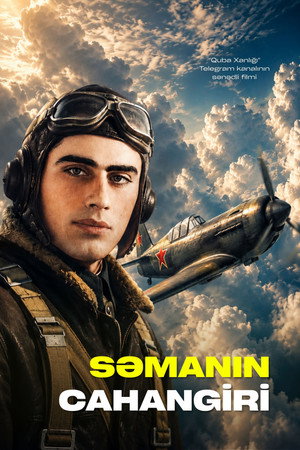
Jahangir Baghirov: Conqueror of the Skies ("Səmanın Cahangiri") is a 2026 Azerbaijani documentary film about Guards Senior Lieutenant and fighter pilot Jahangir Mirjafar Baghirov (1919–1943). Based on historical sources, archival materials and wartime memoirs, the film tells the story of his childhood, military education, heroic combat missions, his final battle during World War II and the preservation of his legacy.
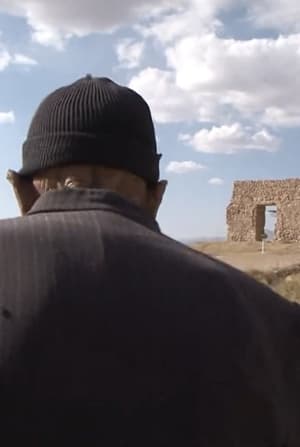
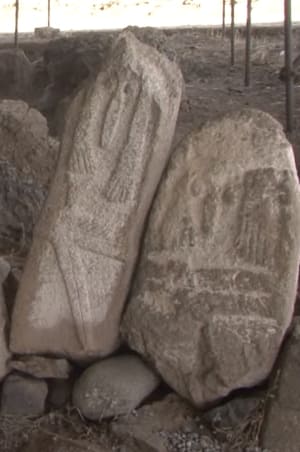
A research on prehistoric Petroglyphs of Arasbaran area in Azerbaijan province of Iran, and the megaliths of Pirazmian area as signs of a lost civilization.
The history of Iranian Azerbaijan from the Medes era to the Sasanian Empire and from Takht-e Soleyman in Atropatene to St. Thaddeus Monastery (AKA Qara Kelisa).
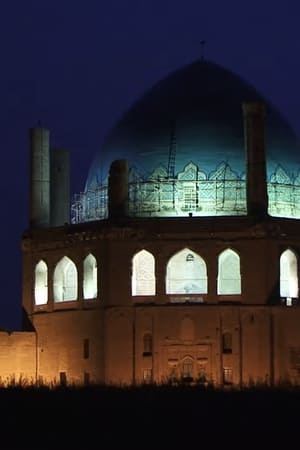
History of Iranian Azerbaijan from Oghuz Turks to the Qara Qoyunlu rulers who built the Blue Mosque (Pers. Masjed-e kabud); and to Hasan Padeshah Aq Qoyunlu who chose Tabriz as their capital.
Story of Azerbaijan, from Sheikh Safi-al-din Ardabili to establishment of Safavid dynasty by King (Shah) Ismail in Iran, and Sheikh Safi-al-din Khanegah and Shrine Ensemble in Ardabil.
The film highlights the lives and deeds of Azerbaijani atabegs Shams ad-Din Eldeniz and Kara Sungur, who played a key role in strengthening the state in the 12th century. Shams ad-Din Eldeniz, the first great atabeg of Azerbaijan, leads successful campaigns, reclaiming territories and uniting the country under his rule. Kara Sungur, the ruler of Aran, engages in political intrigues and military campaigns to protect his lands and influence the sultanate. The film depicts their struggle for power, military achievements, and complex relations with allies and enemies.
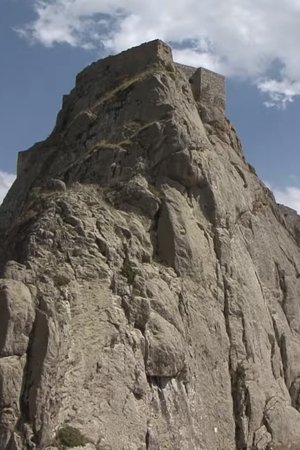
A discovery journey to the ancient sites and forts of Iranian Azerbaijan, Zahhak castle near Mianeh and the Babak Khorramdin stronghold in Kalaybar, who fought the Abbasid Caliphate in early centuries of Islam in Iran.
Leon Bukowiecki is an extremely colourful personality of the Polish film milieu. A well-known and distinguished critic, one of the founders of the Film Weekly, creator of the Film Discussion Clubs, and a great lover of cinema, he talks about how, as a child, he was bitten by the X Muse bug and devoted his entire life to it, watching an average of 4-5 films a day. Good and bad films - because he felt obliged to watch the worse ones too. This meant that, years later, he could proudly describe himself as the 'most filmic' man among those he knew.
A documentary film about Tadeusz Konwicki, his life and work, books and films.
A stroll through a virtual edifice. Norman Leto develops here his interest in the computer-based construction of virtual worlds, blending the real and the imaginary. The interiors of the building merge hotel, exhibition and residential functions and have been modelled on those which exist in reality. However, among real objects there are some that belong exclusively to the virtual world. Sterile hotel lavatories host small shapes – the so-called “delegates”, i.e. units of artificial intelligence whose computer-controlled movements correspond to social processes translated to the language of mathematics. Some of the individuals in the group of “delegates”, however, are not fit to live in society – they function against the mathematical rules and generate chaos within the community.
A short film about professional and private dignity. Portrait of Andrzej Krzysztof Wróblewski, an acclaimed Polish journalist.
The extended television version of the film 83 Zlota Street, offering an expanded look at the various colourful characters introduced there.
Account admin and followers of the viral Instagram meme page @ilovethettc102 reflect on how to maintain hope in a chaotic, online-driven world.
MDM explores the relationship between architecture and ideology by focusing on one Warsaw neighbourhood. The Marszalkowska Housing District was one of the first and most famous of Poland's 1950s Socialist-Realist housing developments. Conceived on a monumental scale as a model of socialist planning and an architectural showpiece for the new Soviet-backed Communist regime, it rose up from the ruins of a city almost completely destroyed in World War II.
Maciej Szumowski was a journalist, reporter, documentary filmmaker, opposition activist, film director, publicist, editor-in-chief of "Gazeta Krakowska", creator of the so-called "school of television documentary", co-founder of independent television, laureate of the Boleslaw Prus Award and two-time winner of the Golden Screen Award. The film "My Dad Maciek" was made by his daughter, Malgorzata Szumowska. From fragments of the author's memoirs, archival materials and accidentally recorded situations, a picture is formed of a very modest man, not chasing cheap acclaim or fame, a man always looking for the truth, unflinchingly honest, sensitive to human injustice, involved in the struggle for freedom and justice.
On the banks of the San Javier River, Néstor Lanche—a potter and artisan from the Mocoví community—guides us on an intimate tour of his craft and his world. With time-hardened hands, he extracts clay.
A documentary on Zbigniew Rybczynski, spanning his entire career, from Kwadrat to his most recent Hi-Def works. Zbigniew is one of the great pioneers of the moving image; a true visionary whose influence and ideas can be found everywhere in contemporary filmmaking and advertising. Fascinating and moving in equal parts, Zbigniew discusses his life and experiences and how they have shaped his work. An incredibly eloquent and engaging narrator and storyteller, the man is as interesting as his creations— a beautiful mind, an extraordinary artist, and a remarkable man.
Educational documentary filmed in b/w on 16mm.
Film in two parts about the events that took place in Radzilow and Jedwabne in July, 1941. The documentary is equally divided with information about both towns, and there are also small sections about Wizna and Wasosz.
The story of Father Kazimierz Strzepek, a Polish Catholic missionary working in harsh conditions among the Andese Indians in Bolivia.