The personification of Death's love for a lonely man is challenged when he falls for a lively woman.
The wife of an abusive criminal finds solace in the arms of a kind regular guest in her husband's restaurant.
Set halfway through the 17th century, a church play is performed for the benefit of the young aristocrat Cosimo. In the play, a grotesque old woman gives birth to a beautiful baby boy. The child's older sister is quick to exploit the situation, selling blessings from the baby, and even claiming she's the true mother by virgin birth. However, when she attempts to seduce the bishop's son, the Church exacts a terrible revenge.
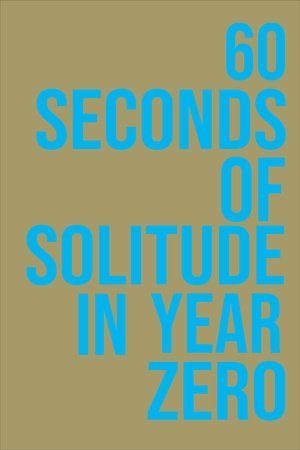
An anthology of one-minute films created by 51 international filmmakers on the theme of the death of cinema. Intended as an ode to 35mm, the film was screened one time only on a purpose-built 20x12 meter public cinema screen in the Port of Tallinn, Estonia, on 22 December 2011. A special projector was constructed for the event which allowed the actual filmstrip to be burnt at the same time as the film was shown.
A tragic story of a musician taking a bold voyage in the pursuit of creation, ambition, and need. Letting life choose for him, as part of the art itself and coming to terms with his decisions.
SEELE orders an all-out attack on NERV, aiming to destroy the Evas before Gendo can advance his own plans for the Human Instrumentality Project. Shinji is pushed to the limits of his sanity as he is forced to decide the fate of humanity.
Director Lam Can-Zhao leads a small film crew as they shoot a film about a stray dog in the streets of Guangzhou, leading viewers into an unpredictable, peculiar and incredible journey.
An unknown future. A boy confesses to the murder of another in an all-boy juvenile detention facility. More an exercise in style than storytelling, the story follows two detectives trying to uncover the case. Homosexual tension and explosive violence drives the story which delivers some weird and fascinating visuals.
Short experimental 16mm film.
Eleven young film-makers got together to collaborate in this atypical project. Atypical not only because of its technical specs, but because of its narrative structure. There are several scenes with only the city in common, and more as a conceptual presence at that than as a precise geography. None of those scenes contains a single "story": Each one of them is part of a larger situation that we cannot see, as though the beginning and end of each "story" had to be filled in by the audience.
In this fragile yet frightening poetic fantasy set against a dark industrial landscape, a woman sits knitting on the porch of her home when a man appears and takes the knitting from her.
Gay, alienated Los Angeles teens have a hard time as their parents kick them out of their homes, they don’t have money, their lovers cheat, and they are harassed by gay-bashers.
Two friends try to re-unite by going on a road-trip to the forests and mountains. Their attempt to reconcile does not go easy due to the secrets they hold, and a shocking revelation ends their journey.
Without any sounds, dialogues and with unknown actors, the images are the focus of this film. Images that want to awake, to question determinant moments, state of a system's languages, the morality of deaths, the immobility, the silence, among other subjects. Shot at the height of the Brazilian military dictatorship, it is an affront to the most diverse types of repression in that period.
The film appears like a ritual with splendids and crypteds psalms. The Great Master of Order (Marcel Mazé, new fetish actor after Aloual) seduces the young male prey with a running cinema projector which carves Murnau's Nosferatu extracts on their bodies. Metamorphosis, rituals passages, Eros and Thanotos, illusion and reality, film into the film are the themes and images in perpetual osmosis in this Stéphane Marti's opus.
The veneer of the story is a tale of chance love: two French expatriates strike up a chance romance when they meet on a ship headed back to South America.
A chair, a yogurt, and a masked man are guided to find themselves by an unknown entity.
In a nightmarish world, dominated by the decline and degradation of Man , Christ resurrected wandering, across three different eras of human history.
Luz, a young cabdriver, drags herself into the brightly lit entrance of a run-down police station. A demonic entity follows her, determined to finally be close to the woman it loves.
CREMASTER 2 is rendered as a gothic Western that introduces conflict into the system. On the biological level it corresponds to the phase of fetal development during which sexual division begins. In Matthew Barney's abstraction of this process, the system resists partition and tries to remain in the state of equilibrium imagined in Cremaster 1.