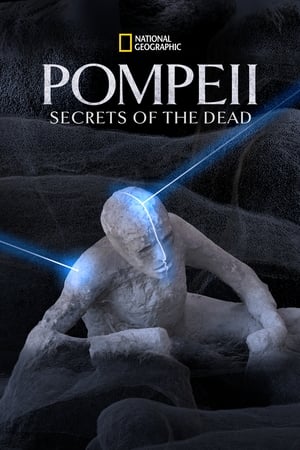
Forensic experts scan Pompeii’s victims to investigate why they didn’t escape the eruption.
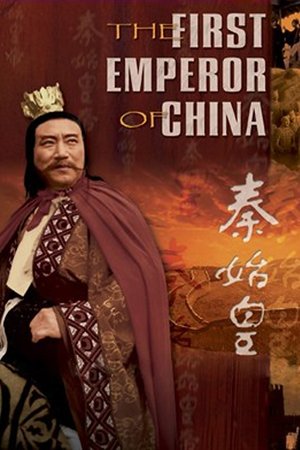
This historical drama tells the story of Qin Shihuang, who unified China's vast territory and declared himself emperor in 221 B.C. During his reign, he introduced sweeping reforms, built a vast network of roads and connected the Great Wall of China. From the grandiose inner sanctum of Emperor Qin's royal palace, to fierce battles with feudal kings, this film re-creates the glory and the terror of the Qin Dynasty, including footage of Qin's life-sized terra cotta army, constructed 2,200 years ago for his tomb.
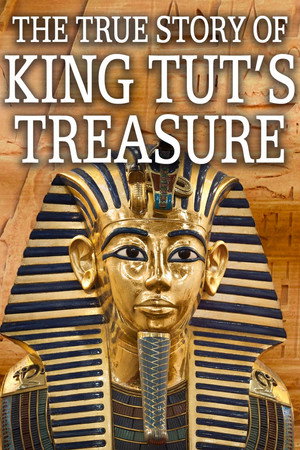
What exactly happened to all the objects found by Howard Carter after he finished exploring Tutankhamun's tomb in 1930 after they had been lying there for the past 3200 years? The most precious of them are exhibited in the Egyptian Museum in Cairo but most were kept out of sight from the very beginning. Ninety years later, for the first time, most of these objects will finally be brought together in the precinct of the great Museum of Giza. Some of them will make their way to the U.S.A. and Paris, where they will be exposed at the Cité des Sciences et de l'Industries in the autumn of 2018 - and then in London, Berlin, Tokyo and…
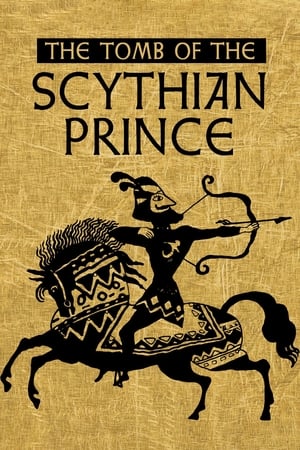
The Scythians, skilled horsemen and nomadic conquerors, built a feared empire in the vast Eurasian steppe between the 9th and 3rd centuries B.C. All that remains are their graves: the Kourganes. In April 1999, a 2400 year-old Scythian tomb was discovered in Kazakhstan. It contained, among other treasures, twelve horses completely harnessed in gold, suggesting high social status.
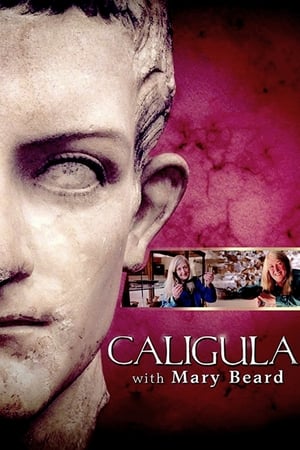
What is true and what is false in the hideous stories spread about the controversial figure of the Roman emperor Gaius Julius Caesar Augustus Germanicus (12-41), nicknamed Caligula? Professor Mary Beard explains what is accurate and what is mythical in the historical accounts that portray him as an unbalanced despot. Was he a sadistic tyrant, as Roman historians have told, or perhaps the truth about him was manipulated because of political interests?
The discovery of Tutankhamun’s tomb is revealed for the first time in color, thanks to colorization of black-and-white newsreel and photographs.
La Cité oubliée de Ramsès II
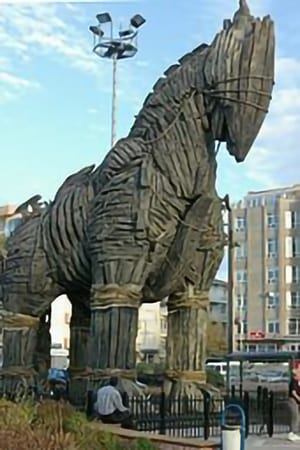
For centuries Troy was believed to be a mythical city. Now, a leading team of American archaeologists have discovered an ancient thriving city, and evidence of a real Trojan War.
This explores the mysterious and catastrophic collapse of ancient civilizations during the late Bronze Age, from the Hittites to the Mycenaeans and the Egyptians, revealing the tumultuous events that brought an end to a thriving era of human history, and warns we may be facing similar threats today.
With more than seven million visitors a year, its massive structure and awesome architecture testify to the genius of ancient Roman building techniques, earning it a place not only among UNESCO's World Heritage sites but as one of the new seven wonders of the world. The Roman Colosseum is an emblem of the power of a bygone empire.
A new exploration of familiar places located in the region of Rhône and Isère throught an reinvention of digital nuances, a study of perceptions and fluidity around the nature of motion in landscapes and human interactions.
Luc Bachelot, a researcher with the CNRS, has been directing since 1994 the French archeological mission at Tell Shioukh Faouqâni in Syria and coordinates the excavations that are carried out there.
Professor Bettany Hughes takes viewers on a journey of discovery as she investigates 10 of the greatest and most intriguing Egyptian mummies - and the secrets that lie beneath the bandages. Having remained in their tombs for thousands of years, wrapped, embalmed and buried with treasure, each mummy tells the story of the criminals, priests, children and pharaohs of Ancient Egypt.
Best known for the myth of the Minotaur, Crete gave birth to Europe's first civilization. Yet little is known about those who inhabited the island. But now, with fresh archeological evidence, light is finally being shed on this ancient culture.
Bettany Hughes goes in search of this lost civilisation, revealing the story of a city founded out of the desert by Alexander the Great in 331 BC to become the world's first global centre of culture. The documentary also looks at the role of astronomer and philosopher Hypatia, and incorporates stunning footage from the feature film 'Agora'.
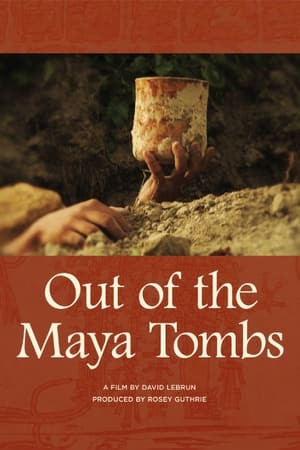
Over the past 50 years, thousands of exquisitely painted Maya vases, almost all looted from tombs, have flooded into public and private collections. These amazing works of art, filled with humor and mystery, have opened an extraordinary window on the Maya past. But the race to unearth these treasures has destroyed temples and palaces, culminating in the takeover of entire ancient cities by looter armies. OUT OF THE MAYA TOMBS (formerly titled DANCE OF THE MAIZE GOD) enters the world of the vases to explore the royal life and rich mythology of the Maya, as well as the tangled issues involved in the collection and study of Maya art. The story is told by villagers, looters, archaeologists, scholars, dealers and curators. For each, these vases have a radically different value and meaning.
In the first century, after the death of Herod the Great, Judea goes through a long period of turbulence due to the actions of the corrupt Roman governors and the internal struggles, both religious and political, between Jewish factions, events that soon lead to the uprising of the population and a cruel war that lasts several years and causes thousands of deaths, a catastrophe described in detail by the Romanized Jewish historian Titus Flavius Josephus.
An account of the reign of Herod the Great, king of Judea under the rule of the Roman Empire, remembered for having ordered, according to the Gospel of Matthew, the murder of all male infants born in Bethlehem at the time of the birth of Jesus, an unproven event that is not mentioned by Titus Flavius Josephus, the main historian of that period.
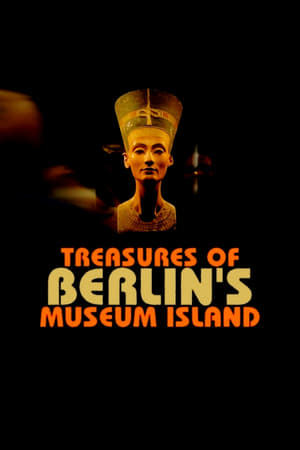
Berlin’s Museum Island, the cultural center of the German capital on the Spree river, houses a large number of art pieces from all over the globe, from the Stone Age to the present day. A walk through their great institutions to marvel at their masterpieces.
Starting from the colonial city of Trujillo, this documentary reveals natural and archeological features along the north coast of Peru, where the Moche culture thrived from the 1st Century BC to the 6th Century AD.