In June 2022, British journalist Dom Phillips was murdered while working with the indigenist Bruno Pereira in the Javari Valley, one of the remotest regions of the Brazilian Amazon. The brutal deaths of Dom and Bruno shocked the world and exposed the unprecedented attack against indigenous communities and those fighting to preserve the environment. Where the Forest Ends is a personal essay in which filmmaker Otavio Cury reflects on the loss of his friend Dom, revisiting the first journey they made to the Amazon and the films they made together.
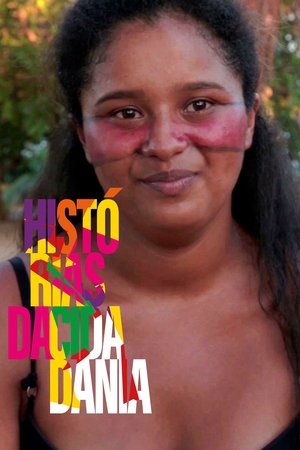
A journey back through Dacia Maraini's and her trips around the world with her close friends cinema director Pier Paolo Pasolini and opera singer Maria Callas. An in-depth story of this fascinating woman's life. Maraini's memories come alive through personal photographs taken on the road as well as her own Super 8 films shot almost thirty years ago.
A Zen priest in San Francisco and cookbook author use Zen Buddhism and cooking to relate to everyday life.
An Okinawan photographer, Mao Ishikawa spent her early 20s working as a barmaid in establishments catered specifically to African American GIs stationed in Okinawa. “There was love,” as the tagline reads, her photography book, 『Red Flower – The Women of Okinawa』 captured the diaristic intimacy of friendships, love affairs, and wild nights shared amongst her social circle of that time.
Angdu is no ordinary boy. Indeed, in a past life he was a venerated Buddhist master. His village already treats him like a saint as a result. The village doctor, who has taken the boy under his wing, prepares him to be able to pass on his wisdom. Alas, Tibet, Angdu’s former homeland and the centre of his faith, lies far away from his current home in the highlands of Northern India. On top of that, the conflict between China and Tibet makes the prospect of a trip there even more daunting. Undeterred by these harsh facts, the duo set off for their destination on foot, accompanied by questions of friendship and the nature of life. With its narrative approach steeped in a serene sense of concentration, this documentary film, composed over a period of eight years, stands as a fundamental experience in its own right.
Montreal Expos star catcher Gary Carter visits Japan to learn about the customs and traditions of baseball in the Far East. He also encounters other "foreign" baseball players he once played with in the MLB.
Merrilees Parker travels to Japan to learn about its unique food culture. She begins her journey in Tokyo, at Tsukiji, the world's biggest fish market. Master chef, Romeo teaches her how to make the ultimate sushi, an art that takes years to master. Then it's off to a ramen museum, where you can try various regional styles of the noodle soup. Escaping the city, Merrilees takes the bullet train to Matsusaka where she visits a farm that produces the most expensive beef in the world. She also visits Kyoto and Mount Fuji for the annual Summer Fire Festival to gorge herself on wonderful street food.
Actual footage by the United States Signal Corps of the landing and attack on Arawe Beach, Cape Glouster, New Britain island in 1943 in the South Pacific theatre of World War Two, and the handicaps of the wild jungle in addition to the Japanese snipers and pill-box emplacements.
Japan blossomed into its Renaissance at approximately the same time as Europe. Unlike the West, it flourished not through conquest and exploration, but by fierce and defiant isolation. And the man at the heart of this empire was Tokugawa Ieyasu, a warlord who ruled with absolute control. This period is explored through myriad voices-- the Shogun, the Samurai, the Geisha, the poet, the peasant and the Westerner who glimpsed into this secret world.
A view of the religious tensions between Muslims and Buddhist through the portrait of the Buddhist monk Ashin Wirathu, leader of anti-Muslim movement in Myanmar.
Street art, creativity and revolution collide in this beautifully shot film about art’s ability to create change. The story opens on the politically charged Thailand/Burma border at the first school teaching street art as a form of non-violent struggle. The film follows two young girls (Romi & Yi-Yi) who have escaped 50 years of civil war in Burma to pursue an arts education in Thailand. Under the threat of imprisonment and torture, the girls use spray paint and stencils to create images in public spaces to let people know the truth behind Burma's transition toward "artificial democracy." Eighty-two hundred miles away, artist Shepard Fairey is painting a 30’ mural of a Burmese monk for the same reasons and in support of the students' struggle in Burma. As these stories are inter-cut, the film connects these seemingly unrelated characters around the concept of using art as a weapon for change.
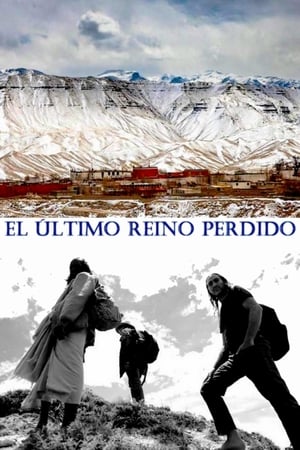
Following in the footsteps of his father, Folco Felzani embarks on an epic journey on foot in search of Mustang, the last lost kingdom, in northern Nepal. The story of a king without a kingdom. The adventure of a son without a father.
An experimental journey through a year in the life of the director, using his always playing playlist to cross the boundaries of fiction and documentary. Through scenes of both comedy and tragedy, realistic documentary footage and experimental sequences of the director's environment and daily life we get a sometimes estranging image of a young man and also an intriguing insight in his mindset and how this translates to the imagery on screen.
Pelican, a bakery located at Asakusa, Tokyo, becomes crowded every morning. There are only two types of bread sold. It looks ordinary but meet a bakery that has been loved for 74 years with a taste you won't get tired of even if you eat it everyday!
How the Japanese process American pop culture and make it their own -- a mind-bending odyssey through cultural mixing.
Narrated by Benedict Cumberbatch, Walk With Me is a cinematic journey into the world of a monastic community who practice the art of mindfulness with Zen Buddhist master Thich Nhat Hanh.
Famous French director Tavernier tells us about his fantastic voyage through the cinema of his country.
THE OPENER is a feel-good, underdog music doc about a street performer who wrote 30 songs in 30 days to process his grief and isolation during the pandemic, and found that his music spoke to millions. When it reached the ears of one of his heroes, Grammy-winner Jason Mraz, he was invited on his very first tour and given a chance to prove himself on the big stage.
The Kabul National Museum, once known as the "face of Afghanistan," was destroyed in 1993. We filmed the most important cultural treasures of the still-intact museum in 1988: ancient Greco-Roman art and antiquitied of Hellenistic civilization, as well as Buddhist sculpture that was said to have mythology--the art of Gandhara, Bamiyan, and Shotorak among them. After the fall of the Democratic Republic of Afghanistan in 1992, some seventy percent of the contents of the museum was destroyed, stolen, or smuggled overseas to Japan and other countries. The movement to return these items is also touched upon. The footage in this video represents that only film documentation of the Kabul Museum ever made.
Liliana Cavani's "The Night Porter" is a film that, fifty years after its release, continues to spark debate and mixed reactions. The story, set in Vienna in 1957, follows doorman Max Aldorfer and his former concentration camp prisoner, Lucia, who reunite after years in a hotel.