First part of the collaborative project "Brise-Glace" showing the diverse travels on the icebreaker "Frej". Directed by Jean Rouch.
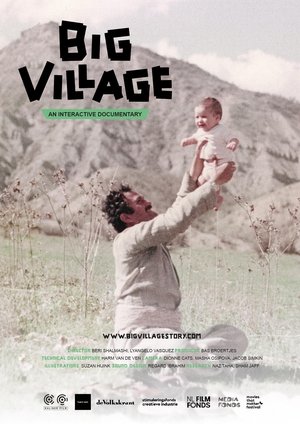
A Bolivian by birth, who grew up with adoptive parents in the Swabian town of Mössingen, is looking for his family in the mountains of Potosí. Out of poverty, his mother gave the little boy away when he was just a few months old. The search carries a story that goes far beyond personal fate. Because Manuel was born in a region known for the ruthless exploitation of silver. It's a film about identity, homeland and equal opportunities.
A Donatello award nominated documentary looking at the last centenary of the CGIL - the largest trade union in Italy.
In this tape, Ko Nakajima and Video Earth Tokyo interview a homeless man. The subject is initially angry and frustrated, but gradually opens up and shares stories about his life. Under A Bridge was later broadcast on cable television.
No animal in the Amazon is more feared and more respected than the 'spirit of the river' - The Anaconda
Over forty years ago, one extraordinary American family moved into the most famous house in the world and changed the nature of the Presidency forever. With glamorous Hollywood good looks and two camera friendly children, the Kennedys helped to usher in a youth culture that affected every aspect of American life. From behind closed doors in the White House to intimate family vacations, photography and television took the American public behind-the-scenes into the lives of its most regal...but just how true were the images projected? Featuring photographs that have never been shown before, and rarely seen home movies, this probing documentary captures private moments with the most well-known First Family as well as recollections from former White House staff, journalists, photographers and biographers.
Documentary about the French public welfare system.
A Burning Star depicts the physicality of destruction and disappearance through images of the Japanese filmmaker's father who dies and is cremated. Maintaining a solid rhythm and perspective, this film highlights the meaning and importance of "viewing" and "filming" in documentary.
An intimate look at the Woodstock Music & Art Festival held in Bethel, NY in 1969, from preparation through cleanup, with historic access to insiders, blistering concert footage, and portraits of the concertgoers; negative and positive aspects are shown, from drug use by performers to naked fans sliding in the mud, from the collapse of the fences by the unexpected hordes to the surreal arrival of National Guard helicopters with food and medical assistance for the impromptu city of 500,000.
Paul Mazursky journeys to a small town in the Ukriane, to witness and participate in a three day celebration by over 25,000 singing, dancing, praying, and emotionally elevated Chassidic Jews.
100 Years of Wrigley Field celebrates a century of the greatest moments and best personalities of the ballpark on Chicago's North Side.
Since Little League Baseball was founded in 1939, about 40 million kids have played the sport. The list includes future Hall of Famers like Carl Yastrzemski, Tom Seaver and Nolan Ryan, and hundreds of other future Major Leaguers. But of all the kids who ever played Little League, the best of the best was a boy you’ve probably never heard of: Art “Pinky” Deras. In the summer of 1959, he led the team from Hamtramck, Mich., to the Little League World Series title, and in the process, he put together a Little League season the likes of which we might never see again. His amazing story comes to life in “The Legend of Pinky Deras: The Greatest Little-Leaguer There Ever Was,” a new film from Blue Hammer Films. Pinky received a ton of national publicity back in 1959, but then he fell off the map. In the half-century since he lit the Little League world on fire, there have been no films about him, no magazine stories, not even a single newspaper article.
Nine famous faces are pushed to their physical and emotional limits in a valiant attempt to scale Mount Kilimanjaro, Africa's highest mountain, to raise money for Comic Relief and help change lives this Red Nose Day, with their turmoil and triumphs revealed in Kilimanjaro: The Bigger Red Nose Climb.
A 19-year-old high school graduate travels through Australia as a backpacker and accompanies his adventure with a camera.
Transcending cultural barriers and consistently going against the grain, female Nepali climber Pasang Lhamu Sherpa attempted to summit Everest four times in the early nineties. Although she was not allowed to attend school as a child, Pasang did not let that stop her from pursuing her dreams. After founding her own trekking company in Kathmandu, she blazed a trail for Nepali women via her efforts to summit Everest. Proving how big you can dream and how far you can go to achieve those dreams, she left a legacy not only for the family she has left behind, but for the myriad women following in her footsteps.
Aborted film project begun by Don Letts and The Clash. The intent of the film was to document the events and performances centering around the band's historic seventeen consecutive shows at Bond's International, a club located in Time's Square, NYC, extending from May 28-June 13, 1981. Footage included Topper Headon strolling around NYC at night & being interviewed while riding in a taxi, the group sitting on a rooftop watching a group of young black kids rap and breakdance, the graffitti artist Futura plying his trade, the backstage scene, and stellar perfomances from the Bond's shows.
Plot kept under wraps. In post- Production.
In 1986, Daniel Pohl was stuck in communist Czechoslovakia, looking for a way to escape life under totalitarian rule. His exit strategy was unusual, to say the least. After realizing that he could not rely on traditional forms of transport, Daniel chose to zip line his way to freedom. After teaming up with a physicist, the two devised a plan using a series of DIY pulleys. Thankfully, his journey proved to be mission possible as he successfully crossed the Iron Curtain, making a safe escape into Austria.
In the late 1960s, with the triumph of bilingualism and biculturalism, New Brunswick's Université de Moncton became the setting for the awakening of Acadian nationalism after centuries of defeatism and resignation. Although 40% of the province's population spoke French, they had been unable to make their voices heard. The movement started with students-sit-ins, demonstrations against Parliament, run-ins with the police - and soon spread to a majority of Acadians. The film captures the behind-the-scenes action and the students' determination to bring about change. An invaluable document of the rebirth of a people.
This is the story of the last two Jews in Afghanistan. All the other Jews have left a long time ago. Isaac and Zabulon live alone in the abandoned synagogue. The older of the two, the ruddy-faced Isaac, is Kabul’s sorcerer-healer. He makes cabalistic amulets, which he sells to Muslims to drive out demons from women, or from soldiers exhausted by the war. The other Jew, Zabulon, has the same Afghan customers, but sells them the wine, which he produces illegally.