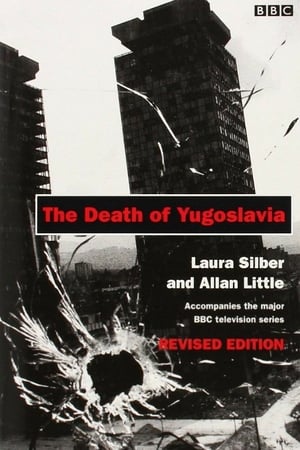
The Death of Yugoslavia is a BAFTA-award winning BBC documentary series first broadcast in 1995. It covers the collapse of the former Yugoslavia. It is notable in its combination of never-before-seen archive footage interspersed with interviews of most of the main players in the conflict, including Slobodan Milošević, the then President of Serbia. Norma Percy won the 1996 BAFTA TV Award for 'Best Factual Series' for the documentary. However, it has been argued that it presents a potentially slightly biased point-of-view; for instance during the trial of Milošević before the ICTY in The Hague, Judge Bonomy called the nature of much of the commentary "tendentious" (partisan).
Tito is a 2010 Croatian documentary television miniseries about Yugoslav leader Josip Broz Tito. The first episode aired March 19, 2010. The series is a co-production by Croatian Radiotelevision and Mediteran film. The two first collaborated on the series Long Dark Night, which at a top audience of 1.8 million viewers was one of the most-watched domestic productions in history. After the announcement of the documentary, Broz's granddaughter Saša announced that she and her family would use all means possible to obstruct filming. Tito cost a reported 1 million euros to make.
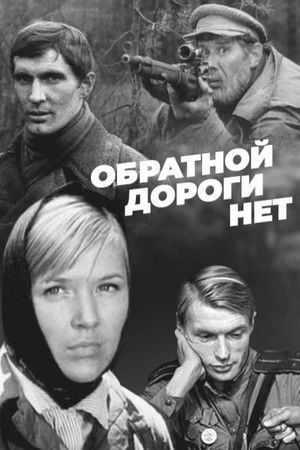
In October 1943, Red Army Major Toporkov, after escaping a concentration camp, informs a partisan detachment about a planned uprising in the camp and the need for weapons. The commander sends two convoys: one with real weapons and another with fake ones to mislead the Germans, aware of a traitor in their ranks. The convoys navigate through Polesie, thickets, and swamps, pursued by German forces, with no return.
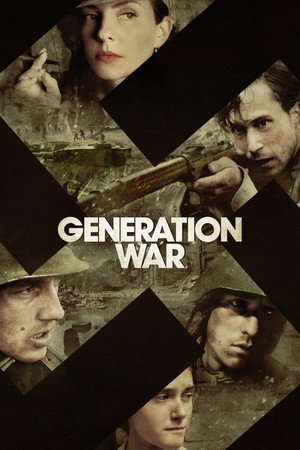
Five young German friends promise to meet again after WW2 ends, but soon their naive wishes of peace and happiness will become a long and tragic nightmare.
Алёша
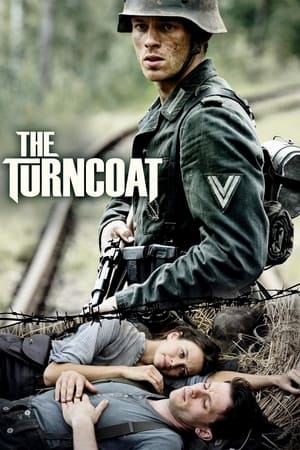
Summer 1944. Walter Proska is about to return to the Eastern Front when his train is blown up by partisans. Together with a scattered bunch of German soldiers, cut off from the front, he awaits certain death while the commands of his superior Willi Stehauf are becoming more and more senseless and inhuman.
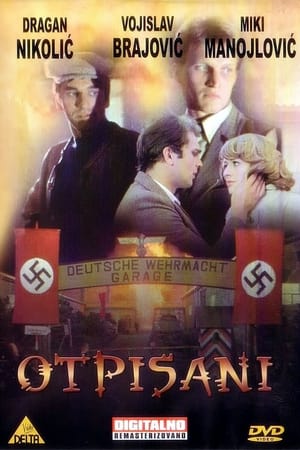
"The Written Off" is a famous Serbian TV miniseries, that was very popular in former Yugoslavia, originally airing in 1974. Due to its popularity, Radio Television of Serbia has shown reruns of the series ten times, the last re-run starting in 2012. The series has achieved something of a cult status among its audience and still attracts an estimated 3 million viewers with its last rerun. Idea of series derives from exploits of freedom fighters in Belgrade during World War II, and all the characters and events are fictitious.
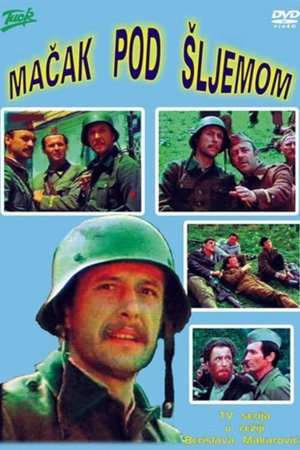
A tragicomic tale of lumberjack who joined the partisans during WW2. As a corporal, he successfully and courageously fulfilled the combat tasks with his partisan battalion. The commander sends him on a special assignment.
An intriguing history of Yugoslav nuclear program that proposed to build an atomic bomb and 16 nuclear facilities on Yugoslav soil. Only one project came to fruition, the nuclear power plant in Krsko, Slovenia.
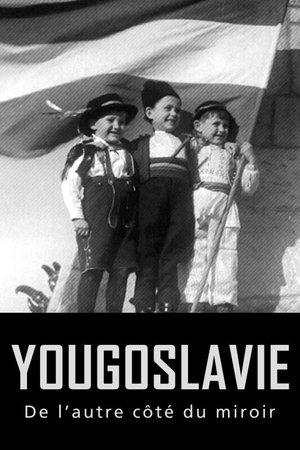
Through two films, this documentary reveals the creation and disintegration, within our own time, of a neighbouring European State named Yugoslavia. Part One covers the 1918-1980 period. Part Two covers the 1980-2001 period.
A suburban family that takes in a mysterious teen naive to the world around him. As Kyle begins to show signs of brilliance, solving the mystery of his origin and potential abilities becomes the family's mission.
The series followed the cabin crew at the fictional airline, Air Scotia, flying out of Prestwick Airport. The crew consisted of the camp, alcohol-loving, narcissistic steward, Sebastian; his sex-obsessed colleague Steve; their up-tight, antagonistic chief stewardess, Shona Spurtle; and the eccentric pilot, Captain Hilary Duff.
With the growing threat of viral epidemic and the possibility of worldwide environmental catastrophe, humanity has an unprecedented ability to destroy itself, and vampires need to take control of their threatened food source. CIB, an elite government force, has been formed to combat the vampire threat. But when eternal life is offered, no one is beyond temptation...
GBH was a seven-part British television drama written by Alan Bleasdale shown in the summer of 1991 on Channel 4. The protagonists were Michael Murray, the Militant tendency-supporting Labour leader of a city council in the North of England and Jim Nelson, the headmaster of a school for disturbed children. The series was controversial partly because Murray appeared to be based on Derek Hatton, former Deputy Leader of Liverpool City Council — in an interview in the G.B.H. DVD Bleasdale recounts an accidental meeting with Hatton before the series, who indicates that he has caught wind of Bleasdale's intentions but does not mind as long as the actor playing him is "handsome". In normal parlance, the initials "GBH" refer to the criminal charge of grievous bodily harm - however, the actual intent of the letters is that it is supposed to stand for Great British Holiday.
When a bolt of lightning crashes through a police crime lab, a mix of electrically charged substances bathes chemist Barry Allen, transforming him into the fastest man alive--The Flash.
Star Cops is a British science fiction TV series created by Chris Boucher, set in 2027 where the International Space Police Force (ISPF) maintains law and order in a newly colonized solar system, overseen by Commander Nathan Spring. Known for its hard science fiction approach and realistic portrayal of space travel, the series was canceled after one season due to poor ratings and production issues. Retrospectively, it has been critically reappraised.
Fang Baihe has been in and out of a drug rehabilitation center more than a dozen times. Her fragile elder sister Milan might have inherited the same illness than their mother had, so Fang Baihe gave up the man she loved deeply, Cheng Mo, to her sister Zilan. She couldn't let her sister suffer the slightest blow. But has the sister lived a happy life as she thought?
The Dick Powell Show is an American anthology series that ran on NBC from 1961- 1963, primarily sponsored by the Reynolds Metals Company. It was hosted by longtime film star Dick Powell until his death from lymphatic cancer on January 2, 1963, then by a series of guest hosts until the series ended. The first of these was Gregory Peck, who began the January 8 program with a tribute to Powell, recognizing him as "a great and good friend to our industry." Peck was followed by fellow actors such as Robert Mitchum, Frank Sinatra, Glenn Ford, Charles Boyer, Jackie Cooper, Rock Hudson, Milton Berle, Jack Lemmon, Dean Martin, Robert Taylor, Steve McQueen, David Niven, Danny Thomas, Robert Wagner and John Wayne.
Space. The Final Frontier. The U.S.S. Enterprise embarks on a five year mission to explore the galaxy. The Enterprise is under the command of Captain James T. Kirk with First Officer Mr. Spock, from the planet Vulcan. With a determined crew, the Enterprise encounters Klingons, Romulans, time paradoxes, tribbles and genetic supermen led by Khan Noonian Singh. Their mission is to explore strange new worlds, to seek new life and new civilizations, and to boldly go where no man has gone before.
Sinchronicity is a six-part drama series broadcast on BBC Three in the United Kingdom. Set in Manchester, the programme is narrated by Nathan and focuses on the love triangle of him, Fi, and Jase. The programme is executive produced by Julian Murphy, who was an executive producer on Channel 4's As If and Sugar Rush and Sky One's Hex. Stylistically similar to As If, following a non-linear narrative, it also features ex-cast members Paul Chequer, Jemima Rooper and Mark Smith and, as such, can be seen as its spiritual successor. The theme tune is "Boys Will Be Boys" by the Ordinary Boys. The show was filmed in high definition and was re-run on BBC HD in mid-October 2006.