In October, during the tense days of the Nagorno-Karabakh war, the director takes his camera to the village of Ashagi Nuvedi in Lankaran. The film follows the daily lives of fishermen — Sakhavat, Ramesh, Rza and Tehran — living in the shadow of the war. They go out to sea every morning amid news from the front, fearing empty nets, and hoping for a miracle — a goldfish in difficult days.
A photographer shares unpublished images chronicling time spent among the 'fiercely independent' residents of a remote English fishing village.
Das deutsche Wunder
The film reports on the historical development of public transportation.
A portrait of Hamburg and its people.
This Warner Bros. short reviews in an often humorous way the impact of the automobile on the United States. By 1900, the horseless carriage was beginning to have an impact. Early adopters were often the object of attention by large curious crowds. There were many car manufacturers and the quality of their product varied considerably. Traffic jams, pollution and automobile racing were only a few of the outcomes.
Impressionistic picture of the Third Avenue Elevated Railway in Manhattan, New York City, before it was demolished. Preserved by the Academy Film Archive in 2010.
1950 short film portrait of the octogenarian folk artist. Nominated for an Oscar in the category "Best Short Subject, One-reel".
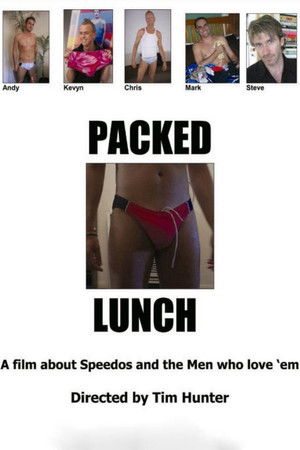
What is it about Speedos? Well here Australian director Tim Hunter is on a mission to find the answer to the question of why so many gay men can't seem to get enough of hunks in tight fitting trunks? Although somehow I think the answer can be found in the question! Anyway in a bid to discover the truth, Hunter has carried out a series of interviews with men who have more than a passing interest in this briefest of garment, including that of Speedo designer Peter Travis, who here relates his part in the history of 'the male equivalent of the Wonder Bra.'
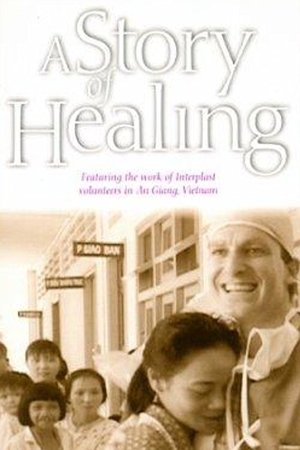
In January, 1997, a team of five nurses, four anesthesiologists, and three plastic surgeons arrive in Vietnam from the United States for two weeks' of volunteer work. They operate on 110 children who have various birth defects and injuries. They also talk to the film crew about why they've made this trip and what it means to them. We watch them work, and we see the children, their families, and their surroundings in the Mekong Delta. Over the closing credits, Dionne Warwick sings Bacharach and David's "What the World Needs Now Is Love".
A year in the life of the Palm Springs Follies, featuring beautiful, ageless performers from around the world in a show that is always Standing Room Only. The film intercuts colorful interviews with the participants and footage of auditions, rehearsals, and the actual performances.
This film illustrates the life of the film director, Shui-Bo Wang in The People's Republic of China. We learn of the life of the director in his own words and images from a child steeped in the values of Chinese communism exemplified by Chairman Mao, to a young man striving to live up to those ideals both as an artist and a soldier.
Fascinating -- and unintentionally funny -- experiments at Austria's famed Institute for Experimental Psychology involve a subject who for several weeks wears special glasses that reverse right and left and up and down. Unexpectedly, these macabre and somehow surrealist experiments reveal that our perception of these aspects of vision is not of an optical nature and cannot be relied on, while the unfortunate, Kafkaesque subject stubbornly struggles through a morass of continuous failures.
Je ne veux qu'elle
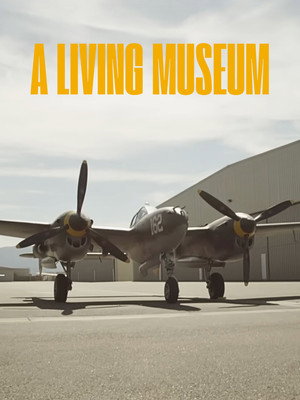
The Planes of Fame Air Museum has always been, and continues to be a "volunteer-driven" organization. Volunteers are the life-blood of most of their activities and the Museum is constantly on the lookout for new volunteers. This short documentary film looks closer at the role volunteers play at the Museum and how their contributions make a difference.
A group of Macedonian women are shown hard at work.
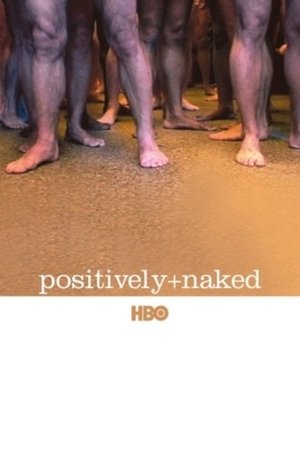
No clothes. No apologies. This film marks artist Spencer Tunick's third 'Naked' documentary which feature photo shoots that create art from the naked bodies of men and women. In this shoot, 85 HIV-positive men and women gather in a downtown Manhattan bar where they bare it all for Tunick's camera, creating an unsentimental look at life with AIDS in America today.
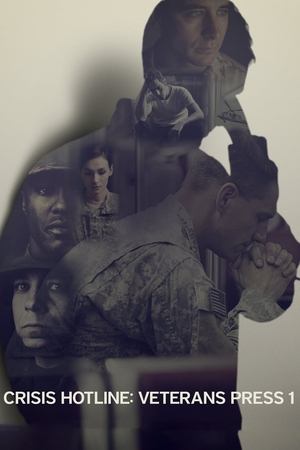
According to the U.S. Department of Veterans Affairs, one veteran dies by suicide in America every 80 minutes. While only 1% of Americans has served in the military, former service members account for 20% of all suicides in the U.S. Based in Canandaigua, NY and open 24 hours a day, 365 days a year, the Veterans Crisis Line receives more than 22,000 calls each month from veterans of all conflicts who are struggling or contemplating suicide. This timely documentary spotlights the traumas endured by America’s veterans, as seen through the work of the hotline’s trained responders. CRISIS HOTLINE captures extremely private moments, where the professionals, many of whom are themselves veterans or veterans’ spouses, can often interrupt the thoughts and plans of suicidal callers to steer them out of crisis.
Lewis Carroll's 'Alice' stories are used to explain certain sections of the Labelling of Food Regulations 1970.
Filmed between 1959 and 1974 using pioneering time-lapse techniques, Hilary Harris’ experimental documentary presents New York City as a living organism. Through a dynamic montage of traffic, crowds, and urban movement, the film explores the parallels between the rhythms of city life and the processes of the human body.