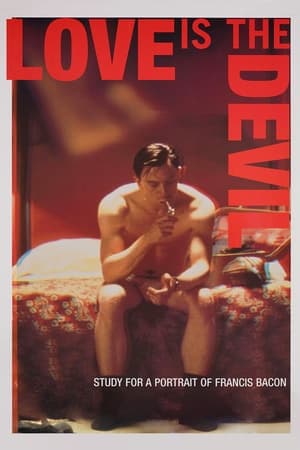
In the 1960s, British painter Francis Bacon surprises a burglar and invites him to share his bed. The burglar, a working class man named George Dyer, accepts. After the unique beginning to their love affair, the well-connected and volatile artist assimilates Dyer into his circle of eccentric friends, as Dyer's struggle with addiction strains their bond.
The gifted, charismatic artist John Cranko moves to the Swabian province from London, where he is attacked for his homosexuality, and after many crises becomes the great sensation as the new pop star of the arts: the Stuttgart Ballet Miracle.
A portrait of the brilliant American writer Truman Capote (1924-84) and the New York high society of his time.
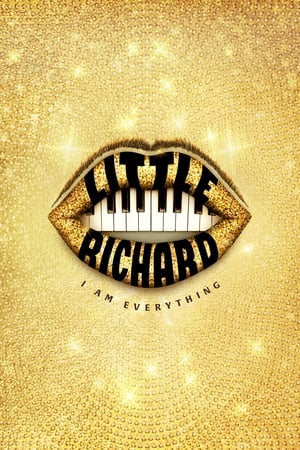
The story of the black, gay origins of rock n' roll. It explodes the whitewashed canon of American pop music to reveal the innovator – the originator – Richard Penniman. Through a wealth of archive and performance that brings us into Richard's complicated inner world, the film unspools the icon's life story with all its switchbacks and contradictions.
Released in 1999, The Devil's Picturebook is a stunning collection of card material that was years ahead of its time. The card magic that Derren performs and teaches offers a rare glimpse into how he thinks about his magic, and how he constructs routines. Then, as now, the audience's emotions are always Derren's primary focus. Over the course of three hours, The Devil's Picturebook gives the audience a detailed insight into this rare Derren Brown material. The first half explains in detail some classic card routines from his early career as a conjurer, all of which rely on sleight of hand, misdirection, and audience management. The second half features his incredible, pioneering psychological card routines and shows a distinct move towards the mentalism for which he is now known.
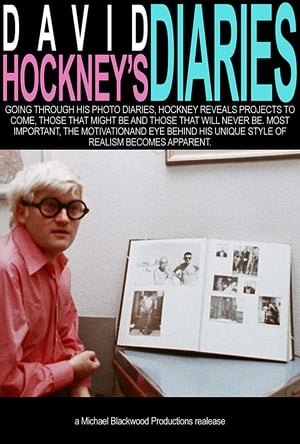
Renowned English painter, David Hockney, takes us on a visual journey as he shares with us his treasured photo diaries. Consisting of polaroids Hockney has been collecting since 1967, the diaries act as both a tribute and an artist's notebook, often times including images the painter used for his large canvas works. A fine example of Hockney's pictorial inspiration are several photographs of castles he took during a boat trip down the Rhine that were later adapted for a suite of etchings to accompany six Grimm's fairy tales. Seeing his projects long before the work begins, Hockney used his camera to slow time and capture images that would go on to boast his unique style of realism. In David Hockney's Diaries the artist is seen at work on a large canvas of his friends Celia and Ossie Clark and their cat Percy, commissioned by the Tate Gallery.
The life of painter, dancer and poet Mark Turbyfill, seen in his 70th year, is evoked through Markopoulos’ unique form of cinematic portraiture.
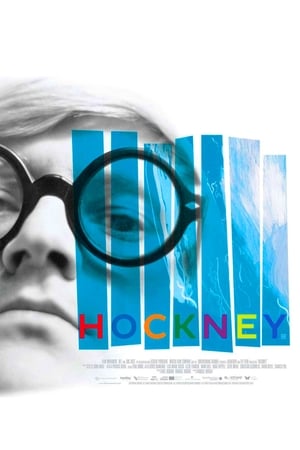
A documentary about the work and personality of artist David Hockney.
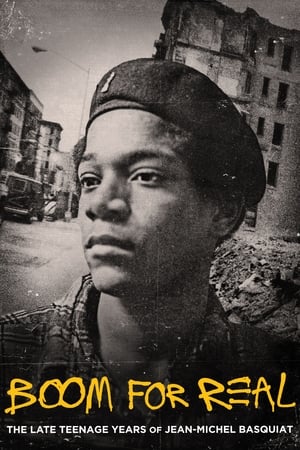
Exploring the pre-fame years of the celebrated American artist Jean-Michel Basquiat, and how New York City, its people, and tectonically shifting arts culture of the late 1970s and '80s shaped his vision.
A documentary about Academy Award-winning costume designer Cecil Beaton. A respected photographer, artist, and set designer, Beaton was best known for designing on award-winning films such as 'Gigi' (1958) and 'My Fair Lady' (1964). The film features archive footage and interviews with a number of models, artists, and filmmakers who worked closely with Beaton during his illustrious career.
Traces the Beats from Allen Ginsberg and Jack Kerouac's meeting in 1944 at Columbia University to the deaths of Ginsberg and William S. Burroughs in 1997. Three actors provide dramatic interpretations of the work of these three writers, and the film chronicles their friendships, their arrival into American consciousness, their travels, frequent parodies, Kerouac's death, and Ginsberg's politicization. Their movement connects with bebop, John Cage's music, abstract expressionism, and living theater. In recent interviews, Ginsberg, Burroughs, Kesey, Ferlinghetti, Mailer, Jerry Garcia, Tom Hayden, Gary Snyder, Ed Sanders, and others measure the Beats' meaning and impact.
A misanthropic author, a single mother and waitress, and a gay artist form an unlikely friendship after the artist is assaulted in a robbery.
A film that charts the artistic and personal relationship between two era-defining artists, Omar Rodríguez-López and Cedric Bixler-Zavala (At the Drive-In/The Mars Volta), told almost entirely through hundreds of hours of self-shot footage filmed by Omar over the last 40 years.
Hervé Guibert was the author of a single film shortly before his death at the age of 36. However, before directing 'Modesty and Shame', he will have tried, on several occasions, to become a filmmaker. This film is an invitation to travel in the cinema dream of a major author of contemporary literature.
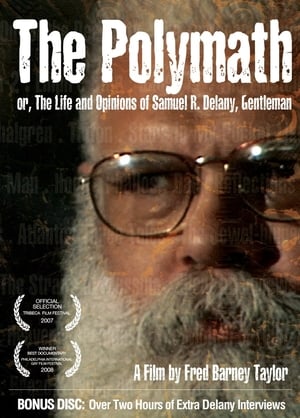
A portrait of Samuel R. Delany, an award-winning African-American gay author whose credits include everything from science fiction to several issues of the Wonder Woman comic book. Using a range of experimental techniques and borrowed footage from Delany's home movies, Taylor captures his subject's thoughts on racism, violence, and his struggles with sexual identity.
Edgardo is a frustrated artist turned cab driver in Buenos Aires, who spends his messy nocturnal life in shady dumps, that distract him from his otherwise constant self-loathing. When he turns fifty, he decides to look for Salvador, his son. His life will take an unexpected turn when he meets Gala, a transvestite tango singer that will bring back Edgardo's inspiration and passion for art.
In 1959, Jean Cocteau looked back on his artistic journey for the Télé Monte-Carlo television show Tout la vérité, rien que la vérité. The program ends with a tasty anecdote about television that Cocteau describes as a “box of tricks”. A few weeks later, in the same Victorine studios, Cocteau directed most of the sequences for his last opus: The Testament of Orpheus (1959).
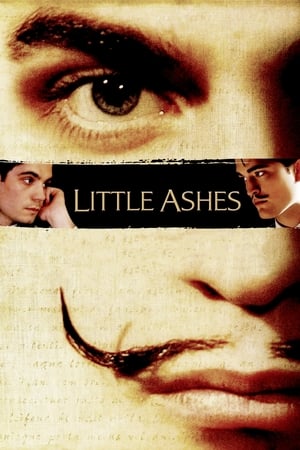
About the young life and loves of artist Salvador Dalí, filmmaker Luis Buñuel and writer Federico García Lorca.
An investigation of Edward Brezinski, an ambitious, charismatic Lower East Side painter hell-bent on sucess, who thwarted his own career with antics that roiled NYC’s art elite. Brezinski’s quest for fame gives an intimate portrait of the art world’s attitude towards success and failure, fame and fortune, notoriety and erasure.
Super 8 short film by Derek Jarman, shot on Fire Island in New York.