Niño Divino is a short-documentary about the Chilean writer and psychiatrist Claudio Naranjo. This story, narrated by Naranjo himself, explores the key moments that shaped his quest and defined his vision and philosophy of life.
A young man undergoes the dilemma of either letting the medication he takes for his bipolar disorder suppress his entire personality or be himself with all that comes with it.
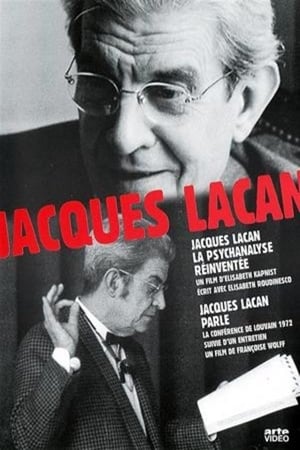
In "psychanalyse", a two part documentary, the psychoanalyst Jacques Lacan answers to questions submitted by his son-in-law Jacques-Alain Miller under the direction of Benoit Jacquot. The Office de Radiodiffusion Television Francaise (ORTF, the french public TV) broadcast this program. This documentary and its text became famous because this is the only televisual experience practiced by Lacan. A fair amount is made of the fact that Lacan was renowned for his powers of seduction and what effect this had on transference in the clinical setting. According to some of the interviewees, he could be irresistibly seductive, so much so that some thought him "monster".
A short film, based on a series of poems, about childhood, the break with parental, and war.
Jerry Falk, an aspiring writer in New York, falls in love at first sight with a free-spirited young woman named Amanda. He has heard the phrase that life is like "anything else," but soon he finds that life with the unpredictable Amanda isn't like anything else at all.
Sergeant Cruchot and his faithful comrades have been sent to the International Congress of Gendarmerie in N.Y.
When a machine that allows therapists to enter their patient's dreams is stolen, all hell breaks loose. Only a young female therapist can stop it and recover it before damage is done: Paprika.
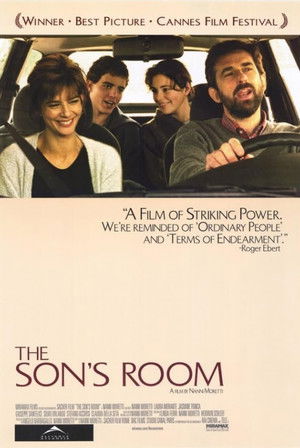
A psychoanalyst and his family go through profound emotional trauma when their son dies in a scuba diving accident.
The residents of San Francisco are becoming drone-like shadows of their former selves, and as the phenomenon spreads, two Department of Health workers uncover the horrifying truth.
Eccentric and full of manias, Michele is a young high school professor who defines himself as “not used to happiness”. He realizes his life is meaningless if he doesn’t have a woman by his side but, after a series of rather disastrous experiences, he feels more alone than ever. Then, out of the blue, a new French teacher called Bianca arrives at school. Amongst uncertainties and contradictions, the two start dating. In the meantime, a series of homicides take place and a police officer begins to suspect that Michele is involved. Bianca will save him providing an alibi at the right moment, but then, everything goes wrong again.
Epigenetics and psychogenealogy through a VERY personal experience.
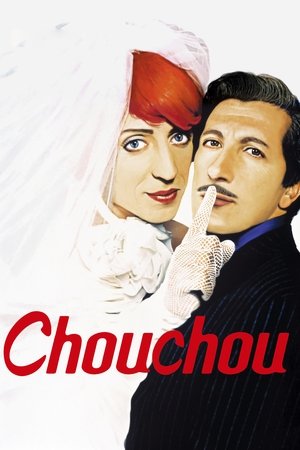
Choukri, alias Chouchou, a transvestite Maghrebi with clear eyes, comes illegally to Paris to find his nephew. Hired as an assistant by a psychotherapist, known for his good mood, he also work as a waiter in a transvestite cabaret of Clichy where he meets Stanislas.
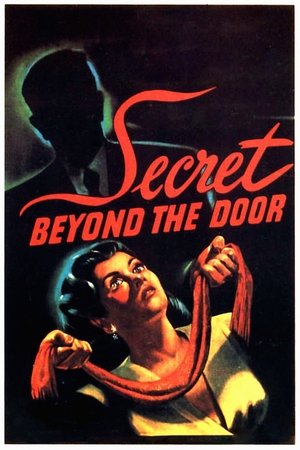
After a whirlwind romance in Mexico, a beautiful heiress marries a man she barely knows with hardly a second thought. She finds his New York home full of his strange relations, and macabre rooms that are replicas of famous murder sites. One locked room contains the secret to her husband's obsession, and the truth about what happened to his first wife.
This compelling film represents a rare record of an original genius. In Jung on Film, the pioneering psychologist tells us about his collaboration with Sigmund Freud, about the insights he gained from listening to his patients' dreams, and about the fascinating turns his own life has taken. Dr. Richard I. Evans, a Presidential Medal of Freedom nominee, interviews Jung, giving us a unique understanding of Jung's many complex theories, while depicting Jung as a sensitive and highly personable human being.
A hilarious introduction, using as examples some of the best films ever made, to some of Slovenian philosopher and psychoanalyst Slavoj Žižek's most exciting ideas on personal subjectivity, fantasy and reality, desire and sexuality.
Seven people in a therapy group are forced to find new ways of coping with their problems when their therapist dies in the middle of a session.
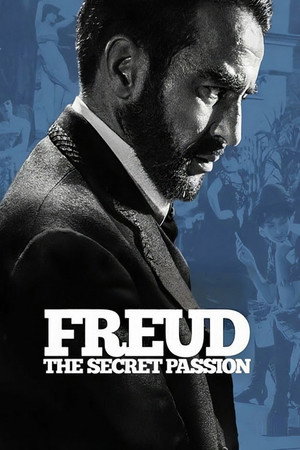
An examination of Austrian psychologist Sigmund Freud's career when he began to treat patients diagnosed with hysteria, using the radical technique of hypnosis.
When a pompous actor tells good girl Alexa that she hasn't lived, she embarks on a bold journey that takes her to mysterious bad boy Johnny. Envious, her shy best friend Ben also dares to pursue Johnny.
Dr. Tony Flagg's friend Steven has problems in the relationship with his fiancée Amanda, so he persuades her to visit Tony. After some minor misunderstandings, she falls in love with him. When he tries to use hypnosis to strengthen her feelings for Steven, things get complicated.
Psychoanalysis in El Barrio shows the experience of Latino psychoanalysts in the United States bringing psychoanalysis to Latino communities. It features interviews with ten Latino analysts (whose heritage is from a variety of Latino cultures) as well as students. It uniquely shows some of those communities in Philadelphia, New York City, and Texas and Interviews Latinos in the street on their thoughts about therapy. And it discusses issues of culture, bias, language and transference that occur for Latino analysts and their patients. The video challenges psychoanalysts to understand the culture and economic circumstances of Latinos in the United States and to bring psychoanalytically informed therapy to them. It Is a consequence of conferences held by the Institute for Psychoanalytic Training and Research (IPTAR) and the Clinical Psychology Department of The New School.