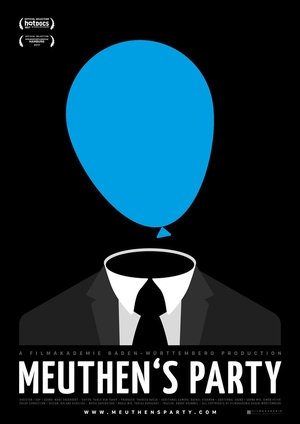
Max S. reveals how he built a drug empire from his childhood bedroom in this story that inspired the series "How to Sell Drugs Online."
Schabowskis Zettel - Die Nacht, als die Mauer fiel
Shell-shocked Barbara must face up to the loss of a dear companion after a tragic accident. Her best friend Klara and husband Torsten devise a plan to thaw Barbara's heart, after she reminisces about the incident, the funeral, and happier times. Will she agree to the suggestions of her nearest and dearest? Can grief turn into hope?
Georg "Schorsch" Kempter is a gardener in a small Bavarian town, working day-in, day-out in his nursery, which is facing bankruptcy. He doesn't like to talk much. He never has. His marriage has long lost all its magic and on top of that, he has trouble to connect with his daughter. Only when he is flying in his own rickety biplane, Schorsch feels truly free. When the owner of the local golf course tries to cheat Schorsch for his money, claiming the shade of green of the grass Schorsch has planted on the golf course is not right, insolvency seems unavoidable. So just when his airplane is about to be impounded, Schorsch grabs the control stick and flies away in an attempt to save his plane and himself. He embarks onto a journey into the unknown, to places he has never seen before, full of odd and special encounters - and with every take-off and every landing, this tough man's heart slowly warms up to what you might call an idea of happiness.
Based on the true story of the Bandō prisoner-of-war camp in World War I. It depicts the friendship of the German POWs with the director of the camp and local residents at the stage of Naruto, Tokushima Prefecture, in Japan.
Paul is visibly confused after a meeting, late in the night. He drives through the night, experiencing a chaos of his feelings and emotions. He celebrates, cries, laughs and screams. But why all this? Again and again his mood is interrupted by strange seeming incidents, in his immediate vicinity...
In 1984 East Berlin, dedicated Stasi officer Gerd Wiesler begins spying on a famous playwright and his actress-lover Christa-Maria. Wiesler becomes unexpectedly sympathetic to the couple, and faces conflicting loyalties when his superior takes a liking to Christa-Maria.
A 9th century woman of English extraction born in the German city of Ingelheim disguises herself as a man and rises through the Vatican ranks.
Documentary film about the painter and sculptor Jörg Immendorff who ranks among the most important German artists. The filmmakers accompanied Immendorff over a period of two years – until his death in May 2007. The artist had been living for nine years knowing that he was terminally ill with ALS. The film shows how Immendorff continued to work with unabated energy and how he tried not to let himself be restrained by his deteriorating health.
At the start of World War I, Paul Baumer is a young German patriot, eager to fight. Indoctrinated with propaganda at school, he and his friends eagerly sign up for the army soon after graduation. But when the horrors of war soon become too much to bear, and as his friends die or become gravely wounded, Paul questions the sanity of fighting over a few hundreds yards of war-torn countryside.
The film does not have a plot per se; it mixes documentary footage, along with standard movie scenes, to give the audience the mood of Germany during the late 1970s. The movie covers the two-month time period during 1977 when a businessman was kidnapped and later murdered by the left-wing terrorists known as the RAF-Rote Armee Fraktion (Red Army Fraction). The businessman had been kidnapped in an effort to secure the release of the original leaders of the RAF, also known as the Baader-Meinhof gang. When the kidnapping effort and a plane hijacking effort failed, the three most prominent leaders of the RAF, Andreas Baader, Gudrun Ensslin, and Jan-Carl Raspe, all committed suicide in prison. It has become an article of faith within the left-wing community that these three were actually murdered by the state.
Professor Niall Ferguson argues that Britain's decision to enter the First World War was a catastrophic error that unleashed an era of totalitarianism and genocide.
Helke Sander interviews multiple German women who were raped in Berlin by Soviet soldiers in May 1945. Most women never spoke of their experience to anyone, due largely to the shame attached to rape in German culture at that time.
When John Halder's latest novel is enlisted by powerful political figures in the Nazi party to push their agenda, his career and social standing instantly advance. But after learning of the Reich's horrific plans for the future and the devastating effects they will have on people close to him, John must decide whether or not to take a stand and risk losing everything.
In the early years of the 20th Century, two British yachtsmen (Michael York and Simon MacCorkindale) stumble upon a German plot to invade the east coast of England in a flotilla of specially designed barges. They set out to thwart this terrible scheme, but must outwit not only the cream of the German Navy, but the feared Kaiser Wilhelm himself.
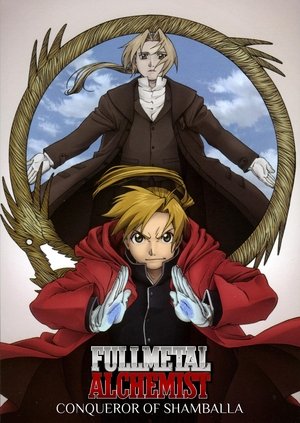
Munich, Germany, 1923. Two years have passed since Edward Elric was dragged from his own world to ours, leaving behind his country, his friends and his younger brother, Alphonse. Stripped of his alchemical powers, he has been all this time researching rocketry together with Alphonse Heiderich, a young man who resembles his own brother, hoping to one day find a way back home. His efforts so far had proven fruitless, but after lending a hand to a troubled gipsy girl, Edward is thrown in a series of events that can wreak havoc in both worlds. Meanwhile, at his own world, Alphonse Elric ventures deeper into the mysteries of alchemy in search for a way to reunite with his older brother.
With aerial shots filmed from helicopters and drones, moments of life and encounters, this abundant geographical narrative offers a unique perspective on today's Germany, providing an overview of a territory undergoing profound change. Committed to an unprecedented energy transition, Germany has been working for several years to reconcile economic development with respect for nature. This challenge is profoundly transforming its urban and rural landscapes, even though they still bear the traces of a partition that the reunification of a little over a quarter of a century ago has not completely erased.
When 22-year-old Rainer Werner Fassbinder storms the stage of a small, progressive theatre in Munich 1967, and seizes the production without further ado, nobody suspects this brazen young rebel to become one of the most important post-war German filmmakers. Despite early setbacks, many of his films breakout at the most renowned films festivals and polarise audience, critics and filmmakers alike. His radical views and self-exploitation, as well as his longing for love, have made him one of the most fascinating film directors of this time.
As the world faces its Second World War, John Halder, a good, intelligent German professor, finds himself pulled into a movement with unthinkable consequences.
Is the solution to Switzerland's future to integrate Germany into the confederation? After all, like Michael Ringier, CEO of the Ringier media group, says, blithely ignoring all minorities, we're very close in culture and language. Oskar Freysinger takes out his guitar and sings his answer. Politicians from French-speaking Switzerland and Ticino think expanding will help the country survive. The former German foreign minister thinks the two countries' traditions are too different. The banker Oswald Grübel is worried about Germany's debts, although he'd be prepared to take over its assets. With serious interviews interspersed with gags (boat people on Lake Constance, the last Habsburger as a peasant), Giaccobbo gathers off-the-cuff reactions which reveal a lot about the different mentalities. The movie laughs at preconceived notions, redefines neutrality and reflects on what designates a nation. Switzerland, which loves to teach the world a lesson, will soon helvetize the planet, oder?