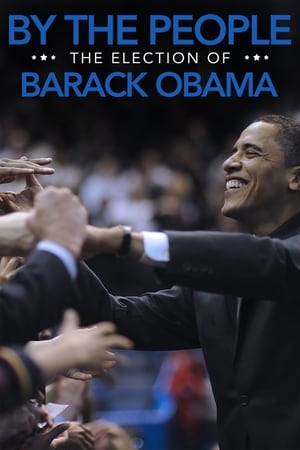
By the People: The Election of Barack Obama is a documentary film produced by Edward Norton broadcast in November 2009 on HBO, which follows Barack Obama and various members of his campaign team, including David Axelrod, through the two years leading up to the United States presidential election on November 4th, 2008.
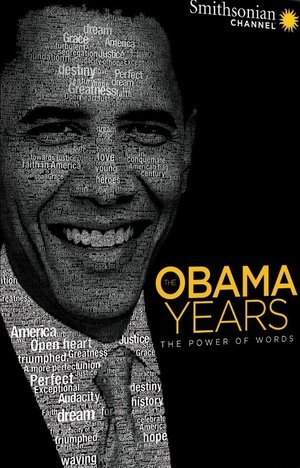
Barack Obama launched into our national consciousness at the 2004 Democratic National Convention and ever since, he's delivered messages of patriotism, unity, and hope through the power of words. But of all the speeches he's given, six in particular may define his legacy as, in historian Doris Kearns Goodwin's words, "one of the best writers and orators in the presidency." Interviews with eminent historians and key figures in his writing process give rare insights into these iconic speeches, as well as the Obama presidency and the man himself.
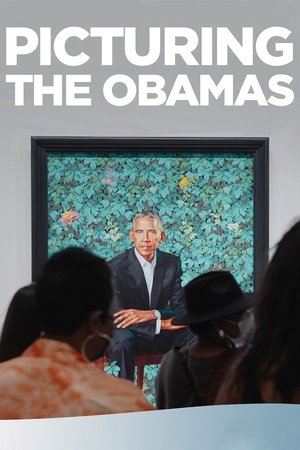
Viewers learn from curators, journalists and art critics about the ways in which the Obamas’ portraits commissioned by the Smithsonian’s National Portrait Gallery disrupt traditional presidential portraiture and spur museums to reach new audiences. The paintings of the ex-commander in chief and first lady, by artists Kehinde Wiley and Amy Sherald, were revealed to much fanfare at the National Portrait Gallery in 2018. The portraits — which drew record attendance to the Washington art museum — have since traveled the country as part of a nationwide exhibition.
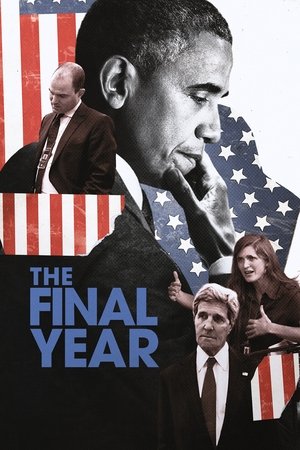
Featuring unprecedented access inside the White House and State Department, The Final Year offers an uncompromising view of the inner workings of the Obama Administration as they prepare to leave power after eight years.
'Fired Up, Ready To Go' follows a number of hopeful and, above all, fanatical grassroots campaigners in New York who are committed to Obama's presidency. A documentary that does not look at Obama's closest associates, but rather at the people on the ground. People who sacrifice a lot to make Obama the first black president of the US.
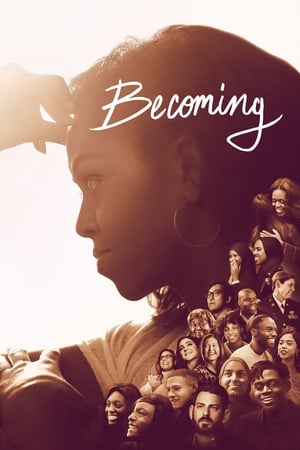
Join former first lady Michelle Obama in an intimate documentary looking at her life, hopes and connection with others.
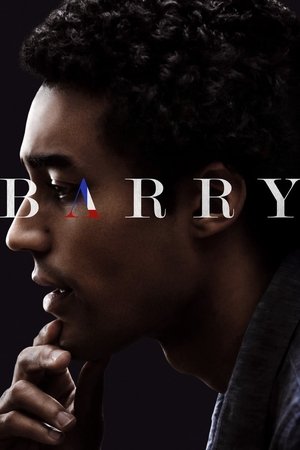
A young Barack Obama forges his identity while dealing with race, divergent cultures and ordinary life as a New York City college student.
This documentary chronicles an Yves Montand concert for Chilean refugees in France.
This film is about drive. It’s about the passion and creative drive of Kazunori Yamauchi, the architect behind Gran Turismo’s birth and breath-taking fifteen-year evolution.
Award-winning filmmakers Jean-Pierre and Luc Dardenne profess their love for the classic "Modern Times." The directors expose their views on the many aspects of the film, Chaplin's brilliancy and they also provide interesting details about the making of Chaplin's masterpiece.
Starting with a long and lyrical overture, evoking the origins of the Olympic Games in ancient Greece, Riefenstahl covers twenty-one athletic events in the first half of this two-part love letter to the human body and spirit, culminating with the marathon, where Jesse Owens became the first track and field athlete to win four gold medals in a single Olympics.
Part two of Leni Riefenstahl's monumental examination of the 1938 Olympic Games, the cameras leave the main stadium and venture into the many halls and fields deployed for such sports as fencing, polo, cycling, and the modern pentathlon, which was won by American Glenn Morris.
After John Wilkes Booth assassinated President Abraham Lincoln, he escaped to Maryland and was discovered hiding in a barn. After he refused to surrender, the barn was set afire and Booth died in the blaze. However, in 1903 a Mr. David E. George, while on his deathbed in Enid, Oklahoma, claimed to be John Wilkes Booth. This MGM An Historical Mystery series short presents evidence of the possibility that Mr. George's claim was true.
Four generations of a Jewish immigrant family create Russ and Daughters, a Lower East Side lox and herring emporium that survives and thrives. Produced to coincide with the 100th anniversary of the store, this documentary features an extensive interview with two of the original daughters for whom the store was named, now 100 and 92 years old, and interviews with prominent enthusiasts of the store including Supreme Court Justice Ruth Bader Ginsburg, actress Maggie Gyllenhaal, chef Mario Batali, New Yorker writer Calvin Trillin, and 60 Minutes correspondent Morley Safer. Rather than a conventional narrator, the filmmakers bring together six colorful longtime fans of the store, in their 80s and 90s, who sit around a table of fish reading the script in the style of a passover Seder. - Written by Julie Cohen
The daily lives of the Krahô Indians, who live in Palmas, Tocantins. The film portrays the culture of the clown Hotxuá and the Festa da Tora da Batata, the most important event of the tribe.
An overview of the singer's career includes comments from manager Roger Davies and ex-husband Ike Turner, as well as Mick Jagger, Elton John, David Bowie, Mark Knopfler.
Flubs and bloopers that occurred on the set of some of the major Warner Bros. pictures of 1937.
Adults share their most embarrassing teenage writings and art in front of total strangers at Mortified stage shows across the country, as the filmmakers explore what the show's popularity says about all of us.
In an epic snow year, five friends leave their daily lives behind to hike California's historic John Muir Trail, a 211-mile stretch from Yosemite to Mt. Whitney (the highest peak in the contiguous U.S.). Their goal - complete the journey in 25 days while capturing the amazing sights & sounds they encounter along the way. Inspired by their bond, humor, artistry & dedication, the group continues to grow: to include other artists, musicians & adventure seekers. Before they all reach the summit, hikers and viewers alike affirm the old adage - it's about the journey, not the destination. Mile... Mile & A Half is the feature-length documentary of that journey...
Working men and women leave through the main gate of the Lumière factory in Lyon, France. Filmed on 22 March 1895, it is often referred to as the first real motion picture ever made, although Louis Le Prince's 1888 Roundhay Garden Scene pre-dated it by seven years. Three separate versions of this film exist, which differ from one another in numerous ways. The first version features a carriage drawn by one horse, while in the second version the carriage is drawn by two horses, and there is no carriage at all in the third version. The clothing style is also different between the three versions, demonstrating the different seasons in which each was filmed. This film was made in the 35 mm format with an aspect ratio of 1.33:1, and at a speed of 16 frames per second. At that rate, the 17 meters of film length provided a duration of 46 seconds, holding a total of 800 frames.