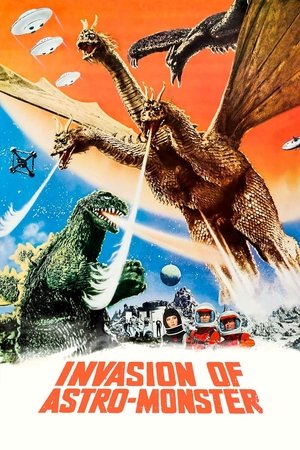
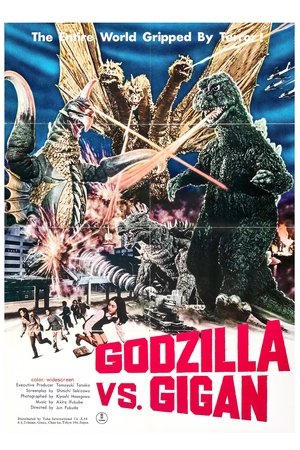
A middle-aged office worker encounters aliens and is gifted with alien technology and limitless powers.
Six directors picked a favorite song by Japanese punk rock band "The Blue Hearts" and made a short film inspired by the song.
Using never-before-seen footage, Japan's War In Colour tells a previously untold story. It recounts the history of the Second World War from a Japanese perspective, combining original colour film with letters and diaries written by Japanese people. It tells the story of a nation at war from the diverse perspectives of those who lived through it: the leaders and the ordinary people, the oppressors and the victims, the guilty and the innocent. Until recently, it was believed that no colour film of Japan existed prior to 1945. But specialist research has now unearthed a remarkable colour record from as early as the 1930s. For eight years the Japanese fought what they believed was a Holy War that became a fight to the death. Japan's War In Colour shows how militarism took hold of the Japanese people; describes why Japan felt compelled to attack the West; explains what drove the Japanese to resist the Allies for so long; and, finally, reveals how they dealt with the shame of defeat.
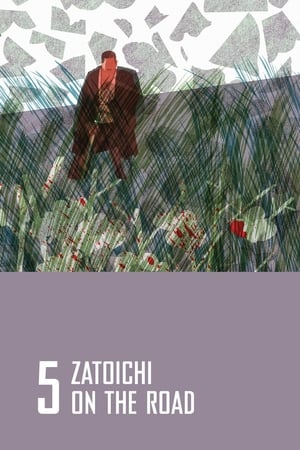
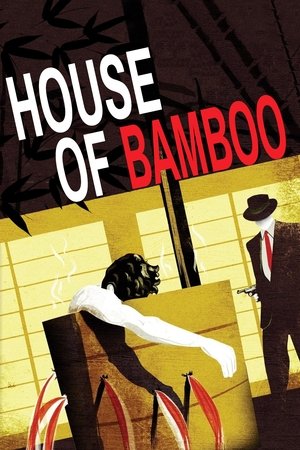
A peaceful ex-ninja's life shatters when his son's kidnapping forces him back into violence amid an American-Japanese criminal drug war.
Sasaki is a sincere civil servant, working at city hall. Due to his timid personality, he can't properly deal with nasty people, including a single mother on the verge of giving up her own child, another civil servant pressing him to have a physical relationship, and a person who receives welfare benefits unfairly. His passivity leads him to get caught up in a terrible crime.
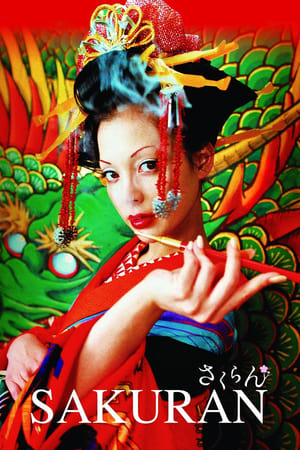
One rainy night in the Edo period, Kotono (a geisha) confronts samurais who killed her father. The samurais attack her one after another, but she fights hard against samurais with her sword. Kotono tries to chase the samurais who scramble to escape. Yet now three ninjas stand up against her. Kotono drops her sword by their wave of assaults. Can she beat them?
In Edo-era Japan, a ukiyo-e artist languishes in his master’s shadow. Creatively stifled, he finds consolation in the company of a prostitute, and becomes entangled in a love triangle. A mystery emerges involving two portraits and the sudden disappearance of the artist Sharaku. Helmed by Cannes-selected director Tatsuji Yamazaki, the film employs kabuki-inspired sequences and stylised sets.
Tokunaga is an unpopular comedian. He meets a senior comedian, Kamiya, who holds a strong faith in comedy. They struggle to move forward as comedians.
Fearless Edo-period police inspector Hanzo Itami, nicknamed The Razor, has developed his own unique way of extracting information for his inquiries. His first adventure sees him investigating his superior officer's mistress, whom he suspects of having ties with a reputed criminal on the loose.
Historical fiction about the aftermath of the atomic bombing of Hiroshima, Japan, on 6 August 1945, and its effects on various civilians, especially children, of that city.
The Cove tells the amazing true story of how an elite team of individuals, films makers and free divers embarked on a covert mission to penetrate the hidden cove in Japan, shining light on a dark and deadly secret. The shocking discoveries were only the tip of the iceberg.
There are breakpoints in the history, the result of a single event may change the whole course. In 1909, an assassination attempt of a Japanese governor fails. Now, in 2009, Korea is just another state of Japan's Empire & Seoul has become a major city. A Korean resistance group fights for liberty, independence & the restoration of true history. Two cops, Japanese & Korean, investigate the group.
An intimate portrait of Victoria Chorale — a Singaporean, alumni community choir led by Nelson Kwei, as he prepares them for a return to the international competition stage in Tokyo for the first time in 18 years. And possibly also their last ever. CODA is an observation of the relationship between the music and its Singaporean makers.
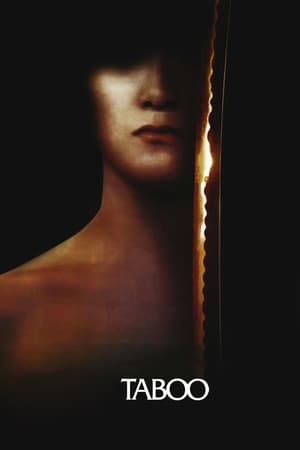
A photographer on a trip to Japan meets a fellow American woman and they quickly fall in love. However, when he returns home to the US, he discovers that she is his girlfriend's older sister.
During World War II, Captain Cassidy and his crew of submariners are ordered into Tokyo Bay on a secret mission. They are to gather information in advance of the planned bombing of Tokyo. Along the way, the crew learn about each other as they face the enemy and some of them lose their lives.
Gamera escapes from his rocket enclosure and makes his way back to Earth as a giant opal from New Guinea is brought back to Japan. The opal is discovered to have been an egg that births a new monster called Barugon. The creature attacks the city of Osaka by emitting a destructive rainbow ray from his back, along with a freezing spray capable of incapacitating Gamera.
A young man is falsely accused of molesting a high-school girl on a train. He is arrested and charged, and goes through endless court sessions, all the while insisting that he is innocent.
Inspired by true events, the story begins with Japanese rugby officials dwelling on a humiliating anniversary, a 145-17 defeat by the New Zealand All Blacks in the 1995 World Cup. Officials question their decision to appoint Eddie Jones, to coach their national team for the 2015 World Cup. Jones plans to defy convention in order to put a stop to Japan being the laughing stock of world rugby.
When a UFO crashes and releases radiation, the dead begin to rise in a cannibalistic frenzy. A group of soldiers and civilians make their way to a hotel and must fend off the zombie hordes.
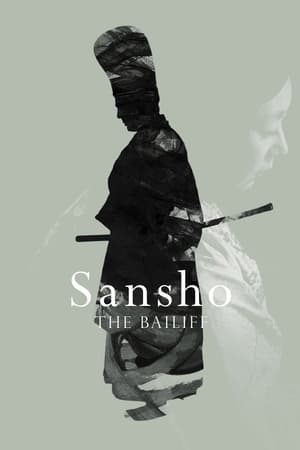
In 11th-century feudal Japan, following the exile of an idealistic governor, his wife and children are separated by slave traders; the children, Zushio and Anju, are sold into brutal servitude under the cruel bailiff Sansho.