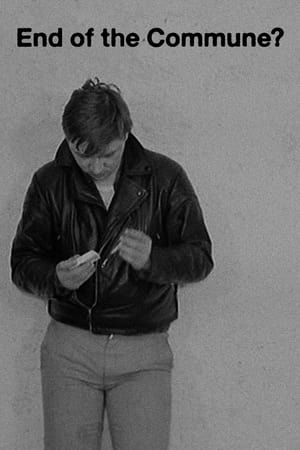
A documentary about Fassbinder and the early years of the legendary Antiteater, the group he was a member/leader of. You can here see and hear some of the actors he was going to use in his movies for the next years. The movie shows rehearsals for his play "The Coffeehouse," which also became a television movie, and you can watch unique footage from the 19th Film Festival in Berlin (1969) where "Love is Colder Than Death" was shown. As told in this documentary, his first feature movie was given a cold shoulder by many of the journalists and visitors at the festival. You can in "End of the Commune" watch Fassbinder and actor Ulli Lommel walk out on stage after the opening of "Love is Colder Than Death,” while a man in the audience is shouting "Out with the director!” In this documentary, Fassbinder also talks a lot about his father, who was a respectable doctor.
A feature length documentary about Australian popular entertainment across 150 years; of Skating and Dancing, Vaudeville and Moving Pictures.
Three friends discover a mysterious machine that takes pictures 24 hours into the future and conspire to use it for personal gain, until disturbing and dangerous images begin to develop.
A documentary about film producer Hal Roach.
The life and professional career of the Spanish filmmaker Florián Rey (1894-1962), a brilliant artist who began his career in silent films and had great commercial success during the Second Republic (1931-1936): a journey to the early days of Spanish cinema.
Tucumán, Argentina, 1965. Three years before George A. Romero's Night of the Living Dead was released, director Ofelio Linares Montt shot Zombies in the Sugar Cane Field, which turned out to be both a horror film and a political statement. It was a success in the US, but could not be shown in Argentina due to Juan Carlos Onganía's dictatorship, and was eventually lost. Writer and researcher Luciano Saracino embarks on the search for the origins of this cursed work.
This is a short film about Alice Guy-Blaché, the first female director of fiction in cinema history. Alice Guy was Léon Gaumont's secretary at the beginning of the last century and she was the first woman to ever direct actors in front of the camera. In 1895, the Lumière brothers introduced to the world the "Cinématographe", the first camera. Léon Gaumont decided to sell this revolutionary new device. Fascinated, Alice asked her boss for permission to use the camera to make her own films. Mr. Gaumont agreed only under the condition that she “would be able to keep up with her mail.” This short film is a poetic reverie that Alice Guy might have had in her time if only society at the time hadn't presented her with so many challenges.
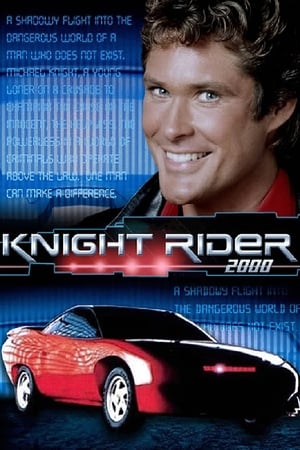
In the future, guns are banned and criminals are frozen for the duration of their sentences. A recent spate of killings involving handguns brings Michael Knight back to fight for justice, but he insists of the help of KITT, his artificially-intelligent car from decades ago. The only problem is that KITT has been deactivated.
A fascinating story of science-fiction films that tried to predict the future of a socialist country that didn’t live long enough to see it.
In 2057, a smart house remains standing in a world without humans after a nuclear war, along with the robots inside it. The robots continue their daily routines meaninglessly. While humanity has been destroyed by a power of its own making and greater than itself, this artificial order, in parallel, is also unable to withstand the greater force of nature for long.
The crew are missing, the ship is damaged, the salvage is at risk. With no help coming and the oxygen running low, an officer and private begin to mistrust one another as their morals and mortality are put to the ultimate test.
A man wakes up inside a spacesuit tumbling helplessly through space, with a computer designed to keep him company until his air runs out, trying to solve the mystery of his death.
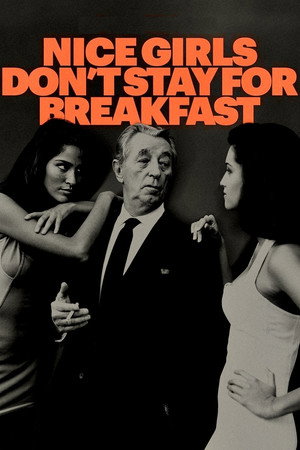
In the late 1990s, iconic photographer Bruce Weber barely managed to convince legendary actor Robert Mitchum (1917-97) to let himself be filmed simply hanging out with friends, telling anecdotes from his life and recording jazz standards.
While checking on her taxes, Mia notices that she owes a lot more than expected. After scheduling an appointment with The Taxman, Mia soon finds herself in a sticky situation.
Tells the story of Jerry, a factory worker with some industrial strength nightmares that are an attempt to escape the harsh reality of his industrial environment. Unrelentingly grim visions of the industrial wasteland such as the horrifyingly violent and erotic inner world bred in those wastes become blurred in his mind until he finally takes action, thereby freeing himself and the love of his dreams from the inhumane imprisonment symbolized by the dark, shadowy Brain Police. A film directed by a group of young filmmakers who live and work in the automotive corridor of the Midwest, Zug has the look of an Eraserhead sequel, Detroit style. Photographed in shadowy film noir tones, with gruesome special effects and a synthesized mechanical soundtrack.
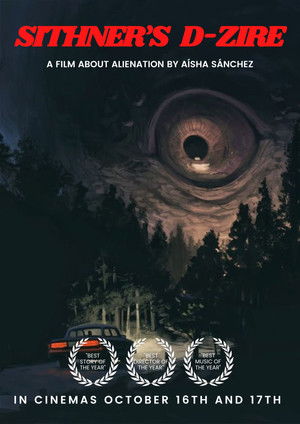
In a distant galaxy, Sithner, an alien from a cold, emotion-suppressing planet, grows disillusioned with her society's rigid training of feelings. While her peers view emotions as weaknesses, Sithner yearns for genuine connections and experiences. During a research mission, she becomes fascinated with humans and their rich emotional lives. Intrigued by their ability to express and embrace feelings, she decides to break free from her own constraints. Fueled by curiosity, she steals a state-of-the-art Starship and transforms into a human, adopting the life of a man. Ultimately, "Sithner's D-Zire" is a heartfelt exploration of identity, belonging, and the transformative power of embracing one's feelings.
Netty is feeling lost in life following the abrupt end of her relationship with Liam. Luckily, there's a quick fix found in pill marketed as "the cure to loneliness".
The early days of the future genius of Spanish cinema Luis García Berlanga, from his birth in Valencia in 1921 to his departure to Madrid in 1947 to become a filmmaker.
Born in 1932, Keiko Kishi has been one of the first Japanese actresses known worldwide. Her decision to move to France and to marry director Yves Ciampi in 1957 – after he filmed her in Typhoon Over Nagasaki starring Jean Marais and Danielle Darrieux – caused a huge scandal in Japan. Despite this transgression, Keiko Kishi continued acting in her home country with Kon Ichikawa, Yasujiro Ozu, Masaki Kobayashi… building unique bridges between Japanese and European cultures. Free and rebellious, she emancipated herself from the many obstacles she encountered in the film industry, and created her own production company in her early twenties. Let’s look back at the story of a pioneer, an inspiration for many generations.
A meteorite is about to collide with Earth and the planet is gripped by despair and chaos. The inhabitants of the little town of Laguna listen to the news in terror. Ale decides to spend his last days shut away, getting drunk and listening to his favorite music. But his plans change when he is forced to help his mother and protect his brother’s four children. Then an ambiguous, disturbing stranger appears.