The history of Europeans in North America, from the arrival of Columbus in 1492 to the business success of German immigrants such as Heinz, Strauss or Friedrich Trumpf, Donald Trump's grandfather. During the 19th century, thirty million people — Germans, Irish, Scots, Russians, Hungarians, Italians and many others — left the old continent, fleeing poverty, racism or political repression, hoping to make a fortune and realize the American dream.
Thundering across the sky on elegant white wings, the Concorde was an instant legend. But behind the glamour of jet setting at Mach 2 were stunning scientific innovations and political intrigue. Fifteen years after Concorde's final flight, this documentary takes you inside the historic international race to develop the first supersonic airliner. Hear stories from those inside the choreographed effort to design and build Concorde in two countries at once - and the crew members who flew her.
A multimedia short created for the U.S. millennium celebrations, The Unfinished Journey reflects on America’s history and spirit through six chapters—immigration, war, culture, civil rights, and innovation. Commissioned by President Bill Clinton and premiered at the Lincoln Memorial on New Year’s Eve 1999, the film features an original orchestral score by John Williams titled American Journey.
Inspired by the true-life experience of its star George Takei, Allegiance follows one family's extraordinary journey in this untold American story following the events of Pearl Harbor. Their loyalty was questioned, their freedom taken away, but their spirit could never be broken.
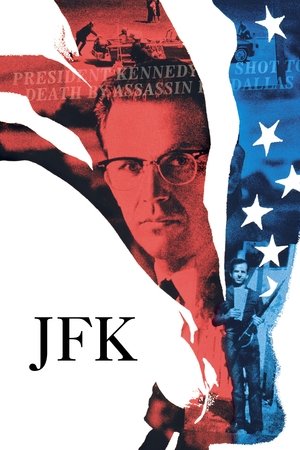
Follows the investigation into the assassination of President John F. Kennedy led by New Orleans district attorney Jim Garrison.
Crownsville Hospital: From Lunacy to Legacy is a feature-length documentary film highlighting the history of the Crownsville State Mental Hospital in Crownsville, MD.
In 1892, Ellis Island, in New York Bay, became the main gateway to the United States for immigrants arriving increasingly from Europe. The story of immigration to the United States from 1892 to 1954, an enthralling polyphonic narrative that embraces both small and great history.
Tour of the White House with Mrs. John F. Kennedy was a television special featuring the First Lady of the United States, Jacqueline Kennedy on a tour of the recently renovated White House. It was broadcast on Valentine's Day, February 14, 1962, on both CBS and NBC, and broadcast four days later on ABC. The program was the first ever First Lady televised tour of the White House, and has since been considered the first prime-time documentary specifically designed to appeal to a female audience.
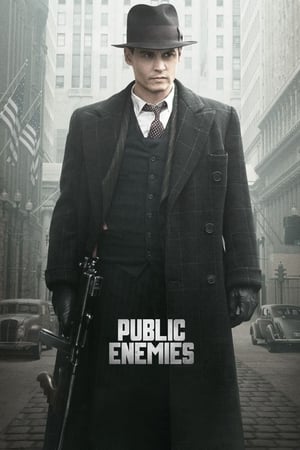
Depression-era bank robber John Dillinger's charm and audacity endear him to much of America's downtrodden public, but he's also a thorn in the side of J. Edgar Hoover and the fledgling FBI. Desperate to capture the elusive outlaw, Hoover makes Dillinger his first Public Enemy Number One and assigns his top agent, Melvin Purvis, the task of bringing him in dead or alive.
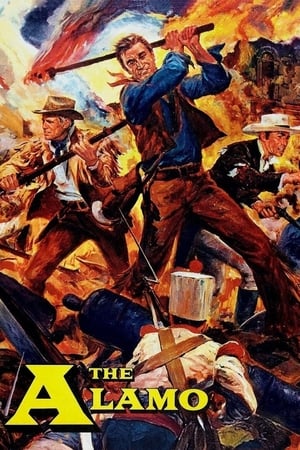
The legendary true story of a small band of soldiers who sacrificed their lives in hopeless combat against a massive army in order to prevent a tyrant from smashing the new Republic of Texas.
Nineteen people were hanged and one man pressed to death, while hundreds went to jail during the "witch hysteria" of 1692. THREE SOVEREIGNS FOR SARAH offers an accurate portrayal of the Salem witch trials, with real characters and original transcripts woven into the dialogue. The film is a powerful, moving story about three loving sisters accused of witchcraft.
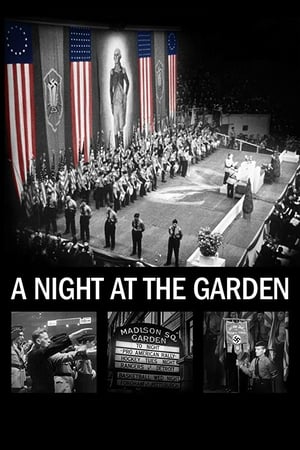
President Kennedy's birthday celebration was held at the third Madison Square Garden on May 19, 1962, and more than 15,000 people attended, including numerous celebrities. The event was a fundraising gala for the Democratic Party. Features Marilyn Monroe singing to JFK.
The detailed timeline of events surrounding the deadly siege of the U.S. Capitol and violence in Washington, D.C. on January 6, 2021.
The inside story of the bitter clash between President Obama and Israeli Prime Minister Netanyahu. Amid violence in the Middle East, the film traces Netanyahu's rise to power and his high-stakes fight with the president over Iran's nuclear program.
How US politicians and diplomats, over the past 25 years, have come close to achieving something almost impossible: securing peace between the State of Israel and its Arab and like-minded neighbors, mired in a struggle both dialectical and violent since the early 20th century, due to historical and religious reasons, entrenched offenses and prejudices, and the invisible and tyrannical hand of third countries' geopolitical interests in the area.
Two of New York's most notorious organized crime bosses, Frank Costello and Vito Genovese, vie for control of the city's streets. Once the best of friends, petty jealousies and a series of betrayals place them on a deadly collision course that will reshape the Mafia (and America) forever.
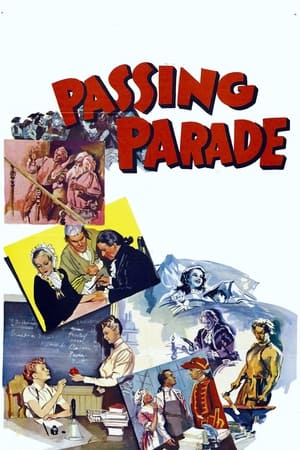
This MGM Passing Parade series short presents how separate events led to the creation of three provisions - freedom of speech, freedom of the press, and prohibition of the infliction of cruel and unusual punishments - in the U.S. Constitution's Bill of Rights.
Thirty years after the release of his film JFK (1991), filmmaker Oliver Stone reviews recently declassified evidence related to the assassination of President John F. Kennedy, which took place in Dallas on November 22, 1963.
An investigation of how Hollywood's fabled stories have deeply influenced how Americans feel about transgender people, and how transgender people have been taught to feel about themselves.
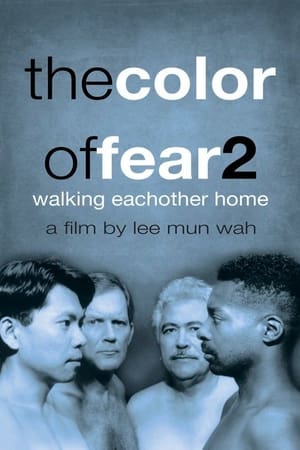
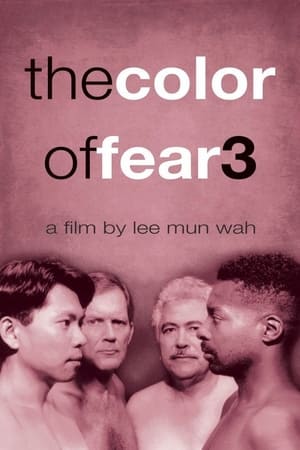
In THE COLOR OF FEAR, eight American men participated in emotionally charged discussions of racism. In this sequel, we hear and see more from those discussions, in which the men talk about about how racism has affected their lives in the United States. We also learn more about the relationships between them, and about their reactions during some of the most intense moments of that discussion.