This film is an album of Native womanhood, portraying a proud matriarchal society that for centuries has been pressured to adopt different standards and customs. All of the women featured share a belief in the importance of tradition as a source of strength in the face of change.
Materia oscura tells the story of a war zone in peacetime. The film location is the Salto di Quirra test range (Sardinia, Italy) where, for over fifty years, governments around the world have tested 'new weapons' and where the Italian government has carried out controlled explosions of old weapon stocks, inexorably endangering the territory.
The T.N.P., the Théâtre National Populaire, an important experimental theater directed by Jean Vilar. Franju combines sequences from theatrical performances with documentary images, creating links and confrontations between theater and the real world.
Shot in Quebec, Canada, The Subterranean Blackness of Roots is a 16mm film triptych which uses several processes specific to analog cinema (hand processing, optical printing, photochemical alteration). The film seeks to show the sensory experience of the invisible life of stones, plants and the nature that surrounds us. It’s a dive into the heart of matter, the essence of the vegetal world and the nourishing earth.
An intimate look into the lives of one of the most iconic folk-rock bands in America - the Indigo Girls. With never-before-seen archival and intimate vérité the film dives into the songwriting and storytelling of the music that transformed a generation.
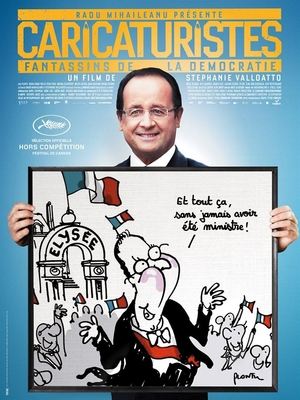
This movie takes us in the daily battle of 12 cartoonists around the world : France, Mexico, Israël, China, Russia, Ivory Coast...
Characteristics and behavior of the house shrew are illustrated.
A brief essay on the ecology of a forest along the Laurentian Shield, in Quebec.
Chuck Close, an astounding portrait of one of the world's leading contemporary painters, was one of two parting gifts (her second is a film on Louise Bourgeois) from Marion Cajori, a filmmaker who died recently, and before her time. With editing completed by filmmaker Ken Kobland, Chuck Close lives the life and work of a man who has reinvented portraiture. Close photographs his subjects, blows up the image to gigantic proportions, divides it into a detailed grid and then uses a complex set of colors and patterning to reconstruct each face.
To support his mother in Mexico, Angel, a nude dancer, turns the web into his new stage.
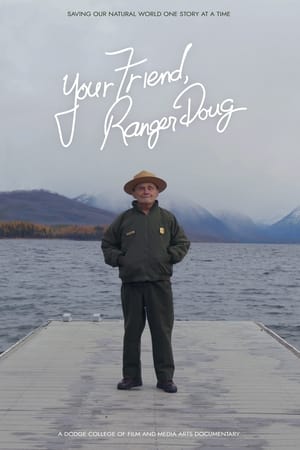
A 94-year-old Glacier National Park ranger confronts the decline of the park he calls home as he reflects on his life and the legacy he will leave behind.
In 1947, two years after the end of the Second World War, Film Journal No. 1 was released in Sarajevo. Fifty years later, after the collapse of the Communist bloc, this newsreel was lost in the confusion of the fighting in Yugoslavia. In Journal No. 1 Hito Steyerl attempts to find out how the footage got lost and what was on this document from the Sutjeska studio. In the simultaneous projection of Journal No. 1 the ‘unattainability of an historical zero hour of the national identity’ takes concrete form: The lost newsreel reports on a literacy campaign as well as Muslim women confidently removing their headscarves. We listen however to eyewitnesses trying to recapture the lost content and we see the artist Arman Kulasic making a number of drawings that resemble the story-boards for the lost film. What appears to be moments of great change remain limited by subjective and uncertain memory. The film was premiered at documenta 12.
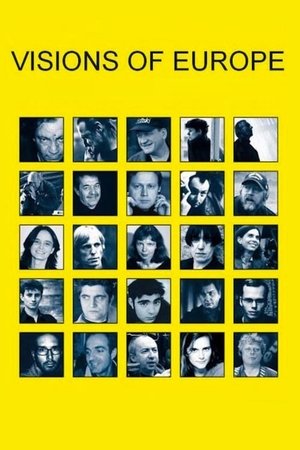
Twenty-five films from twenty-five European countries by twenty-five European directors.
A journalistic story inspired by Volodymyr Vernadsky about the genesis of life in the universe — from the physical elements of the primordial broth to the civilization of intelligent man.
Putito is a production with no specific genre, where reality and fiction blend through a testimony written by José Carlos Henríquez - a feminist activist and male prostitute who plays himself in the project. Available in a censored and uncensored version.
An experimental short film, shot during the COVID-19 pandemic, made by one person. Using recorded scenes and archival footage, the short presents an unorthodox narrative to explore the themes of self-identification, identity, gender expression and androgyny.
Helen Hill remembers her grandfather just before his death (in part) by a metaphor involving him as a rapidly diminishing mouse.
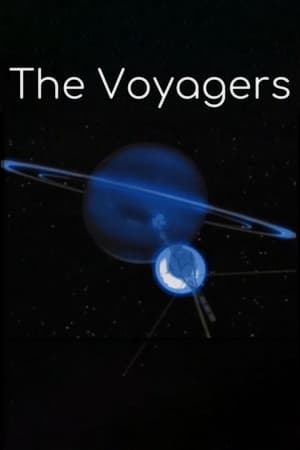
In the summer of 1977, NASA sent Voyager 1 and Voyager 2 on an epic journey into interstellar space. Together and alone, they will travel until the end of the universe. Each spacecraft carries a golden record album, a massive compilation of images and sounds embodying the best of Planet Earth. According to Carl Sagan, “[t]he spacecraft will be encountered and the record played only if there are advanced space-faring civilizations in interstellar space. But the launching of this bottle into the cosmic ocean says something very hopeful about life on this planet.” While working on the golden record, Sagan met and fell madly in love with his future wife Annie Druyan. The record became their love letter to humankind and to each other. In the summer of 2010, I began my own hopeful voyage into the unknown. This film is a love letter to my fellow traveler. - Penny Lane
In 1945, 160 German cities lay in ruins and the loss of millions of lives, billions in material assets and countless cultural treasures was mourned throughout Europe... With the question “How could it happen?”, the film goes back to the year 1914, when the “primal catastrophe of the 20th century” took its course with the First World War.
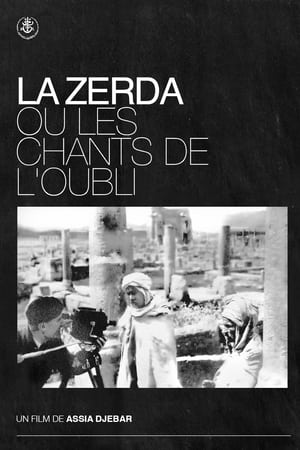
“La Zerda and the songs of oblivion” (1982) is one of only two films made by the Algerian novelist Assia Djebar, with “La Nouba des femmes du mont Chenoua” (1977). Powerful poetic essay based on archives, in which Assia Djebar – in collaboration with the poet Malek Alloula and the composer Ahmed Essyad – deconstructs the French colonial propaganda of the Pathé-Gaumont newsreels from 1912 to 1942, to reveal the signs of revolt among the subjugated North African population. Through the reassembly of these propaganda images, Djebar recovers the history of the Zerda ceremonies, suggesting that the power and mysticism of this tradition were obliterated and erased by the predatory voyeurism of the colonial gaze. This very gaze is thus subverted and a hidden tradition of resistance and struggle is revealed, against any exoticizing and orientalist temptation.