Birds of a Feather is a British sitcom that was broadcast on BBC One from 1989 until 1998 and on ITV from 2013. Starring Pauline Quirke, Linda Robson and Lesley Joseph, it was created by Laurence Marks and Maurice Gran, who also wrote some of the episodes along with many other writers. The first episode sees sisters Tracey Stubbs and Sharon Theodopolopodos brought together when their husbands are sent to prison for armed robbery. Sharon, who lived in an Edmonton council flat, moves into Tracey's expensive house in Chigwell, Essex. Their next-door neighbour, and later friend, Dorien Green is a middle-aged married woman who is constantly having affairs with younger men. In the later series the location is changed to Hainault. The series ended on Christmas Eve 1998 after a 9-year-run.
宮本武蔵
Mini-drama with a historical character having a smartphone.
Five siblings struggle to live together after their parents have passed away. Arguments are a norm, and each have their own problems with studying, finding a job, marriage, etc. But no matter how dysfunctional their family can be, blood is thicker than water and the ties that bind will keep them together through thick and thin.
Qin Ze is a young man who has just entered university . From an early age he excels in singing but following a trauma, he is no longer able to sing in public . However one day, his twin sister Qin Ya, a popular singer, will change his fate by asking him to replace her
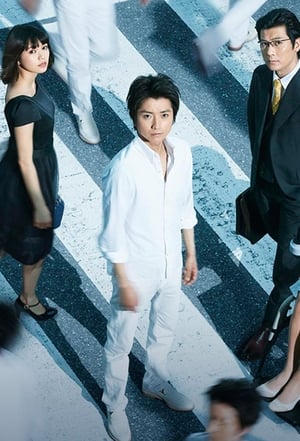
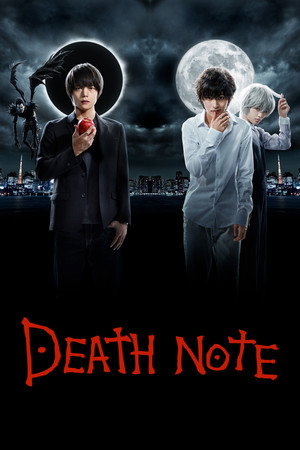
Light Yagami is an ordinary university student. One day, he receives a "Death Note", which changes his life. The Death Note awakens his warped sense of justice and genius. He becomes murderer Kira and punishes criminals. L is a well known private detective. L appears in front of Light Yagami. L defines Kira as evil and decides to catch Kira. Then N, who has a beautiful appearance but dangerous existence, appears.
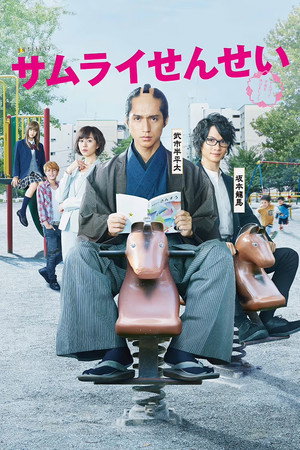
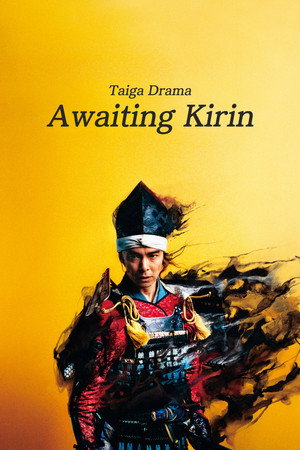
Kotaro Mochizuki (Haruma Miura) is a timid, introspective teenager who attends a private high school. One day he discovers a mysterious old book and from that day on, whenever he finds himself in a difficult situation, he turns into a samurai warrior.
A Happy alien, Takopi, lands on Earth with one mission: to spread happiness! When he meets Shizuka, a lonely fourth grader, he vows to bring back her smile using his magical Happy Gadgets. But as he uncovers the pain in her life, Takopi learns that true happiness may require more than gadgets.
Sakaki Makio, also known as "Tornado" is a tough 27-year-old high school drop-out. By academic standards, he's pretty dumb. His father decides to force Makio to return to high school to receive his diploma and he asks an old friend who happens to be the principal of a nearby school to admit Makio. If Makio doesn't graduate, the position of boss will be given to his younger brother, Mikio. Furthermore, he must pose as a 17-year-old during school hours and in the presence of any classmates or teachers outside of school. If his cover is blown, it would be the end of his high school career as well as his hopes to become boss. Things start out rough and tough as Makio's violent temper is tested. As the lessons and days go by he learns there is much more to school than just tests and studying.
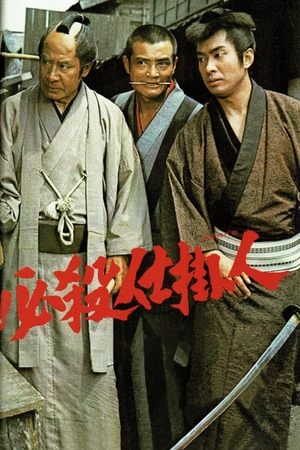
Kōchiyama Sōshun serves as a cha-bōzu (He is kind of tea man) in the administrative headquarters of the Tokugawa shogunate but he works behind the scene to protect powerless people from evil power of Tokugawa shogunate. Kataoka Naojirō and Ushimatsu work for Kōchiyama. Kaneko Ichinojō is a ronin whose interests often align with Kōchiyama
The two part miniseries chronicles the lives and loves of the four March sisters – Jo, Meg, Amy and Beth – growing up during the American Civil War. While their father leaves for battle, the sisters must rely on each other for strength in the face of tragedies both large and small.
Shinsengumi! is a Taiga drama television series produced by Japanese broadcaster NHK. It was a popular drama about the Shinsengumi, a Japanese special police force from the Bakumatsu period.
Fūrin Kazan was the 46th NHK Taiga drama beginning on January 7, 2007. It was aired throughout 2007. The four characters from left to right are wind, woods, fire, and mountain. The title is a reference to the war banner used by Takeda Shingen, which in turn was taken from Sun Tzu's The Art of War. It means "Swift as the Wind, Silent as a Forest, Fierce as Fire and Immovable as a Mountain."
Tenchijin is the 48th NHK Taiga drama. It airs on NHK from January 4, 2009 every Sunday from 20:00 to 20:44 JST to November 22, 2009 spanning 47 episodes. The story centers on the life of the 16th century samurai Naoe Kanetsugu. Production began on April 27, 2007. The story is based on the novel Tenchijin by Masashi Hisaka and was adapted for screen by scriptwriter Eriko Komatsu. The series' music composer was Michiru Oshima. The protagonist of the drama, Naoe Kanetsugu, was taught by Uesugi Kenshin in his youth that to conquer the world is a trifling matter, but what matters is to live one's life with righteousness. After Uesugi's death, Naoe supports Uesugi Kagekatsu, who holds the destiny of Echigo province.
Ryōmaden is the 49th NHK Taiga drama. It was shown on NHK from January 3 to November 28, 2010 spanning 48 episodes. The story centers on the life of 19th-century Japanese historical figures Iwasaki Yatarō and Sakamoto Ryōma. It has been announced that the series will be aired in several other countries, for example Hong Kong, South Korea, Taiwan and Thailand.
Osome is an ex-actress who lost her parents in a fire when she was 6-years old. She then is separated from her older brother, who goes missing. While she tries to investigate the fire that killed her parents, an officer, Yoshikawa reveals that her father used to be a shogunate spy. Osome decides to become a spy herself under Yoshikawa, to find the man who killed her parents and to seek out her lost brother.
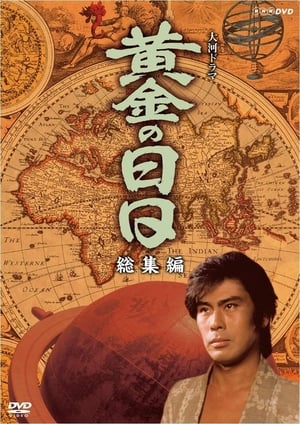
Luzon Sukezaemon is a merchant who imports vases from the Philippines. The vases are highly valued as tea utensils and he makes a huge profit. This was the first taiga drama to concentrate on the lives of commoners and the reviled merchant class of the Tokugawa period. It documents the rise and fall of the merchant city of Sakai, as seen by its most famous resident, the semilegendary Luzon.
Four young people have been arrested for crimes they did not commit. When one of them learns that his daughter is in a critical condition because of an incurable heart ailment, he decides to break out of the jail. He is joined by three other prisoners who also decide to break out of jail. Although their motives and backgrounds are different, all of them are innocent and there are reasons why they cannot wait till their release. They have to get out of jail as soon as they can. So they band together and begin to plan their escape in order to accomplish their goals. Bound for Tokyo, they have to overcome frequent challenges for the sake of their families and loved ones.
Heiji is an undercover policeman in the city of Edo. He possesses a superior skill of throwing coins. When a criminal is caught, Heiji throws coins at the offender and reveals his true identity. Like “Abarenbo Shogun,” “Mito Komon” and “Toyama no Kinsan,” “Zenigata Heiji” is about an official working undercover to catch criminals. The hero was created by novelist Kodō Nomura in 1931.
Edawakare is the driver of Sentaxi, a marvellous vehicle which is able to take a passenger back to his or her “life’s turning point”. His cool appearance is at odds with his talkative, meddlesome, sweet-toothed character. He gives advice to passengers who are flustered after failing in their life’s choice.