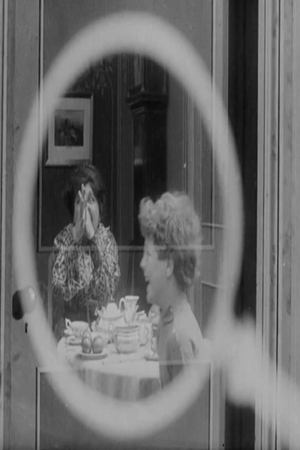
A boy uses a professor's liquid to make objects transparent.
A day in the city of Berlin, which experienced an industrial boom in the 1920s, and still provides an insight into the living and working conditions at that time. Germany had just recovered a little from the worst consequences of the First World War, the great economic crisis was still a few years away and Hitler was not yet an issue at the time.
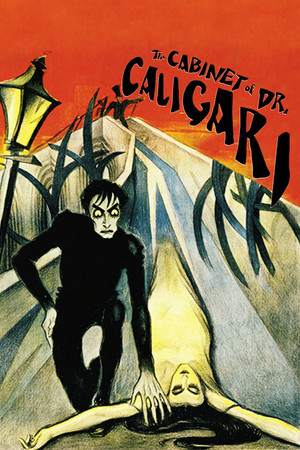
Francis, a young man, recalls in his memory the horrible experiences he and his fiancée Jane recently went through. Francis and his friend Alan visit The Cabinet of Dr. Caligari, an exhibit where the mysterious doctor shows the somnambulist Cesare, and awakens him for some moments from his death-like sleep.
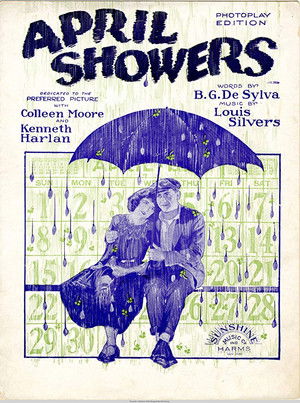
Danny O'Rourke is the son of a police officer who was killed in the line of duty. Eager to join the police force, Danny fails his exams. The failure causes him to neglect his sweetheart Maggie, whose father is a police lieutenant. His attentions turn instead towards society girl Miriam Welton. When Danny’s sister, Shannon, is arrested for shoplifting, Danny turns to boxing to save her. He works his way towards the championship but discovers the final bought has been rigged. Danny fights anyhow and he is beaten, but it is discovered that a mistake had been made on his exams and he actually was eligible to join the police force after all. Considered a lost film.
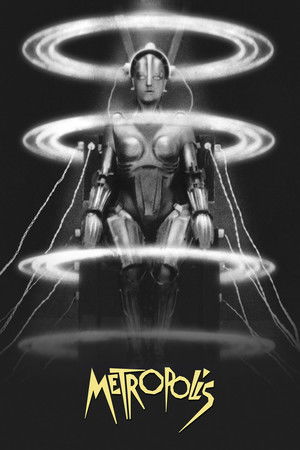
In a futuristic city sharply divided between the rich and the poor, the son of the city's mastermind meets a prophet who predicts the coming of a savior to mediate their differences.
Two old tars, retired from service, live alone in a cottage by the sea. They sail along on an even keel, until a buxom and comely widow projects herself on the scene when one old tar breaks one of their unwritten laws and falls in love with her. The other old fellow objects strenuously.
The second part: Brakhage’s layering of images spends less time with images of war, and begins filtering in scenes of Vienna and his home in Colorado. He sets up a comparison between “Kubelka’s Vienna” and his own.
Madrid, Spain. A mutilated man, a war veteran, walks, leaning on a crutch, through the stadium of the Ciudad Universitaria, a place that still preserves in walls and buildings the terrifying traces of one of the bloodiest battles of the Spanish Civil War.
Los 5 Faust de F. W. Murnau
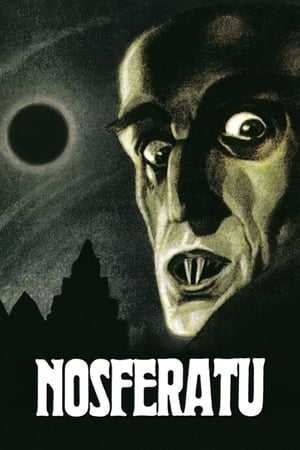
The mysterious Count Orlok summons a happily married real estate agent to his castle, located up in the Transylvanian mountains, to finalise a terrifying deal.
Two men who have been friends for quite some time and who live in different cities maintain a correspondence with Super 8 film reels that they occasionally send to each other. One of these film reels shows a woman who reminds the addressee of a former girlfriend. Immediately and without paying attention to his obligations to the company, he drives the company car to the city of his childhood friend, 780 km away. There he finds out that she has been the secret lover of his Super 8 friend for years. After about three or four weeks, which they spend on the coast of another country without any significant difficulties, the lover of the childhood friend rows his boat alone across the Atlantic after an obviously frame-up rescue operation.
Sitcom for 1920s cinemas about the Winter family.
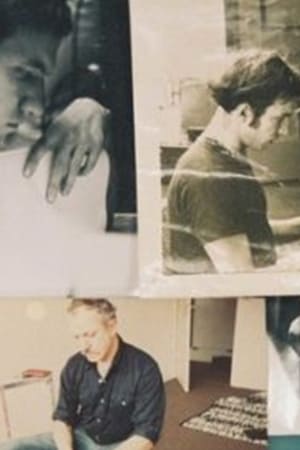
Electro-Pythagorus is an intimate and subjective portrait of the late Martin Bartlett, the Canadian electronic music pioneer who studied with Pauline Oliveros, David Tudor, John Cage, and Pandit Pran Nath. His contribution as an interdisciplinary composer, educator, and founding member of Western Front, though undoubtedly extensive, is in danger of being erased from cultural memory since his death from AIDS in 1993. Navigating an array of archival materials including letters, correspondences, notebooks, personal photos, and a huge body of unreleased music and field recordings held at the archives of Simon Fraser University, Electro-Pythagoras is a journey through the evolution of Bartlett’s musical time and space, softly guided by Luke Fowler’s insightful camera and montage—creating an experimental portrait that defies one-dimensionality.
Mary and Eva are best friends, although they couldn't be more different. Armand, Mary's fiancee, falls in love with the seductive Eva, who is busy becoming a revue star. When Eva fails and loses her money, Armand tries to help her out.
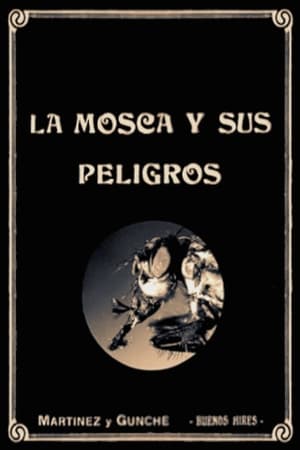
The Dangers of the Fly is an educational film made by Ernesto Gunche and Eduardo Martínez de la Pera, also responsible for Gaucho Nobility (1915), the biggest blockbuster of Argentinean silent cinema. De la Pera was a talented photographer, always willing to try new gadgets and techniques. This film experiments with microphotography in the style of Jean Comandon's films for Pathé and it is part of a series which included a film about mosquitoes and paludism and another one about cancer, which are considered lost. Flies were a popular subject of silent films and there are more than a dozen titles featuring them in the teens and early twenties.
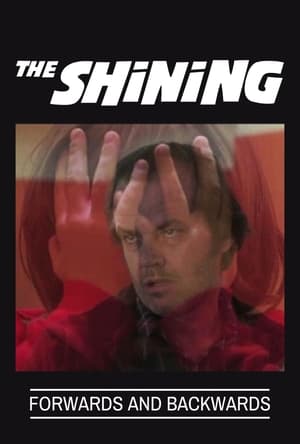
An experimental film comprised of Stanley Kubrick's THE SHINING played forwards and backwards at the same time on the same screen, creating bizarre juxtapositions and startling synchronicities.
A man fakes an engagement to a typist to please his rich aunt.
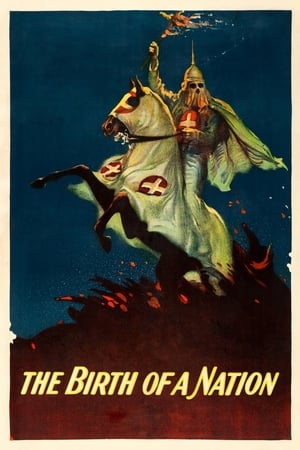
Two families, abolitionist Northerners the Stonemans and Southern landowners the Camerons, intertwine. When Confederate colonel Ben Cameron is captured in battle, nurse Elsie Stoneman petitions for his pardon. In Reconstruction-era South Carolina, Cameron founds the Ku Klux Klan, battling Elsie's congressman father and his African-American protégé, Silas Lynch.
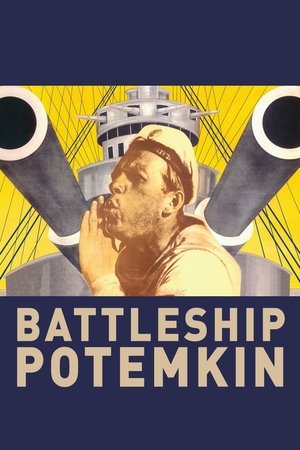
In the midst of the Russian Revolution of 1905, the crew of the battleship Potemkin revolt against the brutal, tyrannical regime of the vessel's officers. The resulting street demonstration in Odessa brings on a police massacre.
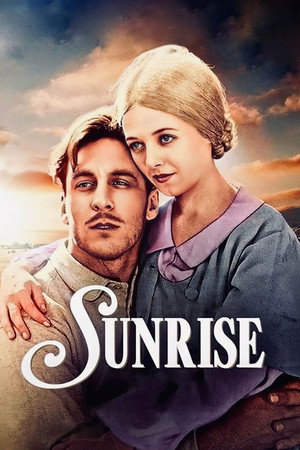
A married farmer falls under the spell of a slatternly woman from the city, who tries to convince him to drown his wife.