Stegophilia
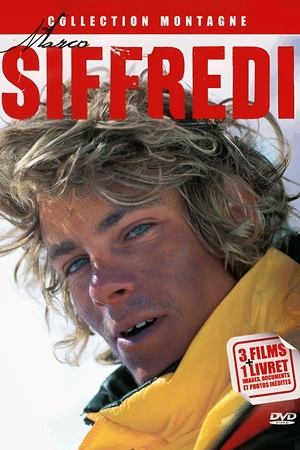
Avid for steep slopes, Marco Siffredi (1979-2002) obeys only one rule: not to fall. This gifted kid with hair sometimes blond peroxidized, green or blue clashed in his valley: Chamonix, mecca of mountaineering. His thing was to go up and down on a snowboard. . 90 minutes September 8, 2002, altitude 8848 meters, rare oxygen, his head already brushing the sky and his snowboard running, Marco Siffredi, 23, rushes from the summit of Everest in the Horbein corridor and its slopes at 50 degrees . A year earlier, he had already made the first descent of the mountain on a snowboard. But there remains another corridor… more direct. It's not a challenge, just a reason to be... However, that day, at the top of the roof of the world, his trace is lost...
Documentary on climbing in the famous Verdon gorges, a mecca for world climbing. From Bernard Vaucher to Catherine Destivelle, from Bernard Gorgeon to Lionel Catsoyannis via Enzo Oddo and Fabien Ristori, relive the evolution of climbing in Verdon through testimonies and anecdotes from climbers from different generations. History, anecdotes and emotions from the early 60s to the present day, with an eye towards the future. Can we define ourselves as a climber without having visited the Verdon?
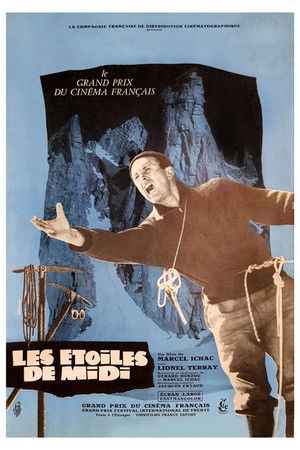
Les Etoiles de Midi is an engaging docudrama about some of the more spectacular exploits of French mountain climbers over the last several decades. In one re-enacted story, there is a wartime escape through the mountains, and in another, a daring rescue of a pair of climbers who had been missing. The actors themselves are adept at the sport of climbing, and they give the scenes an immediacy and real daring that brings the stories alive. A combination of their acrobatics and skill and the outstanding episodes in the history of French climbing creates a winning 78 minutes.
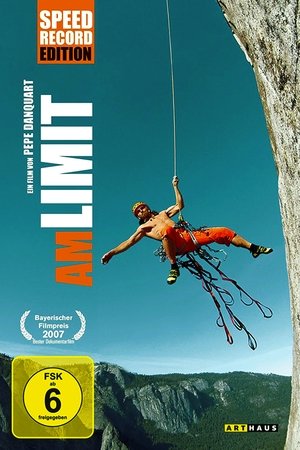
At the Limit is a documentary about extreme climbing. In this sports documentary, Pepe Danquart shows brothers Thomas and Alexander Huber climbing in Patagonia and on the granite rock "El Capitan" in Yosemite Valley (USA). A key part of the film is their attempt at a speed ascent of the 1,000-meter-high route "The Nose," in which the two athletes aim to break the then speed record of 2:48:30 hours, set by Hans Florine and Yuji Hirayama in September 2002.
27-year-old German alpinist Jost Kobusch wants to climb Everest, alone, without oxygen and in Winter, when the roof of the world is deserted.
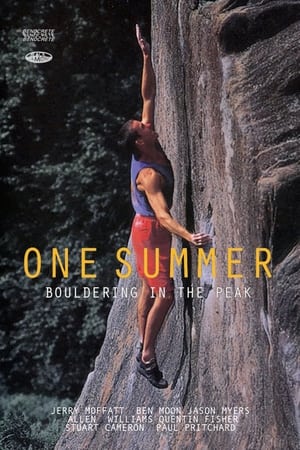
Follow Ben Moon as he ticks some of the Peak's most classic boulder problems, including Ben's Extension (f8A), Pinch 2 (f8A+), and Pump Up The Stamina (f8B+). Filmed and directed by Ben Pritchard with appearances from Jerry Moffat, One Summer has become a fly on the wall account of hard bouldering in the early 1990s.
Partition Libre - Sur Les Traces De Patrick Berhault
Fachiri Echi Verticali - Una Storia su Enzo Cozzolino
In Tamazight culture, "Twïza" symbolizes a gathering for sharing and mutual support. This is precisely what Thibault Dion's film explores – January 2019 – as five French climbers land at Constantine airport. While they initially thought they would simply be opening climbing routes in eastern Algeria, this group of climbers from Grenoble discovers much more. Their initial apprehension about exploring this isolated region, coupled with the warm welcome, good humor, and rich culture, transforms their journey into an unexpected human adventure. Fabulous landscapes, thrilling experiences, unforgettable moments, smiles – beyond borders, in the land of friendship and hospitality... Algeria.
After reading the book "Guide to Hoggar Climbing," guide Pierre Agresti and his wife Isabelle Agresti set off into the Hoggar massif in the Algerian Sahara and tackled the west face of Garet El Djenoun. After a first attempt in 1967, they successfully reached the summit in 1970 and, with an old camera, made a film that remained unused for 25 years. In 1996, they decided to bring the past back to life through the ascent and encounters with the Tuaregs in the rock salt mines of Amadror. The film was shown in competition at the Trento Film Festival in 1997.
In October 1984, Pierre Béghin, an engineer from Grenoble, and Jean-Noël Roche, a high-mountain guide, completed the Himalayan ascent of Dhaulagiri (8,172 m). The expedition's context: seven people crossed Nepal to Muri, collected accounts from trekkers—including that of the author Robert Rieffel—and attended Sherpa prayers at base camp. Then, the two of them embarked on a rocky and snowy route without supplemental oxygen. At over 5,000 meters, on the mountain of winds, Jean-Noël Roche made a paragliding flight. The climbers brought back footage with their Super 8 camera from 6,500 meters, but only photographs have been able to confirm their presence on the summit ridge of the seventh highest peak in the world.
Less than two years after his serious road accident, Eric Escoffier brought together the "Turbo" team (Frédéric Ancey, Michel Fauquet, Christine Janin and Stéphane Schaffter) with whom he will attempt to climb Everest without oxygen and without prior acclimatization in the Himalayas, the project being to complete the Paris-Everest-Paris loop in two weeks. It is also a medical experiment: the athletes spend a week at Mont Blanc, at the Vallot observatory between 4000 and 4800m, then a week in a hypobaric chamber in Grenoble. Doctors (Dr. Richalet, Herry and Bittel) perform tests throughout this training, which will learn about how the body acclimatizes to altitude and allow applications in the management of mountain-related illnesses . On September 2, 1989, they arrived at Everest base camp in China. They attempted the ascent via the North Col but could not carry out their project, prevented by bad weather.
Filmed chronicle by mountain filmmaker Mario Fantin, of the 1964-1965 expedition of the Italian mountaineer Guido Monzino to the summits of Hoggar in the Algerian Sahara with the ascents of Garet el Djenoun, Tizouyag Nord, Saouinan and Iharen. The mountain ranges of the Hoggar desert turn out to be more complex and interesting than most mountaineers suspected at the time.
The first ascent of the Matterhorn was made on July 14, 1865 by Edward Whymper, Francis Douglas, Charles Hudson, Douglas Hadow, Michel Croz and two guides from Zermatt, Peter Taugwalder father and son. Douglas, Hudson, Hadow and Croz are killed on the descent after Hadow slips and drags the other three men down the north face. Whymper and the two Taugwalders, who survive, are later accused of having cut the rope that connected them to the rest of the group so as not to be dragged into the fall, but the ensuing investigation finds no evidence of their guilt and they are acquitted. The Matterhorn is the last great peak in the Alps to be conquered and its ascent marks the end of the golden age of mountaineering. One hundred and fifty years later, a team undertakes the same expedition in order to unravel the mystery.
Four experienced mountaineers climb the three floors of the Eiffel Tower through the pillars of the building. A police officer, overwhelmed by the events, does not succeed in arresting the intrepid who reach the summit with agility under the stunned eyes of tourists. They then abseil and happily throw themselves into the Seine to celebrate the feat.
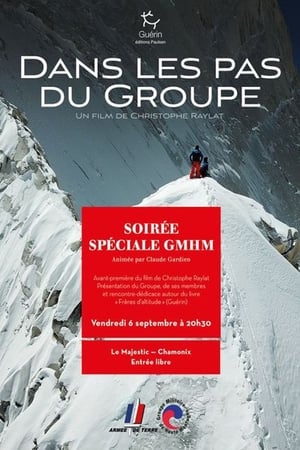
Dans les pas du Groupe
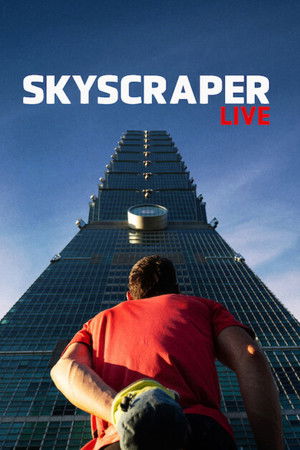
No ropes. No fear. Free solo legend Alex Honnold risks it all in a high-stakes, live ascent of one of the world's tallest skyscrapers in Taipei, Taiwan.
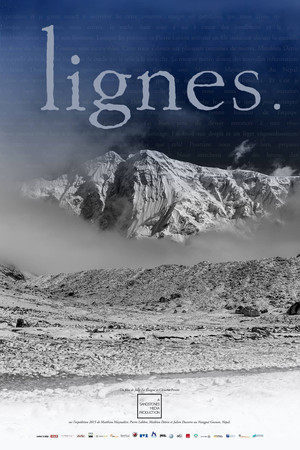
Lignes chronicles the sublime interplay between alpine literature and an expedition seeking the true meaning of mountaineering. Four high-mountain guides—Matthieu Maynadier, Pierre Labbre, Matthieu Détrie, and Julien Dusserre—embark on a project: to summit Nangpai-Gosum, an unclimbed 7,000-meter peak in Nepal, using the "alpine style" adapted to the Himalayas—the toughest and purest approach of all. Through this expedition, Lignes attempts to answer the question: "Why do we climb mountains?" Why, despite the harsh conditions and exhaustion, do these four Alpine guides pursue a perilous dream in a realm that belongs to no one? Lignes finds some answers in the past, drawing on 150 years of alpine literature. Serving as both narrator and seasoned guide, Raymond Renaud takes us on a tour of his books and speaks of the "conquerors of the useless"—from the turn of the century to the present day.
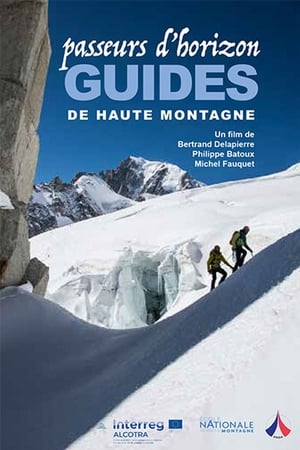
Passeurs d'horizons