Game$how Marathon is an American television program which aired on CBS from May 31, 2006 to June 29, 2006. It is based on the UK series Ant & Dec's Gameshow Marathon which aired on ITV in 2005. The show features contestants competing in some of television's most historically popular game shows, in a single-elimination format until an ultimate winner is found. Both the UK and US versions featured celebrity contestants. The US version was produced by FremantleMedia North America and Granada America and was hosted by Ricki Lake and announced by Rich Fields. In the US, the series only aired for a single season, while in the UK a second season aired in 2007, this time entitled Gameshow Marathon and hosted by Vernon Kay. This program was recorded at Stage 46, CBS Television City in Los Angeles, CA, USA.
Card Sharks is an American television game show created by Chester Feldman for Mark Goodson-Bill Todman Productions. Two contestants compete for control of a row of oversized playing cards by answering questions posed by the host and then guessing if the next card is higher or lower in value than the previous one. The concept has been made into a series four separate times since its debut in 1978, and also appeared as part of CBS's Gameshow Marathon. The primary announcer for the first three series was Gene Wood.
Sporting quiz show, with regular captains leading teams of celebrities.
A game show following contestants as they travel through a massive maze, answering multiple-choice questions along the way. The maze consists of rooms filled with money; and the further in they go, the bigger the prize. But in order to collect the price, however, contestants must remember what they learned along the way as they find their way out.
Famous faces move into Britain's best-known apartment block, in aid of Stand Up To Cancer, as they compete to be crowned The Circle's most popular celebrity player
Teams compete to build ingenious machines out of everyday objects in TV's most leftfield engineering show.
Tipping Point is a British television game show presented by Ben Shephard and is broadcast on ITV. The show began airing on 2 July 2012 and sees contestants answering general knowledge questions to win counters which they use on a large coin pusher arcade-style machine which releases the counters worth £50 each. The third series began airing on 20 May 2013. Twelve celebrity editions of the show, known as Tipping Point: Lucky Stars, aired between June and August 2013. These feature three celebrities, playing to win up to £20,000 for their chosen charities.
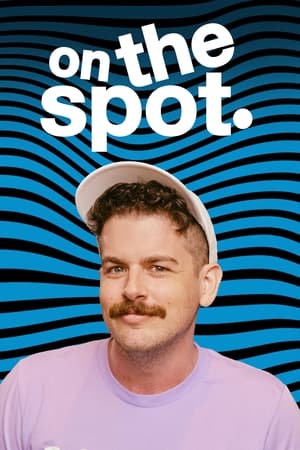
Unsuspecting members of the public secretly will be recruited to pull a prank on their unwitting companions with absolutely no time to prepare. If they agree to participate, they must obey all instructions given through an earpiece from a secret control room nearby. With the opportunity to prank their way to cash and prizes, these everyday people will be shown no mercy as they are tasked with pulling off some of the most ridiculous behavior ever caught on hidden camera.
Burgo's Catch Phrase was an Australian game show that ran between 1997 and 2003, produced by Southern Star Group for the Nine Network. The show was based on the British and American versions of the game, and was originally knowned simply as Catch Phrase until 1999 where the show was renamed as Burgo's Catch Phrase after the host in its honour. The show was cancelled three times in 1998, 2001 and 2003 after failing ratings despite a revamp of the set in 2002. Contestants would have to identify the familiar phrase represented by a piece of animation, with the show's mascot — a character called "Jimmy" — often appearing. In the original run, two contestants played in each game, but in the 2002 revamp, this was increased to three.
Comedian Jason Manford hosts an exciting brand new fast-paced quiz show, where three couples face a series of 50/50 questions which hurtle The Answer Run down towards them.
Concentration is an American television game show based on the children's memory game of the same name. Matching cards represented prizes that contestants could win. As matching pairs of cards were gradually removed from the board, it would slowly reveal elements of a rebus puzzle that contestants had to solve to win a match. The show was broadcast on and off from 1958 to 1991, presented by various hosts, and has been made in several different versions. The original network daytime series, Concentration, appeared on NBC for 14 years, 7 months, and 3,770 telecasts, the longest run of any game show on that network. This series was hosted by Hugh Downs and later by Bob Clayton, but for a six-month period in 1969, Ed McMahon hosted the series. The series began at 11:30 AM Eastern, then moved to 11:00 and finally to 10:30. Nearly all episodes of the NBC daytime version were produced at 30 Rockefeller Plaza, New York City. A weekly nighttime version appeared in two separate broadcast runs: the first aired from October 30 to November 20, 1958 with Jack Barry as host, while the second ran from April 24 to September 18, 1961 with Downs as host.
A spectacular battle of the brains quiz show in which 100 contestants stand on 100 squares on a massive game show floor, competing for a whopping $250,000 prize.
膠戰
Bad Influence! is an early to mid-1990s British factual television programme broadcast on CITV between 1992 and 1996, and was produced in Leeds by Yorkshire Television. It looked at video games and computer technology, and was described as a "kid’s Tomorrow's World". It was shown on Thursday afternoons and had a run of four series of between 13 and 15 shows, each of 20 minutes duration. For three of the four series, it had the highest ratings of any CITV programme at the time. Its working title was Deep Techies, a colloquial term derived from 'techies' basically meaning technology-obsessed individuals.
Wheel of Fortune is a British television game show created by Merv Griffin. Contestants compete to solve word puzzles, similar to those used in Hangman, to win cash and prizes. The title refers to the show's giant carnival wheel that contestants spin throughout the course of the game to determine their cash and/or prizes. The programme aired between 19 July 1988 and 21 December 2001 and was produced by Scottish Television for the ITV network and mostly follows the same general format from the original version of the programme from the United States.
Could you pass off a complete stranger as your new best friend for one short weekend to win £10k, even if your 'friend' was actually a brilliant actor hell-bent on humiliating you?
Catchphrase is a British game show based on the short-lived U.S. game show of the same name. It originally aired on ITV in the United Kingdom between 12 January 1986 and 19 December 2002. It was presented by Northern Irish comedian Roy Walker from 1986–1999; followed by Nick Weir from 2000–2002, and Mark Curry in 2002. In the original series, two contestants, one male and one female would have to identify the familiar phrase represented by a piece of animation accompanied by background music. The show's mascot, a golden robot called "Mr. Chips", appears in many of the animations. In the revived version of the show, the same format remains, but there are three contestants. In August 2012, it was announced that Stephen Mulhern would host a revived version of the show beginning on 7 April 2013. On 21 August 2013, it was confirmed that Catchphrase has been re-commissioned for a second series, following the success of the first.
Shooting Stars is a British television comedy panel game broadcast on BBC Two as a pilot in 1993, then as 3 full series from 1995 to 1997, then on BBC Choice from January to December 2002 with 2 series before returning to BBC Two for another 3 series from 2008 until its cancellation in 2011. Created and hosted by double-act Vic Reeves and Bob Mortimer, it uses the panel show format but with the comedians' often slapstick, surreal and anarchic humour does not rely on rules in order to function, with the pair apparently ignoring existing rules or inventing new ones as and when the mood takes them.
Eight pairs of Brick heads are pitted against each other in a quest to impress with their creativity, design and flair, driven by their unparalleled passion for the possibilities that will start with a single LEGO brick.
Passa ou Repassa