This pioneering documentary film depicts the lives of the indigenous Inuit people of Canada's northern Quebec region. Although the production contains some fictional elements, it vividly shows how its resourceful subjects survive in such a harsh climate, revealing how they construct their igloo homes and find food by hunting and fishing. The film also captures the beautiful, if unforgiving, frozen landscape of the Great White North, far removed from conventional civilization.
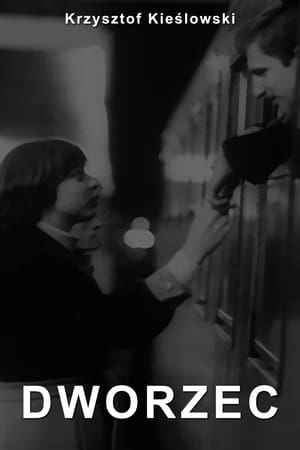
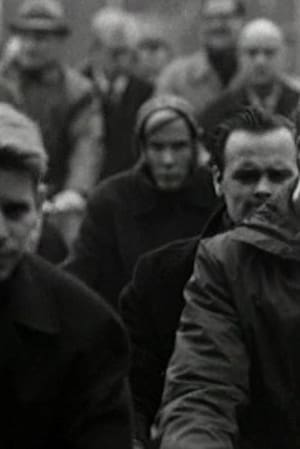
Warsaw's Central Railway Station. 'Someone has fallen asleep, someone's waiting for somebody else. Maybe they'll come, maybe they won't. The film is about people looking for something.
Los 5 Faust de F. W. Murnau
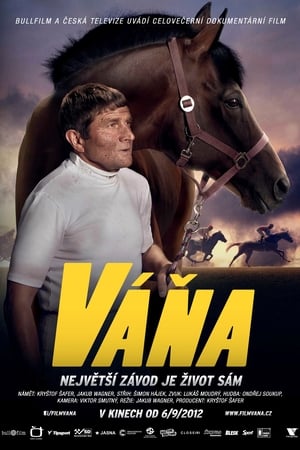
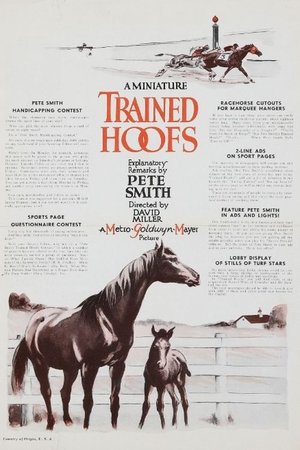
A documentary portrait of a legendary Czech jockey, Josef Vána, reveals his inner world of thoughts. His unique way of life can't be described in words, and this is a first, really original view into his daily life around horses, terrifying accidents, and also stories about his family.
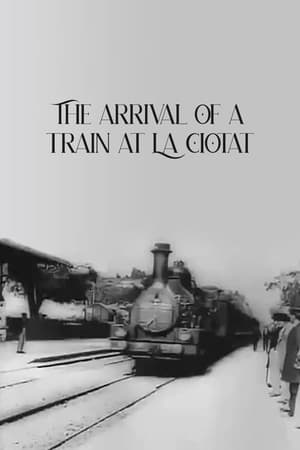
A group of people are standing along the platform of a railway station in La Ciotat, waiting for a train. One is seen coming, at some distance, and eventually stops at the platform. Doors of the railway-cars open and attendants help passengers off and on. Popular legend has it that, when this film was shown, the first-night audience fled the café in terror, fearing being run over by the "approaching" train. This legend has since been identified as promotional embellishment, though there is evidence to suggest that people were astounded at the capabilities of the Lumières' cinématographe.
A day in the city of Berlin, which experienced an industrial boom in the 1920s, and still provides an insight into the living and working conditions at that time. Germany had just recovered a little from the worst consequences of the First World War, the great economic crisis was still a few years away and Hitler was not yet an issue at the time.
The Dangers of the Fly is an educational film made by Ernesto Gunche and Eduardo Martínez de la Pera, also responsible for Gaucho Nobility (1915), the biggest blockbuster of Argentinean silent cinema. De la Pera was a talented photographer, always willing to try new gadgets and techniques. This film experiments with microphotography in the style of Jean Comandon's films for Pathé and it is part of a series which included a film about mosquitoes and paludism and another one about cancer, which are considered lost. Flies were a popular subject of silent films and there are more than a dozen titles featuring them in the teens and early twenties.
This documentary follows various migratory bird species on their long journeys from their summer homes to the equator and back, covering thousands of miles and navigating by the stars. These arduous treks are crucial for survival, seeking hospitable climates and food sources. Birds face numerous challenges, including crossing oceans and evading predators, illness, and injury. Although migrations are undertaken as a community, birds disperse into family units once they reach their destinations, and every continent is affected by these migrations, hosting migratory bird species at least part of the year.
A film about everything changing while remaining the same. Or rather – everything remaining the same while changing. We observed this (and wanted to share) while standing (standing regularly and for a long time) on a road rather close to the Eastern border of Latvia, because we followed the suggestion of the locals who asked to shoot “that horrible road”.
A method soldier boys have for amusing themselves in their leisure moments. New comrades are frequently initiated by the old-fashioned sport of tossing in a blanket. The newly arrived recruit, who is the victim of their sport, enjoys himself, perhaps, less than the other participants.
From polar bears in the arctic tundra to black bears in the Northern Rockies, you'll see some of the most spectacular footage ever shot of these enterprising omnivores. Catch salmon with a group of hungry grizzlies on the McNeil River in Alaska. Crawl inside a den with a mother black bear and her cubs. Learn about the challenges facing each of these species as their habitat diminishes.
A short, early documentary work showing insects exhibiting extreme strength and agility.
From the unique vantage point of 200 miles above Earth's surface, we see how natural forces - volcanoes, earthquakes and hurricanes - affect our world, and how a powerful new force - humankind - has begun to alter the face of the planet. From Amazon rain forests to Serengeti grasslands, Blue Planet inspires a new appreciation of life on Earth, our only home.
Fighter Pilot: Operation Red Flag follows American F-15 Eagle pilot John Stratton as he trains with some of the world’s best pilots. The movie depicts Stratton’s progression through the challenging and dangerous exercises of Operation Red Flag, the international training program for air forces of allied countries.
The earliest surviving motion-picture film, and believed to be one of the very first moving images ever created, was shot by Louis Aimé Augustin Le Prince using the LPCCP Type-1 MkII single-lens camera. It was taken on paper-based photographic film in the garden of Oakwood Grange, the Whitley family house in Roundhay, Leeds, West Riding of Yorkshire (UK), on 14 October 1888. The film shows Adolphe Le Prince (Le Prince’s son), Mrs. Sarah Whitley (Le Prince’s mother-in-law), Joseph Whitley, and Miss Harriet Hartley walking around in circles, laughing to themselves, and staying within the area framed by the camera. Roundhay Garden Scene is often associated with a recording speed of around 12 frames per second and runs for about 2 to 3 seconds.
A film by Louis Aimé Augustin Le Prince, shot in late October 1888, showing pedestrians and carriages crossing Leeds Bridge.
The first woman to appear in front of an Edison motion picture camera and possibly the first woman to appear in a motion picture within the United States. In the film, Carmencita is recorded going through a routine she had been performing at Koster & Bial's in New York since February 1890.
Jonas Mekas documents Timothy Leary’s Millbrook estate in the wake of a police raid, juxtaposing serene images of the property with audio of officials justifying their actions. Blending diary footage with subversive reportage, the film exposes the gap between perception and authority, offering an oblique portrait of the counterculture and its suppression.
Short documentary on a central african tribe called 'The Chillouks'.
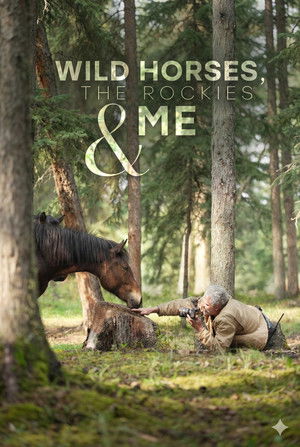
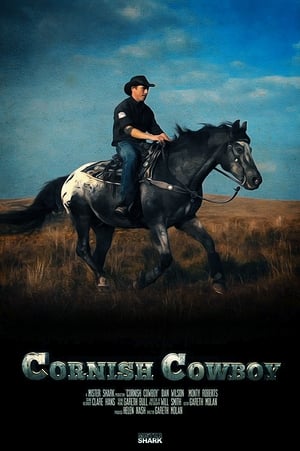
Fueled by stunning footage, this stirring documentary considers wild horses' role in the American psyche and their dwindling numbers in today's West. In an artful blend of exquisite nature documentary and character-driven narrative, the majestic wild horses of the American West are revealed in stereoscopic 3D as never before. The wonder in a girl’s eye pulls us into the drama that unfolds on hundreds of millions of acres of public land. The battle lines have long been carved into the landscape, and the players are deeply entrenched. Yet as the subtle choreography that has evolved over thousands of years begins, we are captivated. The intricate dance between a man and a wild horse presents lessons for us all, even the battle-hardened special interest groups fighting for the place of the AMERICAN MUSTANG.