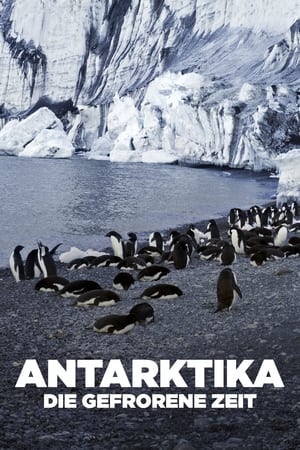
The few thousand kilometers that separate Patagonia from the South Pole are a fascinating and hypnotic journey for explorers. Some even speak of an addiction, 'the Antarctic bite'. March of the Penguins (2005) director Luc Jacquet has been experiencing it for 30 years. His new film is a visually-striking adventure, offering us images beyond words, an ultimate tribute to a vanishing continent.
The grizzly has roamed North America for nearly a million years. And now, in the last century and a half, he has come dangerously close to extinction. Frank and John Craighead have tracked this extraordinary creature.
Antarctica lives in our dreams as the most remote, the most forbidding continent on Planet Earth. It is a huge land covered with ice as thick as three miles, seemingly invulnerable, cold and dark for eight months of the year. Yet Antarctica is also a fragile place, home to an incredible variety of life along its edges, arguably the most stunning, breathtaking and still-pristine place on earth. The one constant is that it is constantly changing, every season, every day, every hour. I've been fortunate to travel to Antarctica many times; most recently with 3D cameras, a first for the continent. The result is our new film, Antarctica: On the Edge.
Newly into addiction recovery, an urgent threat emerges to spur filmmaker, Mark Titus back to the Alaskan wilderness - where the people of Bristol Bay and the world's last intact wild salmon runs face devastation if a massive copper mine is constructed.
A fourth-grader investigates the mysterious reason behind the sudden appearance of penguins in his village, which is somehow related to a power from a young woman working at a dental clinic.
Take a spectacular ride across, over, and through the magical realms of the most dramatic continent on earth: Africa. Our guide through this enchanted kingdom is the sorcerer itself – water. Water crafts Wild Africa, conjuring up life wherever it journeys… travelling above the plains on seasonal winds, cascading along raging rivers or sheltering coral cities.
The story of Steve, an Adélie penguin, on a quest to find a life partner and start a family. When Steve meets with Wuzzo the emperor penguin they become friends. But nothing comes easy in the icy Antarctic.
From the North Pole to remote islands, birds can live almost anywhere. How do these resilient animals thrive in such different environments? They have become hardy and versatile through their bodies, feathers, movements, and songs. In this global birding tour, we learn about these nomads of the sky.
Bertie heads to South Africa for his most audacious mission yet. The wild waters here are a hotspot for one of the ocean’s most famous and feared predators, the great white shark. Diving in the shallows without a cage, Bertie will attempt to film these huge sharks. By entering their domain, he discovers the challenges they face on our rapidly changing planet.
A 6-foot-long animatronic shark featuring on-board cameras, Robo Shark is designed to blend in with real sharks and capture never-before-seen wild shark behavior. Footage shown in this television special includes the deep-sea thresher shark in the Philippines; giant whale sharks feeding off the coast of Belize; and deadly hammerheads, great whites and bronze whaler sharks in South Africa.
Embark to Niagara Falls and witness its stunning beauty and a wide variety of wildlife—mammals, birds, and reptiles. Through the eyes of passionate scientists, uncover a complex world forged by stone and powered by water.
Five times, Earth has faced apocalyptic events that swept nearly all life from the face of the planet. What did these prehistoric creatures look like? What catastrophes caused their disappearance? And how did our distant ancestors survive and give rise to the world we know today?
After years of swimming every day in the freezing ocean at the tip of Africa, Craig Foster meets an unlikely teacher: a young octopus who displays remarkable curiosity. Visiting her den and tracking her movements for months on end he eventually wins the animal’s trust and they develop a never-before-seen bond between human and wild animal.
Jane Goodall has spent five years observing the chimps in Tanzania (formerly Tanganyika), Africa. One of her discoveries is that they use primitive tools. The film shows the life of the chimps. Retrospective note: This documentary features remarkable historical footage of Goodall, her original camp, and the Gombe chimpanzees. It shows the early years of Goodall establishing the site before it went on to become a world-renowned research center.
Rescued from poachers, an endangered baby pangolin embarks on a journey back to the wild with help from a devoted human guardian in this documentary.
David Attenborough takes us on a guided tour through the secret world of plants, to see things no unaided eye could witness. Each episode in this six-part series focuses on one of the critical stages through which every plant must pass if it is to survive:- travelling, growing, and flowering; struggling with one another; creating alliances with other organisms both plant and animal; and evolving complex ways of surviving in the earth's most ferociously hostile environments.
With narration from Paul McGann, this ground-breaking film sets out to solve one of nature's mysterious phenomena: the Bewick swan's dramatic decline. A pioneering group of scientists and conservationists sets out to discover why we have lost nearly half the Bewick population in the last twenty years. Every year, these majestic birds make one of the world's toughest migrations, across perilous land, sea and skies. Somewhere between the harsh Tundra landscape and the south of England lies the key to their disappearance. We join extreme sportswoman Sacha Dench and award-winning wildlife cameraman Benjamin Sadd, as they follow the swans over 7,000 km, on a journey that pushes both humans and swans to the limits of their endurance. Cutting-edge tracking techonology and innovative filming techniques give privileged insight into the birds' hidden world, providing stunning aerial views and the personal stories of swans, Charlotte, Daisy-Clarke and Leho.
Bee Wild is an inspirational, upbeat, and poetic documentary that explores the foundational role that bees play in sustaining humanity, the reasons for their sharp population decline and how we can regenerate bees worldwide so they are once again part of a thriving ecosystem. Because we are losing 1 billion pollinators annually, the film will focus on the urgent nature of both bees and other insects that pollinate our food and emphasize ways that viewers can get involved in restoring, regenerating and nurturing this largely unseen world.
The documentary visually presents the very diverse fauna and flora of Slovenia, focusing on mammals and birds, and shows some particularly interesting species of amphibians, fish, insects and plants. It takes place over a period of one year and takes the viewer through typical Slovenian landscapes. The plot crosses between the provinces and occasionally returns to the same area in order to show what is happening in the animal world in the second part of the year. A very rich ecosystem diversity, rarely seen recordings, and scientifically verified information weaved into the intelligible text are key attributes of this film.
A passionate conservation biologist brings together a river bushman fearful of losing his past and a young scientist uncertain of her future on an epic, four-month expedition across three countries, through unexplored and dangerous landscapes, in order to save the Okavango Delta, one of our planet's last pristine wildernesses.