A journey to the heartland of the Midwest for an in-depth look at an ongoing phenomenon: one of the most recent and popular stories has been an ongoing wave of sightings of a red-eyed, shapeless creature dubbed the Chicago Mothman.
Harold Frederick Shipman, known to acquaintances as Fred Shipman, was an English general practitioner and serial killer. He is considered to be one of the most prolific serial killers in modern history, with an estimated 250 victims. We delve into the psychology of Harold to try and understand what turned him into such a cruel murderer and how he managed to get away with it for so long.
Pythéas, l'astronome voyageur
Nikola Tesla is considered the father of our modern technological age and one of the most mysterious and controversial scientists in history.
Albert Fish, the horrific true story of elderly cannibal, sadomasochist, and serial killer, who lured children to their deaths in Depression-era New York City. Distorting biblical tales, Albert Fish takes the themes of pain, torture, atonement and suffering literally as he preys on victims to torture and sacrifice.
A family portrait in which the director profiles his grandmother, Odette Robert. Eustache includes in the film the conditions of its production — he is seated at the table with her, pours her some whiskey, speaks with the camera operator, manipulates the clapboard at the head and tail of the reels, and even takes a phone call. Robert, who was seventy-one, speaks rapidly and tells the story of her life, starting from her early childhood in villages in the Bordeaux region of France. A shorter version of the film ("Odette Robert") was edited in 1980 to be broadcast on television on TF1. The complete film only gained exposure in 2002, when it was salvaged by Boris Eustache, Thierry Lounas, João Bénard da Costa, Jean-Marie Straub, and Pedro Costa.
A Place of Our Own
In 1943, in a circus tent in Burbank, CA, a bunch of revolutionary thinkers first gathered together in secrecy to build America's first jet fighter. They were rule benders, chance takers, corner cutters-people who believed that nothing was impossible. I
The life and work of stage designer ADOLPHE APPIA, originator of the most profound agitations in contemporary theatre. Through the dynamic alternation of animated drawings and choreographies specially conceived for the film, we discover the steps of his artistic evolution.
Arguably second only to Muddy Waters among the Mississippi Delta singers who traveled north and pioneered urban electric blues (their supposed rivalry is the subject of one of this DVD's bonus features), Wolf was a big, imposing man with an inimitable, booming voice and a lasting influence on generations of rock & rollers--all of which comes across in the 90-minute film.
In 1968, the fury and violence of the Democratic National Convention in Chicago propelled us toward a tipping point in politics. Martin Luther King Jr. and Robert F. Kennedy were assassinated, America suffered its bloodiest year in Vietnam and drugs seduced us. Yet idealism--and hope--flourished. Explore the significance of that turbulent year and the way it continues to affect the American landscape. Tom Brokaw offers his perspective on the era and shares the rich personal odysseys of some of the people who lived through that chaotic time, along with the stories of younger people now experiencing its aftershocks. Includes archival footage and interviews with former Atlanta Mayor Andrew Young, who was talking to King when he was assassinated and rushed to his side to try to staunch the wound; Olympic gold medalist Rafer Johnson, who wrestled RFKs' assassin to the ground; and Arlo Guthrie, best known for his song "Alice's Restaurant.
An in-depth portrait of British composer, pianist and singer Elton John, pop star and myth of modern culture.
Handbook of Movie Theaters' History is a documentary about the history, the development in the present days and the future of movie theaters in the city of Turin, Italy. It mixes the documentary language with comedy and fiction, and is enriched by interviews to some of the most important voices of Turin cinematography. The film follows the evolution of movie theaters by enlightening its main milestones: the pre-cinema experiences in the late 19th Century, the colossals and the movie cathedrals of the silent era, the arthouse theaters, the National Museum of Cinema, the Torino Film Festival, the movie theaters system today and the main hypothesis about its future. The mission of Handbook of Movie Theaters' History is to explore and give back to the audience a deep reflection about the identity and the value of movie theater, in its social and anthropological role and as a mass media, and to analyze the experience of the viewer.
As Australian cinema broke through to international audiences in the 1970s through respected art house films like Peter Weir's "Picnic At Hanging Rock," a new underground of low-budget exploitation filmmakers were turning out considerably less highbrow fare. Documentary filmmaker Mark Hartley explores this unbridled era of sex and violence, complete with clips from some of the scene's most outrageous flicks and interviews with the renegade filmmakers themselves.
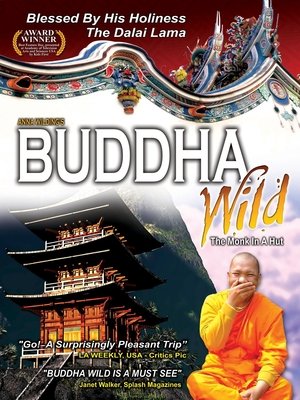
Buddhist monks open up about the joys and challenges of living out the precepts of the Buddha as a full-time vocation. Controversies swirling within modern monastic Buddhism are examined, from celibacy and the role of women to racism and concerns about the environment.
This short celebrates the 20th anniversary of MGM. Segments are shown from several early hits, then from a number of 1944 releases.
The film interweaves the personal accounts of polio survivors with the story of an ardent crusader who tirelessly fought on their behalf while scientists raced to eradicate this dreaded disease. Based in part on the Pulitzer Prize-winning book Polio: An American Story by David Oshinsky, Features interviews with historians, scientists, polio survivors, and the only surviving scientist from the core research team that developed the Salk vaccine, Julius Youngner.
From the Battle of Britain to the Dresden bombings, some of the most intense combat of World War II occurred in the airspaces over Europe. This multi-volume box set offers a comprehensive account of the aircraft that helped bring the Allies to victory, including the B-17 Flying Fortress, the B-24 Liberator, the P-51 Mustang, and many more.
The long-suppressed story of 12,000 Japanese Americans who dared to resist the U.S. government's program of mass incarceration during World War II. Branded as 'disloyals' and re-imprisoned at Tule Lake Segregation Center, they continued to protest in the face of militarized violence, and thousands renounced their U.S. citizenship. Giving voice to experiences that have been marginalized for over 70 years, this documentary challenges the nationalist, one-sided ideal of wartime 'loyalty.'
Seventy years on, brothers Colin and Ewan McGregor take viewers through the key moments of the Battle of Britain, when 'the few' of the RAF faced the might of the Nazi Luftwaffe. As they fly historic planes, meet the veterans, explore the tactics and technology, Colin and Ewan discover the importance of the Battle and the surviving legacy of the 1940's campaign for the modern RAF.