The captivating tales of the people and events behind one of humanity's greatest achievements in exploration: NASA's Voyager mission.
A group of maverick scientists on a remote Australian sheep farm are the globe's only hope for obtaining the epic images of man's first steps on the moon.
Travel alongside the astronauts as they deploy and repair the Hubble Space Telescope, soar above Venus and Mars, and find proof of new planets and the possibility of other life forming around distant stars.
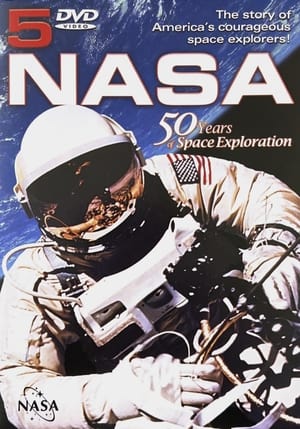
This film shows how far we have come since the cold-war days of the 50s and 60s. Back then the Russians were our "enemies". And to them the Americans were their "enemies" who couldn't be trusted. Somewhere in all this a young girl in Oklahoma named Shannon set her sights on becoming one of those space explorers, even though she was told "girls can't do that." But she did.
From the unique vantage point of 200 miles above Earth's surface, we see how natural forces - volcanoes, earthquakes and hurricanes - affect our world, and how a powerful new force - humankind - has begun to alter the face of the planet. From Amazon rain forests to Serengeti grasslands, Blue Planet inspires a new appreciation of life on Earth, our only home.
At 38, Thomas Pesquet is the youngest French astronaut to be selected for a 180 days mission in the ISS. Oleg Novitskiy, the Russian pilot and the American Peggy Whitson, the most experienced astronaut in the world, train alongside him.
Recently discovered footage reveals the secret history of NASA's first landing on the moon, and using this brand-new evidence, former astronauts and experts challenge everything known about the Apollo missions.
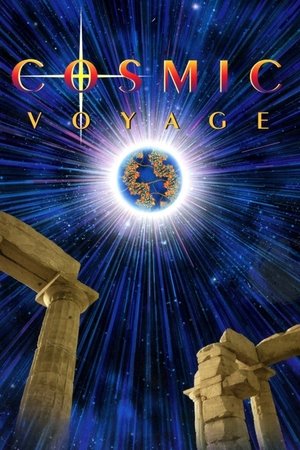
The Academy Award® nominee Cosmic Voyage combines live action with state-of-the-art computer-generated imagery to pinpoint where humans fit in our ever-expanding universe. Highlighting this journey is a "cosmic zoom" based on the powers of 10, extending from the Earth to the largest observable structures in the universe, and then back to the subnuclear realm.
Who were the men and women of Project Apollo? Where are they today? What do they think of the extraordinary effort they helped make possible? Coinciding with the 50th anniversary of the first moon landing in 2019, When We Were Apollo is an intimate and personal look at the Apollo Space Program through the lives and experiences of some of its most inspiring behind-the-scenes figures: engineers, technicians, builders and contractors who spent the better part of a decade working to get us to the moon and back.
Top Gear presenter James May presents this informative program that examines the historic moon missions. Traveling to America, May meets three of the men who walked on the surface of the moon, learning how it felt and how the now antiquated technology was used to achieve such an historic feat.
A testament to NASA's Apollo program of the 1960s and '70s. Composed of actual NASA footage of the missions and astronaut interviews, the documentary offers the viewpoint of the individuals who braved the remarkable journey to the moon and back.
The life of engineer and former NASA astronaut José M. Hernández, the first migrant farmworker to go to space.
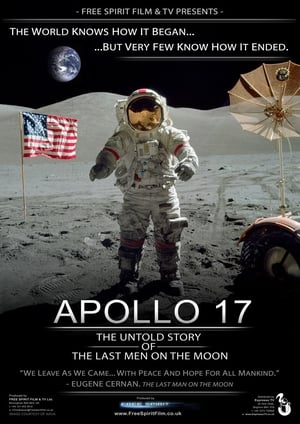
The 1960s was an extraordinary time for the United States. Unburdened by post-war reparations, Americans were preoccupied with other developments like NASA, the game-changing space programme that put Neil Armstrong on the moon. Yet it was astronauts like Eugene Cernan who paved the uneven, perilous path to lunar exploration. A test pilot who lived to court danger, he was recruited along with 14 other men in a secretive process that saw them become the closest of friends and adversaries. In this intensely competitive environment, Cernan was one of only three men who was sent twice to the moon, with his second trip also being NASA’s final lunar mission. As he looks back at what he loved and lost during the eight years in Houston, an incomparably eventful life emerges into view. Director Mark Craig crafts a quietly epic biography that combines the rare insight of the surviving former astronauts with archival footage and otherworldly moonscapes.
Apollo 11 : Retour vers la lune
Moonscape is a free and freely downloadable high-definition documentary about the first manned Moon landing. Funded and produced by space enthusiasts from all over the world, it shows the full, unedited Apollo 11 landing and moonwalk, using only the original TV and film footage and the original audio and photographs. All this material has been scanned, digitized and restored from the best available sources. The live TV broadcast, the 16mm color film footage shot on the Moon and in Mission Control, and the Hasselblad 70mm color photographs taken by astronauts Buzz Aldrin and Neil Armstrong, have been fully synchronized with the audio recordings (including the onboard and Mission Control recordings) and are presented in real time, as they happened, with full subtitles in English or Italian.
In unusual circumstances, scientists from different countries work together to achieve a common scientific goal. Locked in their spinning space lab, they are isolated from the world — family and friends - and can only watch from the outside as life on Earth continues without them. The space station is a monument not only to the weaknesses of humanity, but also to its ability to do the impossible for the sake of life in space.
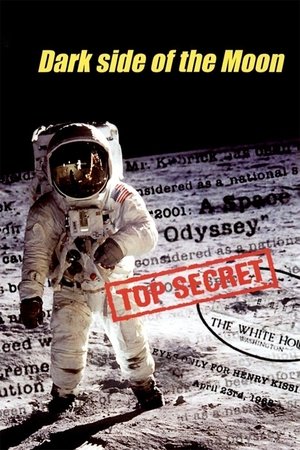
A French documentary or, one might say more accurately, a mockumentary, by director William Karel which originally aired on Arte in 2002 with the title Opération Lune. The basic premise for the film is the theory that the television footage from the Apollo 11 Moon landing was faked and actually recorded in a studio by the CIA with help from director Stanley Kubrick.
When Kennedy announced in 1961 that he wanted to take humans to the moon within a decade, Charles M. Duke was skeptical. Almost 11 years later, however, Charles M. Duke was standing on the moon himself. He gave Neil Armstrong the go-ahead for the landing on Apollo 11. Because he contracted rubella, the Apollo 13 crew had to be changed. In 1972, he landed with Apollo 16 and looked down on Earth from the moon himself.
This film consists of three parts. The first dramatizes the life of the founder of Soviet astronautics, Konstantin Tsiolkovsky; the second describes the development of rocket technology; and the third visualizes the future with enactments of the first manned spaceflight, spacewalk, space station construction and humans on the moon.
On July 16, 1969, hundreds of thousands of spectators and an army of reporters gathered at Cape Kennedy to witness one of the great spectacles of the century: the launch of Apollo 11. Over the next few days, the world watched on with wonder and rapture as humankind prepared for its "one giant leap" onto the moon--and into history. Witness this incredible day, presented through stunning, remastered footage and interviews that takes you behind-the-scenes and inside the spacecraft, Mission Control, and the homes of the astronaut's families.