Young athletes between the ages of 10 and 13 show what they are made of in the youth version of "Ninja Warrior Germany" in various obstacle courses. Only those who demonstrate courage, strength, endurance and skill can master the difficult tasks and win the respective age group.
Eight celebrities with a passion for darts step up to the oche to see if they have what it takes to become the first Showbiz Darts Champion.
Game$how Marathon is an American television program which aired on CBS from May 31, 2006 to June 29, 2006. It is based on the UK series Ant & Dec's Gameshow Marathon which aired on ITV in 2005. The show features contestants competing in some of television's most historically popular game shows, in a single-elimination format until an ultimate winner is found. Both the UK and US versions featured celebrity contestants. The US version was produced by FremantleMedia North America and Granada America and was hosted by Ricki Lake and announced by Rich Fields. In the US, the series only aired for a single season, while in the UK a second season aired in 2007, this time entitled Gameshow Marathon and hosted by Vernon Kay. This program was recorded at Stage 46, CBS Television City in Los Angeles, CA, USA.
Dinner for Five is a television program in which actor/filmmaker Jon Favreau and a revolving guest list of celebrities eat, drink and talk about life on and off the set and swap stories about projects past and present. The program seats screen legends next to a variety of personalities from film, television, music and comedy, resulting in an unpredictable free-for-all. The program aired on the Independent Film Channel with Favreau the co-Executive Producer with Peter Billingsley. The show format is a spontaneous, open forum for people in the entertainment community. The idea, originally conceived by Favreau, originated from a time when he went out to dinner with colleagues on a film location and exchanged filming anecdotes. Favreau said, "I thought it would be interesting to show people that side of the business". He did not want to present them in a "sensationalized way [that] they're presented in the press, but as normal people". The format featured Favreau and four guests from the entertainment industry in a restaurant with no other diners. They ordered actual food from real menus and were served by authentic waiters. There were no cue cards or previous research on the participants that would have allowed him to orchestrate the conversation and the guests were allowed to talk about whatever they wanted. The show used five cameras with the operators using long lenses so that they could be at least ten feet away from the table and not intrude on the conversation or make the guests self-conscious. The conversations lasted until the film ran out. A 25-minutes episode would be edited from the two-hour dinner.
Quiz show where contestants try to answer a question that only 1% of the country can get right.
Oat Pramote and C Siwat host 10 of the biggest Thai comedians in a community mall for 6 hours. To eliminate their fellow comedians, they can do anything to make each other laugh, except laugh themselves. With 1 million baht on the line for a charity of their choice, who will be the Last One Laughing?
Ikke lov å le på hytta
Jimmy Carr hosts a outlandish game show where pairs of comics and some of the nation's favourite celebrities battle it out for pride, prizes, and floorspace while living in a box.
Card Sharks is an American television game show created by Chester Feldman for Mark Goodson-Bill Todman Productions. Two contestants compete for control of a row of oversized playing cards by answering questions posed by the host and then guessing if the next card is higher or lower in value than the previous one. The concept has been made into a series four separate times since its debut in 1978, and also appeared as part of CBS's Gameshow Marathon. The primary announcer for the first three series was Gene Wood.
Sporting quiz show, with regular captains leading teams of celebrities.
Cash Cab: After Dark is a spin-off of the Discovery Channel series that aired in 2007. The contestants were picked up near or after sunset as well as overnight and the cash value of the questions was double that of the regular version of the show. The questions were usually more difficult than the daytime version.
If your friends went through a mysterious door and got lost in an alternate universe, would you come to their rescue? Join Achievement Hunter in this four-episode miniseries as they embark on an adventure so unique and psychedelic that it could only come from a collaboration with the art collective Meow Wolf. Will they unravel the mysteries of The Weird Place to find Geoff before time and reality run out?
The Big Escape
“Prison Life of Fools” is a variety show where the cast members will divide themselves into different teams and play various games to find the hidden “mafia” member.
Bamzooki is a mixed reality television gameshow on the BBC which features a toolkit developed by Gameware Development. The first series aired in March 2004 on CBBC. The show was presented by Jake Humphrey. It has occasionally featured specials with Sophie McDonnell. In July 2008, it was announced on CBBC on BBC One that Bamzooki was returning. A new thirteen part series began in November 2009 and was now hosted by Barney Harwood and Gemma Hunt.
Concentration is an American television game show based on the children's memory game of the same name. Matching cards represented prizes that contestants could win. As matching pairs of cards were gradually removed from the board, it would slowly reveal elements of a rebus puzzle that contestants had to solve to win a match. The show was broadcast on and off from 1958 to 1991, presented by various hosts, and has been made in several different versions. The original network daytime series, Concentration, appeared on NBC for 14 years, 7 months, and 3,770 telecasts, the longest run of any game show on that network. This series was hosted by Hugh Downs and later by Bob Clayton, but for a six-month period in 1969, Ed McMahon hosted the series. The series began at 11:30 AM Eastern, then moved to 11:00 and finally to 10:30. Nearly all episodes of the NBC daytime version were produced at 30 Rockefeller Plaza, New York City. A weekly nighttime version appeared in two separate broadcast runs: the first aired from October 30 to November 20, 1958 with Jack Barry as host, while the second ran from April 24 to September 18, 1961 with Downs as host.
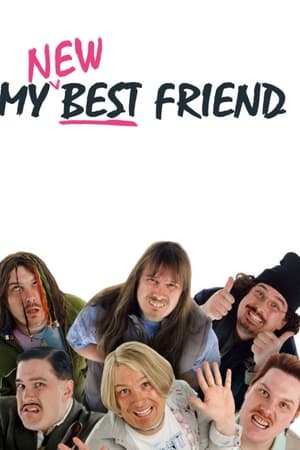
Could you pass off a complete stranger as your new best friend for one short weekend to win £10k, even if your 'friend' was actually a brilliant actor hell-bent on humiliating you?
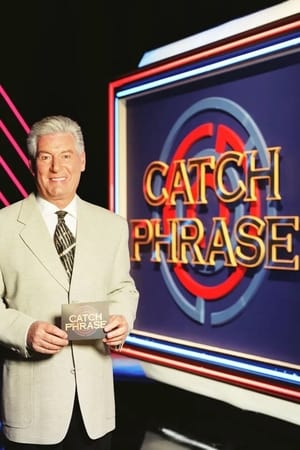
Catchphrase is a British game show based on the short-lived U.S. game show of the same name. It originally aired on ITV in the United Kingdom between 12 January 1986 and 19 December 2002. It was presented by Northern Irish comedian Roy Walker from 1986–1999; followed by Nick Weir from 2000–2002, and Mark Curry in 2002. In the original series, two contestants, one male and one female would have to identify the familiar phrase represented by a piece of animation accompanied by background music. The show's mascot, a golden robot called "Mr. Chips", appears in many of the animations. In the revived version of the show, the same format remains, but there are three contestants. In August 2012, it was announced that Stephen Mulhern would host a revived version of the show beginning on 7 April 2013. On 21 August 2013, it was confirmed that Catchphrase has been re-commissioned for a second series, following the success of the first.
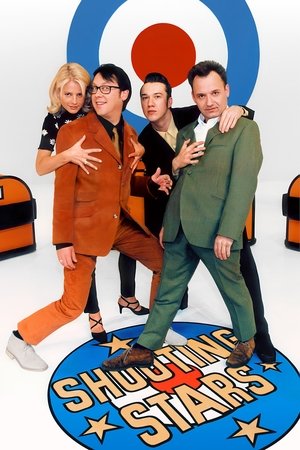
Shooting Stars is a British television comedy panel game broadcast on BBC Two as a pilot in 1993, then as 3 full series from 1995 to 1997, then on BBC Choice from January to December 2002 with 2 series before returning to BBC Two for another 3 series from 2008 until its cancellation in 2011. Created and hosted by double-act Vic Reeves and Bob Mortimer, it uses the panel show format but with the comedians' often slapstick, surreal and anarchic humour does not rely on rules in order to function, with the pair apparently ignoring existing rules or inventing new ones as and when the mood takes them.
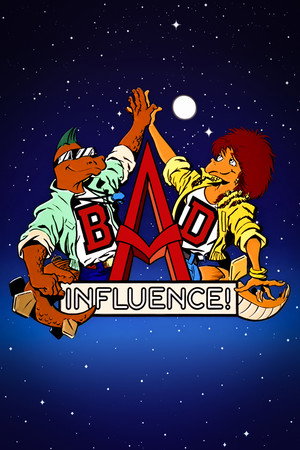
Bad Influence! is an early to mid-1990s British factual television programme broadcast on CITV between 1992 and 1996, and was produced in Leeds by Yorkshire Television. It looked at video games and computer technology, and was described as a "kid’s Tomorrow's World". It was shown on Thursday afternoons and had a run of four series of between 13 and 15 shows, each of 20 minutes duration. For three of the four series, it had the highest ratings of any CITV programme at the time. Its working title was Deep Techies, a colloquial term derived from 'techies' basically meaning technology-obsessed individuals.