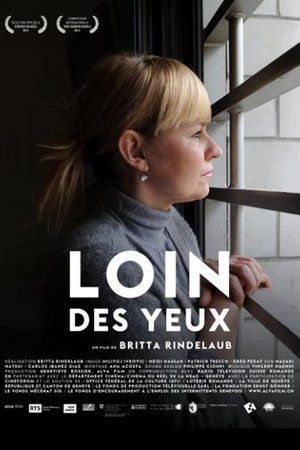
Switzerland still carries out special flights, where passengers, dressed in diapers and helmets, are chained to their seats for 40 hours at worst. They are accompanied by police officers and immigration officials. The passengers are flown to their native countries, where they haven't set foot in in up to twenty years, and where their lives might be in danger. Children, wives and work are left behind in Switzerland. Near Geneva, in Frambois prison, live 25 illegal immigrants waiting for deportation. They are offered an opportunity to say goodbye to their families and return to their native countries on a regular flight, escorted by plain-clothes police officers. If they refuse this offer, the special flight is arranged fast and unexpectedly. The stories behind the locked cells are truly heartbreaking.
Max Frisch was the last big Swiss intellectual widely respected as a “voice” in its own right – a character hardly found today. The film retells Frisch’s story as a witness of the unfolding 20th century, wondering if such “voices” are needed at all, or if we could do without them.
The Baselstrasse is a street in Lucerne. People call it "Rue de Blamage" – it's a noisy street tucked into a narrow space between a hill and a train track. The people who live here don't usually mingle with the rich and famous, but even the roughest haunt can be a home to those who live and work there – and Baselstrasse's two kilometers of asphalt are no different.
The traditional healers in the Swiss and French mountains.
A behind-the-scenes look at the of how the Paris Opera is run under the direction of Stephane Lissner.
Modern Amazons are fierce heroines. They are ready to fight for what is important to them. Without explaining, without compromising, always persisting. They fight for victory in the ring for acceptance, and too, for fellow sufferers and humanity.
Zurich-born Hugo Koblet was the first international cycling star of the post-war period. He was a stylist on the bicycle and in life, and a huge heartthrob. Koblet had a meteoric rise and won the Giro d'Italia in 1950. Once he had reached the zenith of his career, Koblet was put under pressure by overly ambitious officials and ended up ruining his health with drugs. In 1954, he married a well-known model and they became a celebrity dream couple. After his athletic career ended, Koblet began to lose his footing. Threatened by bankruptcy, he crashed his Alfa into a tree.
The real place where the penguin congress takes place is also the most fictional place on this planet where you can stand on your own two legs. Here, even the animals can talk. This land of dreams and nightmares is called Antarctica. In this desert of ice surrounded by a stormy sea, a few dozen human beings also live. Using sophisticated instruments, they observe the worrying changes affecting our world: the hole in the ozone layer, climate change, and so on.
Documentary account of a man’s life in the face of imminent death – Francisco Varela's story told affectionately and gently, touchingly and astutely. Varela spent his life building bridges: between Western science and Eastern wisdom, neurobiology and philosophy, abstract theory and practical life. This film seeks to deconstructs the prevailing division between science and art.
With his vivid oil paintings, Albert Anker captured Swiss folk life like no other. Together with musician Endo Anaconda we discover the "Anker-House", Anker's old studio.
Wolves divide and fascinate us. 150 years after they were driven to extinction in Central Europe, they are returning slowly but inexorably. Are they dangerous to humans? Is it possible to coexist? Using Switzerland as a point of departure, where wolves have returned in the very recent past, this documentary sheds light on the wolf situation in Austria, eastern Germany, Poland, Bulgaria, and even Minnesota, where freely roaming packs of wolves are more common sight.
An intimate portrayal of the everyday lives of Carthusian monks of the Grande Chartreuse, high in the French Alps (Chartreuse Mountains). The idea for the film was proposed to the monks in 1984, but the Carthusians said they wanted time to think about it. The Carthusians finally contacted Gröning 16 years later to say they were now willing to permit Gröning to shoot the movie, if he was still interested.
Switzerland is presently the only country in the world where suicide assistance is legal. Exit: The Right to Die profiles that nation's EXIT organization, which for over twenty years has provided volunteers who counsel and accompany the terminally-ill and severely handicapped towards a death of their choice.
Remue-ménage
Le salaire de l'artiste
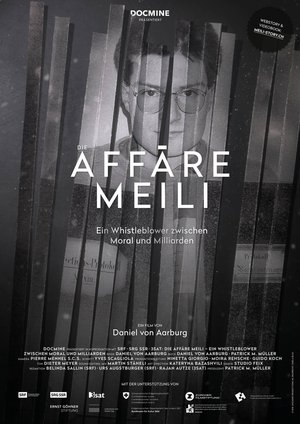
While managers of Swiss banks in the USA ruefully apologize for their tax evasions practices and customer data is disclosed to the American authorities, Rudolf Elmer, former auditor at bank Julius Bär, is indicted for violating the Swiss banking secrecy law on the Cayman Islands. Rudolf Elmer: from insider to critic.
From August to October 1942, over 2250 Jews were deported from the internment camp of Rivesaltes to Auschwitz by way of Drancy. Among them were 110 children. Friedel Bohny-Reiter, a nurse with the Swiss Aid to Children, worked in this camp in the South of France. Like many others in the formerly unoccupied zone, it was run by the French. Once a military camp, it had been converted in 1941 into a transit camp regrouping Jewish, Gypsy and Spanish people living in the area or who had fled to the free zone as refugees. Thanks to the young nurse from Basel, many children were probably saved from certain death. The film follows the nurse on a visit to that still intact site as well as through the pages of the journal she wrote in those dark days, published by Editions Zoë, Geneva in 1993.
Sixth-graders have many things on their minds. But they are confronted with an important decision: do they continue their education in secondary school A, B, or C, or do they go to grammar school after all? And what even are those things? How do children deal with the hopes and fears associated with this step?
The Blocher Experience tells the story of Switzerland’s most controversial political leader. It also chronicles the face-to-face encounter between a film-maker and a man of power, through a year of exclusive, up-close interviews and access to his private life.
What becomes history, what feeds memory, what shapes an era? Images found in the dustbins of history. Taken out of context, fragments, testimonies and unpublished documents intermingle, interweave and collide. They take on a new meaning, a dimension of authentic proximity. The peregrination touches on the advent of the atomic bomb, the military trials at the end of the war, the lie detector, the discovery of the Majdanek camp; Einstein, Lenin's embalmer, the KGB agent, the American spy rebuilding his life in Russia, the Yugoslav war sniper all have their say.