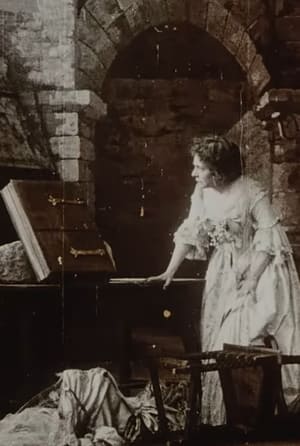
A reel of the Noh drama Momiji-gari, in which Danjuro Ichikawa played opposite Onoe Kikugoro V as an ogress who has disguised herself as the Princess Sarashina. Filmed by Shibata Tsunekichi in the open air on a windy day in November 1899, Danjuro would allow only the one take, so that when his fan blew away in mid-performance the scene had to stay. The film re-emerged at the Kikikan theatre in 1907 where it was a great success and inspired a wave of fiction filmmaking based on traditional Japanese narratives.
It's Christmas time, and a grandmother spends a quiet afternoon tending to the family chores. But the arrival of an unexpected visitor brings with her some deadly consequences.
A man is being haunted by a masked stranger. The only language used in the movie comes from three (inter) title cards and a few sentences of sermon-like talk in Danish. Some of the talk is modified citations from the bible and similar sources.
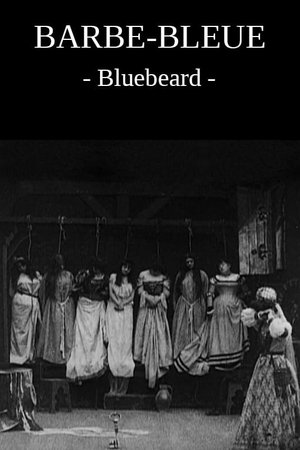
During a game of hide and seek, a new bride hides in a chest and remains undiscovered until a strange visitation thirty years later.
A distraught squatter tries to cope with his werewolf nature through drugs and music.
This is a film about a man without a face. His arms and legs, bound with ropes, the disabled man is still without even a shudder in a white room. A series of unusual scenes in this room expresses what lies between memories, nightmares, and violent images.
A middle aged woman is desperately wondering in the streets looking for her daughter. A man finds her before she does.
A knight returns home from the Crusades to find his village devastated by disease and his family gone. He roams the forest searching for them, until he finds a mysterious maiden who is being held prisoner by a black knight. In order to free her, he must confront her captor.
Simon is a little boy that has to deal with his babysitter, Sonia, a total nuisance. But that same night Simon will receive and unexpected visitor, Timothy, the main character of Simon's favourite show, a visit he will never forget.
A green-skinned demon places a woman and two courtiers into a flaming cauldron.
One of the two earliest horror films ever made. This film is presumed lost.
One of the two earliest horror films ever made. This film is presumed lost. In this black comedy scene, the bottom falls out of a coffin, the corpse tumble out, and is jolted back to life. Short sequences like this, as well as street scenes and dancing geisha girls were the main subjects of early Nippon cinema, pioneered by Shiro Asano and Shibata Tsunekichi from 1897 onwards. In creating dramatic, scenes, film-makers naturally chose the most striking or bizarre. Another undocumented film, recalled by cameraman Shiro Asano.
A doctor must remove a parasite infestation from within a patient's breast.
On a quiet night, a young couple find themselves caught up in a nightmarish ordeal after they witness a murderer disposing of a body in this claustrophobic thriller.
A sinister montage intimates the hellish void facing a man emptying bottles by the river. Sandy Fisher’s densely reverberating electronic score provides strong support for Lloyd Williams’ cultic collage of skulls, chess boards and fire.
A man is trapped in a sinister flat, where nothing seems to obey the laws of nature.
A group of people is having a barbecue party when two Krishnas appear at their doorstep, both of which transform into hideous monsters and start killing everybody in gory ways. The survivors retreat to a friend's house and realize something bigger is going on...
As a practical joke, an actor impersonates the screen monster he made famous. A lost film.
An alcohol/drug abuser re-examines his life until he nearly dies from an overdose. Then a friend convinces him to join a self-help group which turns out to be demonic.
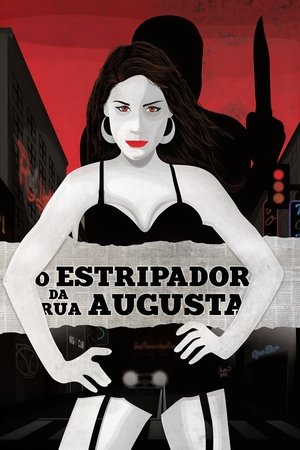
A vampire pretends to be a hooker on Augusta St., in São Paulo, to feed on her victims, until she comes across a monster that attacks at the same address.