The Specials don’t just write memorable songs - they soundtrack moments in history. This film explores how the band’s music was influenced by social, economic, and political events and how they have continued to shape contemporary music and popular culture internationally, with their message of unity and harmony in the face of ongoing political and social challenges.
Les Mathématiques du Roi Heenok
In CATHEDRALS, filmmaker Dan Algrant embarks on a journey to reconnect with two black collaborators from a film made nearly 50 years ago. CATHEDRALS becomes a powerful exploration of the bonds that tie us together and the experiences that shape our identities. Through the lens of a creative collaboration, the film illuminates the struggles and triumphs that define life in a close-knit community, ultimately reaffirming the importance of human connection and the power of collective memory.
Je suis finissant
Quartiers sous tension
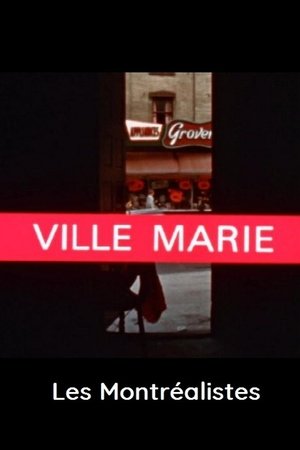
Gilles Groulx's first film shot in 1955 with a camera borrowed from his brother and edited during his spare time when he worked as an editor at the Radio-Canada news service a few years before he joined the NFB. Silent film, presented as its author left it, where the soil and the dialectic of Groulx's work are already there: documentary realism, the social space to be explored, daily life, the relationship between individual and society, social disparities, the consumer society, seduction and happiness.
This film documents the youth groups personalities, interests and what they like to do for fun. It also highlights important and relevant issues facing young travellers and their peers in East Cork and Cork City. A film the by the Connect Youth Project. Directed and filmed by the members of the Connect Youth Project in East Cork.
The pupils of about fifteen secondary schools in the suburbs of Paris react to the projection of two short films taken from the series "No More Lies ! 12 perspectives on everyday racism". Their comments, questions and reactions are of course focused on the subject of racism, but they also take a stand about what it means to have two cultural identities. Is it enough to be born in France in order to feel French ? What is their vision of a society obsessed with the idea of integration? What do they expect of the future ? With their questions and their protests, they often put their finger on the heart of the issues at stake. Beyond fiction, we discover their reality...
In 150 years, twice marked by total destruction —a terrible earthquake in 1923 and incendiary bombings in 1945— followed by a spectacular rebirth, Tokyo, the old city of Edo, has become the largest and most futuristic capital in the world in a transformation process fueled by the exceptional resilience of its inhabitants, and nourished by a unique phenomenon of cultural hybridization.
The Sahrawi people have lived in exile for almost half a century in the driest desert of the African continent. There, where basic resources such as water are scarce, there is a film school. As the world looks the other way, a group of young filmmakers carries out a battle against oblivion.
This gripping documentary revisits the shocking 1995 bombing of an Oklahoma City federal building, the deadliest act of domestic terrorism in US history.
Documentary about the 1983 terrorist attack in West Berlin’s Maison de France.
The Shipibo-Konibo people of Peruvian Amazon decorate their pottery, jewelry, textiles, and body art with complex geometric patterns called kené. These patterns also have corresponding songs, called icaros, which are integral to the Shipibo way of life. This documentary explores these unique art forms, and one Shipibo family's efforts to safeguard the tradition.
Immediately after the Boston Marathon bombing in April 2013, amateur detectives took the Internet chat rooms to try to find the culprits, looking for details in photographs uploaded to the sites that could point to the guilt of potential suspects.
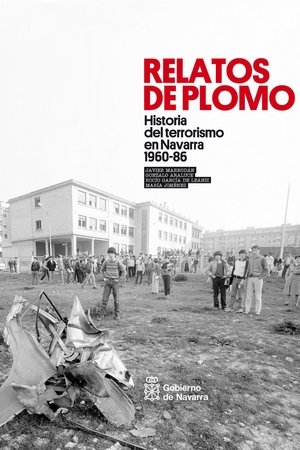
An attempt to create a bridge between the different political positions that coexist, sometimes violently, in the Basque Country, in northern Spain.
Galician writer Xavier Queipo is getting ready to move back to his homeland after more than 30 years of living in Brussels. He empties his house and puts his memories in boxes the removal company loads onto their truck to take them to Spain. Another Galician man, the filmmaker Hugo Amoedo, who is based in Brussels, too, wonders whether and when he’ll be back in his homeland. In the meantime, he teaches his son to ride a bike, wonders, dreams, struggles to unravel ideas for films, and argues with the clerks of the Brussels post.
Ten years ago, Carina Bergfeldt covered the terrorist attack in Norway, and as one of the first reporters on-site, she gained a unique insight into the aftermath of the tragedy. For two days she lived with survivors and parents who were looking for their missing children in the hotel that was turned into a crisis centre. Now she has returned to see what happened with the families and with Norway.
La Coupe Stanley à Montréal en 1993
Les Marquises, aux sources de la Polynésie
Villa Madjo