An investigation into accusations of teenagers being sexually abused within the film industry.
A short documentary about the life of director and artist René Laloux, featuring an interview with Laloux from 2001.
A documentary looking at the life and films of Francesco Rosi.
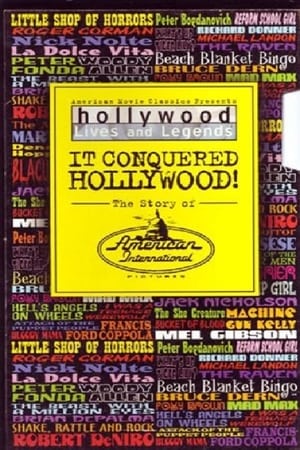
A 60-minute salute to American International Pictures. Entertainment lawyer Samuel Z. Arkoff founded AIP (then called American Releasing Corporation) on a $3000 loan in 1954 with his partner, James H. Nicholson, a former West Coast exhibitor and distributor. The company made its mark by targeting teenagers with quickly produced films that exploited subjects mainstream films were reluctant to tackle.
An examination of why the James Bond films have proved so popular including a discussion between the four actors who have played Bond, an interview with Cubby Broccoli and contributions from the directors, production designers, special effects and stuntmen.
Jonathan Ross delves into the world of James Bond and meets with new and former cast members who reveal humorous stories and anecdotes in a series of interviews. All the 5 Bonds at the time are featured, though only Lazenby (reflecting in the usual frank, self criticizing manner), Moore and Brosnan granted an interview. Connery and Dalton are featured through some unused footage from LWT's 30 years of James Bond program. The ever faithful Desmond Llewelyn turns up in character as well as some other less related peeps like Christopher Lee, Paul McCartney and the ultimate playboy: Hugh Hefner -- who all give an interesting perspective on the worlds most famous spy.
Working men and women leave through the main gate of the Lumière factory in Lyon, France. Filmed on 22 March 1895, it is often referred to as the first real motion picture ever made, although Louis Le Prince's 1888 Roundhay Garden Scene pre-dated it by seven years. Three separate versions of this film exist, which differ from one another in numerous ways. The first version features a carriage drawn by one horse, while in the second version the carriage is drawn by two horses, and there is no carriage at all in the third version. The clothing style is also different between the three versions, demonstrating the different seasons in which each was filmed. This film was made in the 35 mm format with an aspect ratio of 1.33:1, and at a speed of 16 frames per second. At that rate, the 17 meters of film length provided a duration of 46 seconds, holding a total of 800 frames.
A documentary about the legendary Japanese filmmaker.
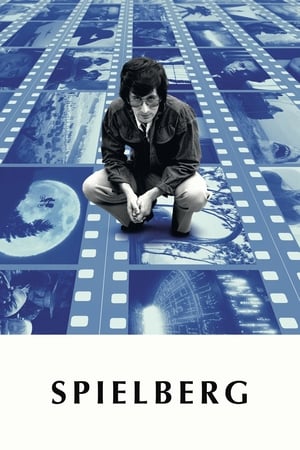
A documentary on the life and career of one of the most influential film directors of all time, Steven Spielberg.
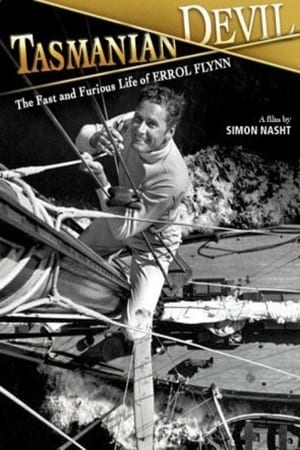
The story of Tasmanian-born actor Errol Flynn whose short & flamboyant life, full of scandals, adventures, loves and excess was largely played out in front of the camera - either making movies or filling the newsreels and gossip magazines. Tragically he was dead from the effects of drugs and alcohol by the time he was only 50 & the myths live on. But there is another side of Flynn that is less well known - his ambitions to be a serious writer and newspaper correspondent, his documentary films and his interest in the Spanish Civil War and Castro's Cuba
TUGS: A Bigg Retrospective is the definitive film telling the story of how the 1989 cult classic series 'TUGS' was brought to our TV screens, and how it survived beyond its premature end.
One of the dominating figures in Elvis Presley's life was his manager, who was known as the "Colonel". No other relationship in Elvis' life was as controversial and misunderstood as the one he had with Colonel Tom Parker. The truth about their unique friendship is revealed in this documentary.
A short documentary by Levon Grigoryan about the making of Parajanov's «Sayat-Nova», or «The Colour of Pomegranates».
Episode of the BBC Scotland television series focusing on Lindsay Anderson's 1968 film "If...", featuring interviews with star Malcolm McDowell, cinematographer Miroslav Ondříček, assistant editor Ian Rakoff, director’s assistant Stephen Frears, producer Michael Medwin, and screenwriter David Sherwin
Documentary about the making of Louis Malle's 1963 film "The Fire Within".
The film features a conversation between Lucas and Francis Ford Coppola, producer of THX 1138. They discuss Lucas' vision for the film, including his ideas about science fiction in general and in particular his concept of the "used future" which would famously feature in his film Star Wars. Intercut with this discussion is footage shot prior to the start of production of THX 1138 showing several of its actors having their heads shaved, a requirement for appearing in the film. In several cases the actors are shown being shaved in a public location. For example, Maggie McOmie is shaved outside the Palace of Fine Arts in San Francisco, while Robert Duvall watches a sporting event as his hair is cut off. Another actor, Marshall Efron, who would later play an insane man in the film, cut off his own hair and was filmed doing so in a bathtub.
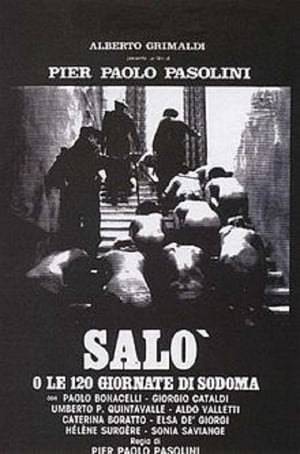
A documentary about Pier Paolo Pasolini and his film 'Salò o le 120 giornate di Sodoma'.
Documentary about the Parisian locations for the film by Louis Malle.
Behind-the-scenes documentary about a fundraiser which was staged for Robert Altman's film "The Player" (1992).
Documentary about the making of Swedish film director Jan Troell's "The New Land" (1971) and "The Emigrants" (1972).