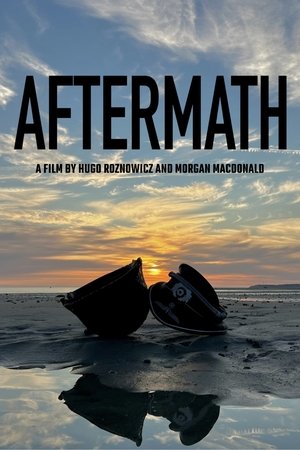
Narrated by the only 5-time Super Bowl winning head coach in NFL history, the New England Patriots Bill Belichick. The World War II Foundation hired one of France's top aerial Drone camera companies to film some of the most iconic locations in Normandy from D-Day. The result is some of the most spectacular scenes of the landing beaches and battlefields viewers have ever seen.
The concept of machine-made knit was known as early as the 1850s, but it was only during the 1920s that the quality of the material had improved. When the plant known as "Atlas" was introduced in 1931, the shop windows drew a lot of attention, and Aho & Soldan was ordered to make a promotional film. In this well-paced film, we see the jersey production step by step.
Michael Franti, winner of the San Francisco Foundation 2009 Community Leadership Awards (the Helen Crocker Russell Award) - artist, activist, founder of Spearhead, for embodying a social movement of justice and activism and being a voice for the vulnerable. By founding the music groups Spearhead and the Disposable Heroes of Hiphoprisy, as well as the Power to the Peaceful festival, Michael built an underground movement to spread a message of social justice and advocated for underrepresented people. His recent film, I Know I'm Not Alone, highlights the human cost of war and empowers people to utilize their vote and recognize their collective power to impact American foreign policy.
A powerful depiction of war in infamous global conflict zones. Directed by Oscar/Emmy documentary makers Buddy Squires and Graeme Scott (know for Sam Smith), this film provides a rare and powerful insight into humanity and hope in the depth of war and the greatest global humanitarian crisis of the last several decades.
The story is set in the British province of New York during the French and Indian War, and concerns—in part—a Huron massacre (with passive French acquiescence) of between 500 to 1,500 Anglo-American troops, who had honorably surrendered at Fort William Henry, plus some women and servants; the kidnapping of two sisters, daughters of the British commander; and their rescue by the last Mohicans.
Personal stories from civilians, children, soldiers, doctors, the country’s elderly, journalists, religious leaders, and international volunteers - a handful of the millions of people whose lives have been turned upside-down by nine years (and counting) of Russian aggression against Ukraine.
Island of Java, 1942, during World War II. British Major Jack Celliers arrives at a Japanese prison camp, run by the strict Captain Yonoi. Colonel John Lawrence, who has a profound knowledge of Japanese culture, and Sergeant Hara, brutal and simpleton, will witness the struggle of wills between two men from very different backgrounds who are tragically destined to clash.
By invading this "state fiction" that is, according to him, Ukraine, Vladimir Putin takes up the motto of the tsars: "sovereign of all Russia, the great, the small and the white". The first would have Moscow as its capital, the second, kyiv, and the last, Minsk.
This expository film shows the mood of European society on the eve of the Second World War while promoting the values of international cooperation. Using the Swiss office of the BBC as an example, the film describes the functioning of radio and presents the possibilities opened by mass communications. After the advent of sound film, Cavalcanti promoted experimentation with sound, and in this connection he was interested in the communicational, organizational, and social aspects of radio.
Checkpoint Zoo documents a daring rescue led by a heroic team of zookeepers and volunteers, who risked their lives to save thousands of animals trapped in a zoo behind enemy lines in the Russian Invasion of Ukraine.
As the war wages on, Ukrainians under everyday threat find ways to live. A soldier returns home, a chaplain grapples with the weight of responsibility, and a mother grieves the loss of her family. These stories, amidst others, are a testament of Ukraine’s history, perseverance and plea to be remembered.
During the Boer War, three Australian lieutenants are on trial for shooting Boer prisoners. Though they acted under orders, they are being used as scapegoats by the General Staff, who hopes to distance themselves from the irregular practices of the war. The trial does not progress as smoothly as expected by the General Staff, as the defence puts up a strong fight in the courtroom.
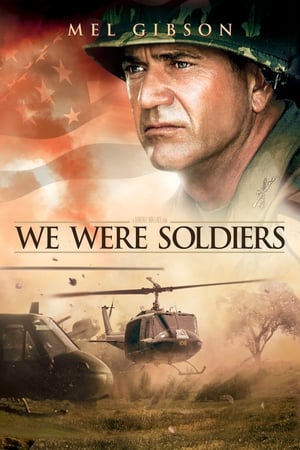
The year is 1965 and America is at war with North Vietnam. Commanding the air cavalry is Lt. Col. Hal Moore (Gibson), a born leader committed to his troops. His target: the Ia Drang Valley, called "The Valley of Death." As Moore prepares for one of the most violent battles in U.S. history, he delivers a stirring promise to his soldiers and their families: "I will leave no man behind...dead or alive. We will all come home together."
This documentary follows the steps of the boys of H Company as they fight on the island of Iwo Jima.
During the Continuation War, there were dozens of POW camps in Finland. About the third of 70,000 prisoners died during the first year of war. Most of the archives of the camps were destroyed and the majority of the war crimes were never revealed.
A slice-of-life documentary following Ulla, a blind woman adjusting to life after eye removal surgery. With the help of her guide dog, Laina, she navigates Helsinki while pursuing a prosthetic eye and a deeper understanding of photography.
During the Swedish invasion of Poland, the brave warrior Andrzej Kmicic, considered a traitor to the nation, fights for a country, redemption and love across the 17th-century Polish territories.
People in a small German village in the last valley to remain untouched by the devastating Thirty Years' War try to exist in peace with a group of soldiers occupying the valley.
It's spring 2022, and Russia has begun its invasion of Ukraine. In Kyiv, we meet the rock musician Artem, who with only 14 days' notice could be sent to the front lines. Right now, however, his focus is elsewhere. He is preparing for a charity tour in Denmark.
2010 documentary film on the Armenian Genocide by the Young Turk government of the Ottoman Empire during World War I. It is based on eyewitness reports by European and American personnel stationed in the Near East at the time, Armenian survivors and other contemporary witnesses which are recited by modern German actors.