A short film mostly comprised of two sources: research footage from 1988 about the beginnings of the HIV epidemic from the perspective of medical professionals, and an interview with Cleve Jones in 2003 as he looks back upon his activism, and the state of the HIV/AIDS epidemic in the early 2000s.
In the tradition of the 20th century classic novel 'Zen and the Art of Motorcycle Maintenance', Growing Old Disgracefully is a biker documentary about a son's struggle to understand his father five years after a family break-up. Riding with his dad and the Ulysses club, we trace a motorcycle adventure across the southern Australian landscape, and the emotional terrain of family relationships.
Through a life story the film deals with issues related to human rights, such as the right to difference. The character's life is presented from others, otherness as a logic. The spectators complete the senses and gradually realize that this is a homosexual who, still in his adolescence, became a transvestite; "Amapoa" is a term that comes from Yoruba and has become transvestite slang for women. The film has a brutal ending, revealing that the character suffered a strong violence. Homophobia. The approach leads to identification with the character and allows reflections on the intolerance of today's society.
The film is a testimony to the short but extremely dynamic life of one of the most talented Slovak composers of the new era – Marek Brezovský. He died of a heroin overdose at the age of 20. The film is also a report on an entire generation that came of age in the chaotic post-revolutionary period of the first half of the 1990s. A generation for whom Marek Brezovský's music became their essential cry and sounds like a hymn in their hearts. The film about Marek Brezovský is an attempt to reconstruct one human life. A life that was dramatically short, but incredibly intense and fruitful. Marek Brezovský is perhaps the first Slovak artist to become famous after his death.
The story of artist Edith Lake Wilkinson, a painter who was committed to an asylum in 1924 and never heard from again. All her worldly possessions were packed into trunks and shipped to a relative in West Virginia where they sat in an attic for 40 years. Edith's great-niece, Emmy Award winning writer and director Jane Anderson, grew up surrounded by Edith's paintings, thanks to her mother who had gone poking through that dusty attic and rescued Edith's work. The film follows Jane in her decades-long journey to find the answers to the mystery of Edith's buried life, return the work to Provincetown and have Edith's contributions recognized by the larger art world.
A portrait of Toronto, as defined by the spaces its queer residents inhabit and the memories they’ve created there.
Contrary to the stereotype of Mississippi as a state of social conservatism and stagnation, the support, protection and love Rainbow families provide queer youth offers up an alternative view of the New Deep South.
Terry Wilson is a 70-year-old lifelong resident of Meadowvale Village, Ontario's first heritage district. As development looms and begins to destroy Terry's favourite place in the world, he recreates pieces of history in his backyard, crafting an oasis where it feels like nothing has changed. A beautiful tribute to his childhood, his mother, and his town, Terry passionately fights to preserve history in a world that's too anxious for change.
An experimental documentary account of a butch dyke's journey to trans man, succinctly summing up the complexity of this journey in under 2 minutes.
Mémoire de mer
Coin de cuisine
Filles et fils d'addicts
Bye Bye Barcelona is a documentary about a city and its relation to tourism , on the difficult coexistence between Barcelona the city and Barcelona the tourist destination
Colourful amateur film showing family outings around Lancashire and a trip to Southampton to meet travellers from America.
In a forest in Norway, a family lives an isolated lifestyle in an attempt to be wild and free, but a tragic event changes everything, and they are forced to adjust to modern society.
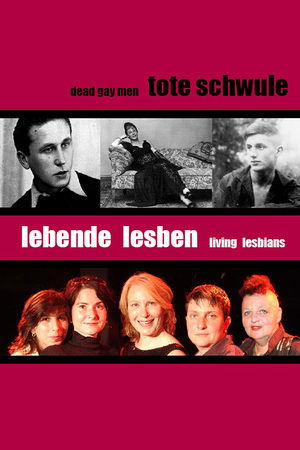
As a result of the Holocaust and later, AIDS, the male homosexual community has sustained bitter losses and, according to Praunheim, lesbian women have now placed themselves at the head of the so-called queer movement. The female protagonists in the film represent two different generations; they also incorporate the past and present status of homosexuals in society.
Amanda’s perspective on her hometown changes drastically when she discovers that the simplicity and memories in Neves have shaped her true home.
Chris, sous le pont Laënnec
Few amateur films with sound were produced in the 1930s and fewer remain extant. A charming artifact that demonstrates the expressive possibilities and technical limitations of amateur talkies, "The Spider and the Fly" includes a backyard Labor Day gathering, a trip to the Riverview Amusement Park, and a homemade Halloween parade of witches and ghouls.
The original documentary on the Wigstock festival, back in the day when it was a much smaller affair in Thompkins Square Park. A full day of peace, love, and wigs…