Recounts the 40-year history of building the Salt Lake Temple, shown as if recounted by Wilford Woodruff to a young reporter. It portrays the pioneers' dedication to temple worship.
4 horse drawn fire brigade carts pull out from Newcastle fire station in the UK as part of a filmed demonstration
Za práva ľudu
In the 19th century, China held the monopoly on tea, which was dear and fashionable in the West, and the British Empire exchanged poppies, produced in its Indian colonies and transformed into opium, for Chinese tea. Inundated by the drugs, China was forced to open up its market, and the British consolidated their commercial dominance. In 1839, the Middle Empire introduced prohibition. The Opium War was declared… Great Britain emerged as the winner, but the warning was heeded: it could no longer depend on Chinese tea. The only alternative possible was to produce its own tea. The East India Company therefore entrusted one man with finding the secrets of the precious beverage. His mission was to develop the first plantations in Britain’s Indian colonies. This latter-day James Bond was called Robert Fortune – a botanist. After overcoming innumerable ordeals in the heart of imperial China, he brought back the plants and techniques that gave rise to Darjeeling tea.
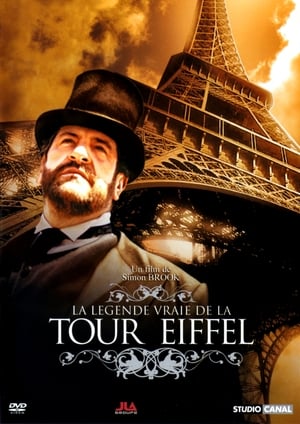
Behind the iconic Eiffel Tower lies the story of an incredible challenge to erect a thousand-foot tower that went far beyond a design competition, and marked a major turning point in engineering history. It was the beginning of radical transformation where iron was pitted against stone, engineering against architecture, and modern design against ancients. Press campaigns, lobbying, public conferences, denigration of opposing projects, bragging about big names - all participants engaged in a fierce battle without concession. Using 3D recreations, official sources (reports, letters, drawings...) and intimate archives obtained from their descendants, this film will bring to life this vertical race through a fresh and visual way to mark the centenary of Eiffel death.
Explorers Meriwether Lewis and William Clark lead a U.S. expedition to the Pacific Ocean and back.
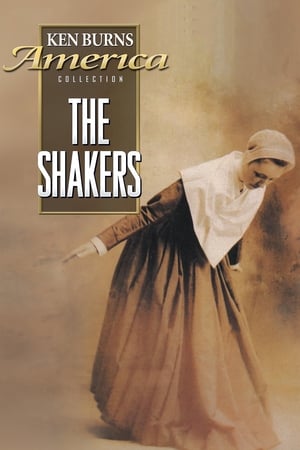
They called themselves the United Society of Believers in Christ's Second Appearing, but because of their ecstatic dancing, the world called them Shakers. Ken Burns creates a moving portrait of this particularly American movement, and in the process, offers us a new and unusually moving way to understand the Shakers.
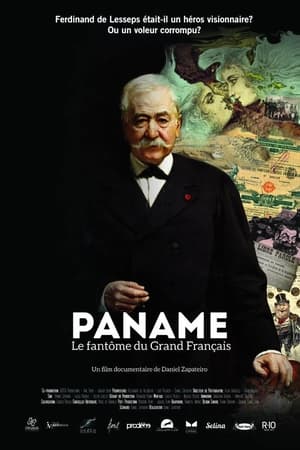
Ferdinand de Lesseps, known as “The Great Frenchman”, will embark in the greatest adventure of his life: To unite the Pacific and Atlantic oceans through a Canal in the Isthmus of Panama – without knowing that this will cost him his reputation, thousands of innocent lives and the biggest financial scandal of all time, up to that point: the famous “Scandal of Panama”. Today, the French capital is known as “Paname”.
Mark Gatiss explores the life and career of Aubrey Beardsley, an artist who wielded outrage as adroitly as his pen. A lifelong fan, Mark shows how Beardsley was more than just a genius of self-promotion who scandalised the art world of the 1890s. He was also a technological innovator, whose uncompromising attitude still feels remarkably modern.
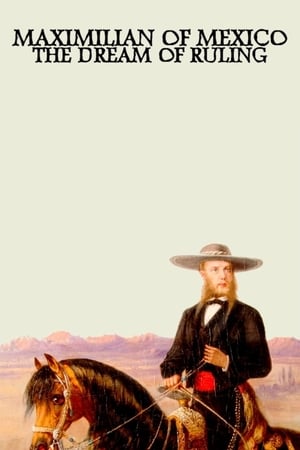
The life and struggles of Ferdinand Maximilian Joseph Maria of Habsburg-Lorraine (1832-1867), emperor of the Second Mexican Empire as Maximilian I of Mexico from 1864 to 1867 (under the wing of Emperor Napoleon III and the French Empire), his tragic confrontation with Mexican leader Benito Juárez, the defeat of the will and the end of a dream.
Three friends are playing cards in a beer garden. One of them orders drinks. The waitress comes back with a bottle of wine and three glasses on a tray. The man serves his friends. They clink glasses and drink. Then the man asks for a newspaper. He reads a funny story in it and the three friends burst out laughing while the waitress merely smiles.
On January 31, 1857, the French writer Gustave Flaubert (1821-80) took his place in the dock for contempt of public morality and religion. The accused, the real one, is, through him, Emma Bovary, heroine with a thousand faces and a thousand desires, guilty without doubt of an unforgivable desire to live.
In 1899, a photographer at American Mutoscope & Biograph mounted his camera on the front of a trolley traveling over the Brooklyn Bridge. The three 90-foot rolls he created were edited together to complete the journey from Manhattan to Brooklyn, entitled Across the Brooklyn Bridge. As a commission by the Museum of Modern Art for the re-opening of their facility, American avant-garde filmmaker Bill Morrison took this remarkable footage and recombined it with itself to form a new split-screen extrapolation.
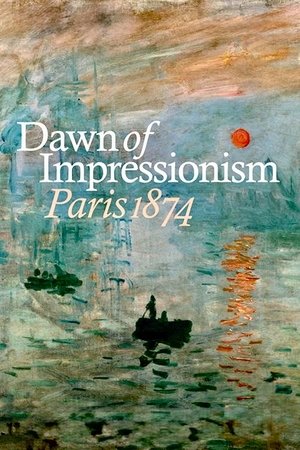
The Impressionists are the most popular group in art history – millions flock every year to marvel at their masterpieces. But, to begin with, they were scorned, penniless outsiders. 1874 was the year that changed everything; the first Impressionists, “hungry for independence”, broke the mould by holding their own exhibition outside official channels. Impressionism was born and the art world was changed forever. What led to that first groundbreaking show 150 years ago? Who were the maverick personalities that wielded their brushes in such a radical and provocative way? The spectacular Musée d’Orsay exhibition brings fresh eyes to this extraordinary tale of passion and rebellion. The story is told not by historians and curators but in the words of those who witnessed the dawn of Impressionism: the artists, press and people of Paris, 1874.
Photo sequence of the rare transit of Venus over the face of the Sun, one of the first chronophotographic sequences. In 1873, P.J.C. Janssen, or Pierre Jules César Janssen, invented the Photographic Revolver, which captured a series of images in a row. The device, automatic, produced images in a row without human intervention, being used to serve as photographic evidence of the passage of Venus before the Sun, in 1874.
The epic life story of Alice Guy-Blaché (1873–1968), a French screenwriter, director and producer, true pioneer of cinema, the first person who made a narrative fiction film; author of hundreds of movies, but banished from history books. Ignored and forgotten. At last remembered.
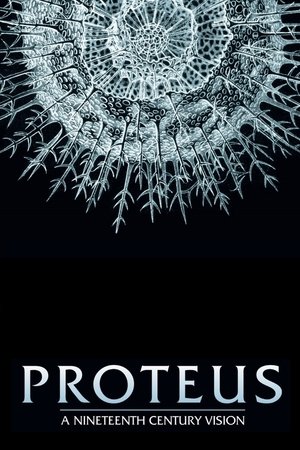
The animated documentary Proteus explores the nineteenth century's engagement with the undersea world through science, technology, painting, poetry and myth. The central figure of the film is biologist and artist Ernst Haeckel, who found in the depths of the sea an ecstatic and visionary fusion of science and art.
This movie is a docudrama relating the early history of the Eiffel Tower: From the planning to its first military use.
Vincenz Priessnitz
Romantic art was a response to the social upheavals of the 19th century, as shown by works by its emblematic painters Friedrich, Venetsianov and Delacroix.