Juno Award-winning musician Kinnie Starr is on a quest to find out why only 5% of music producers are women even though many of the most bankable pop stars are female. What does it take for a woman to make it in music?
A documentary that brings together interviews with 20 activists who address the issue of intersectional feminism and patriarchy in Portugal.
Let Me Run profiles six inspiring women, famous or anonymous, from yesterday or today, athletes or amateurs, who use sport to gain freedom, while tracing more than 150 years of women's struggle for access to sport.
Interviews and performance footage are used to provide an overview of the women's music scene.
A film about what it means to be a woman cycling in different countries around the world. When Manon left to cycle from Brussels to Tokyo, she took a camera with her and met other women cyclists along the way. Hear their stories!
The cinema of Pernambuco is considered one of the most complex components of Brazilian cinema, particularly for its potency and creative style. The presence of women in filmmaking seldom holds the same historical notoriety as that of men, and the Pernambuco scene is no exception. In the context of "Amor, Plástico e Barulho" (Love, Plastic, and Noise), we find a film that serves as a testament to the marginalization of women in the creative industry, intertwining themes of consumption and the production of brega music. Hence, we use "Feminino e Barulho" (Feminine and Noise) as a means to share what we've learned. Renata Pinheiro has inspired us to craft a narrative that gives voice to those who need to be heard. We are here to showcase a glimpse of them and what they represent. "Feminino e Barulho" is a short film about love, femininity, sisterhood, and empowerment.
The mother and daughter face the question of whether to keep the pregnancy or terminate it. Both are under pressure from relatives, friends, and doctors. Both are going through a difficult decision-making process. Each episode of the artistic part shows the life circumstances and the path that a woman in a crisis situation goes through. In documentary inserts, representatives of various professions (psychologists, lawyers, gynecologists, clergymen) tell how they face the problem of abortion in their lives.
A look at the impact of an already very precarious maternal health state in the U.S. post-rescinding of Roe v. Wade, via the Supreme Court's Dobbs decision, reversing rights that women have been working so hard to fight for, and that will actually have a deep impact that we can't even see just yet in terms of the numbers of mortality and trauma as a result of those very draconian policies.
Film by Franca Donda and Josefina Jordán for the feminist collective Grupo Miércoles.
Film by Franca Donda about the Feminist icon Argelia Laya.
Film by Franca Donda, about Eumelia Hernández.
Film by Franca Donda about Inés María Marcano.
"Ellas en la ciudad" (Them in the City) focuses on the first settlers of the neighborhoods on the outskirts of Seville. Through their stories, we discover that they have been the backbone of a city that has turned its back on them.
The ten anthologies and eight long poems of the Sangam age are the oldest and most distinguished body of secular poetry extant in India, of which women poets were a very strong presence.
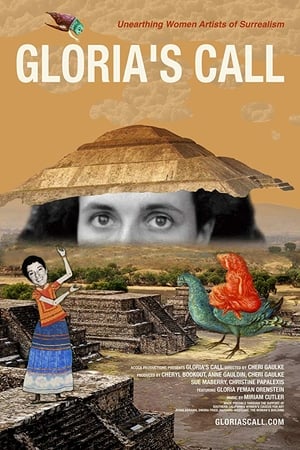
In 1971, graduate student Gloria Orenstein received a call from Surrealist artist Leonora Carrington that sparked a lifelong journey into art, ecofeminism and shamanism. This short film uses art, animation and storytelling to celebrate this wild adventure. Now more than 40 years later, award-winning Dr. Gloria Feman Orenstein is a feminist art critic and pioneer scholar of women in Surrealism and ecofeminism in the arts. Her delightful tale brings alive an often unseen history of women in the arts.
Punk music icons, Lunachicks, reunite after 20 years in an unfiltered, hilarious, and electric documentary. Packed with rare archival footage, the film traces their rise from gritty NYC teens to feminist trailblazers of the 90s grunge era. Fans and newcomers alike will thrill as the band recounts old antics, rekindles bonds, and embarks on their long-awaited journey back to the stage.
Agustina González. La zapatera que miraba a las estrellas
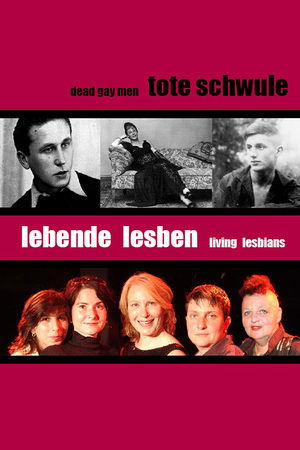
As a result of the Holocaust and later, AIDS, the male homosexual community has sustained bitter losses and, according to Praunheim, lesbian women have now placed themselves at the head of the so-called queer movement. The female protagonists in the film represent two different generations; they also incorporate the past and present status of homosexuals in society.
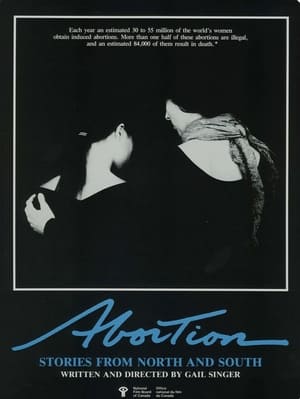
At a public hospital in Nicaragua, Ob/Gyn Dr. Carla Cerrato must choose between following a law that bans all abortions and endangers her patients or taking a risk and providing the care that she knows can save a woman's life. In 2007, Dr. Cerrato’s daily routine took a detour. The newly elected government of Daniel Ortega, a former Marxist revolutionary who converted to Catholicism to win votes, overturned a 130-year-old law protecting therapeutic abortion. The new law entirely prohibits abortion, even in cases of rape, incest, or when a woman’s life is at stake. As Carla and her colleagues navigate this dangerous dilemma, the impact of this law emerges—illuminating the tangible reality of prohibition against the backdrop of a political, religious, and historically complex national identity. The emotional core of the story—the experiences and situations of the young women and girls who are seeking care—illustrate the ethical implications of one doctor's response.
Exploring the concept of the Ecology of Emotions, this musical film portrays an inner journey through the secret garden of creativity put into frame by the nature of Iceland. Hidden Eden is a metaphor for our inner secret garden of creativity. This project bloomed during an art residency in Iceland, sparked by conversations around our shared philosophies on voice and emotional connection. The nature of Iceland inspired us to make the connection on how the landscape reflects the emotional states of creativity and how it helps manage the homeostasis of our inner emotional landscapes. This exchange between emotion and the landscape opens a space for healing. Creativity provides us with the tools to access a garden of our authentic being, nourishing and balancing us. Allowing ourselves to explore the spectrum of our emotions through the lens of our relationship with the Earth invites others to do the same. The creative process can affect our well being and is a key to human evolution.