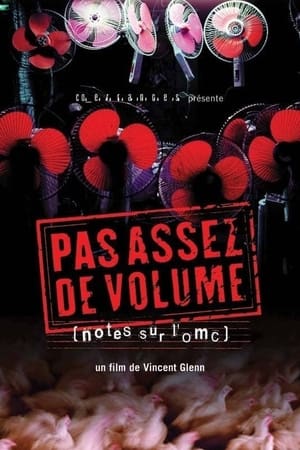
Pas assez de volume
Nicknamed the "Iron Lady," Margaret Thatcher served as the prime minister of England from 1979 to 1990. The daughter of a local businessman, she was educated at the local grammar school. Her family operated a grocery store and they all lived in an apartment above the store. In her early years Thatcher was introduced to conservative politics by her father who was a member of the townʼs council.
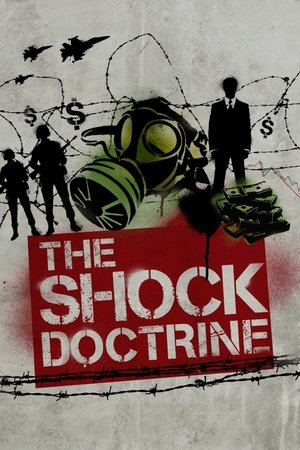
An investigation of "disaster capitalism", based on Naomi Klein's proposition that neo-liberal capitalism feeds on natural disasters, war and terror to establish its dominance.
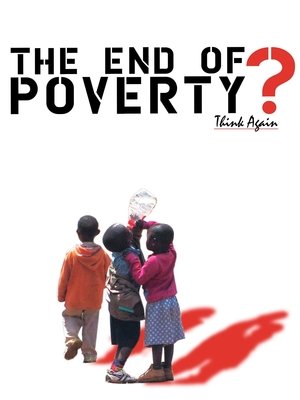
The End of Poverty? asks if the true causes of poverty today stem from a deliberate orchestration since colonial times which has evolved into our modern system whereby wealthy nations exploit the poor. People living and fighting against poverty answer condemning colonialism and its consequences; land grab, exploitation of natural resources, debt, free markets, demand for corporate profits and the evolution of an economic system in in which 25% of the world's population consumes 85% of its wealth. Featuring Nobel Prize winner Amartya Sen and Joseph Stiglitz, authors/activist Susan George, Eric Toussaint, Bolivian Vice President Alvaro Garcia Linera and more.
A historical perspective to understand Neoliberalism and to understand why this ideology today so profoundly influences the choices of our governments and our lives.
The Confederation of Haitian Workers (CTH) invited an Industrial Workers of the World (IWW) delegation to Haiti to learn about their fight against "le plan neoliberal" and recruit help in the form of material aid and solidarity. The delegation was in Haiti from April 24 to May 25, 2008, two weeks after the country erupted in mass protest at burgeoning food prices. This video shares the stories and experiences.
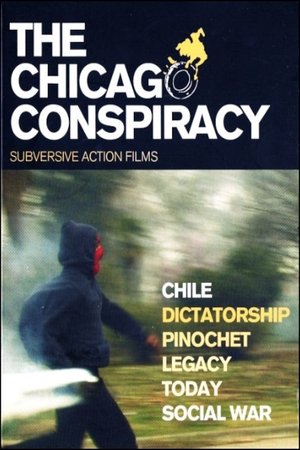
This documentary addresses the legacy of the military dictatorship in Chile by sharing the story of young fighters killed by the Pinochet regime as a backdrop to the history of the military dictatorship and the ongoing social conflict in that area. The larger story unfolds in three shorter parts, which explore the student movement, the history of the towns that became centers of armed resistance against the dictatorship, and the indigenous Mapuche conflict.
Faced with the familiar challenge of limited time and money, Fran and Gaby, a charming couple hailing from Mexico, work together to create a life that supports their activist efforts, but will their love be enough to sustain their ideals?
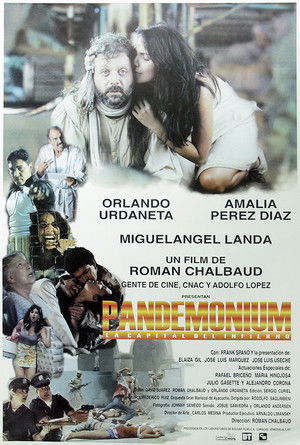
Adonai is an lunatic poet. He lives in an abandoned neighborhood of Caracas where he runs an underground radio called "Radio Pandemonium", he lives with his mom, his grandmother and a young lady who she calls very endearly, 'whore'. They survive among the corrupt, the death and the rising upheaval of the oppressed.
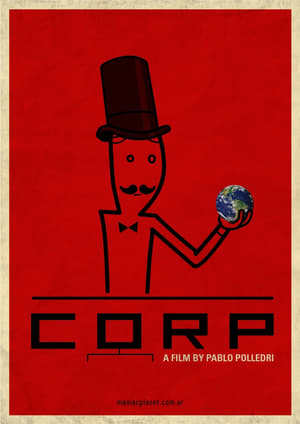
Ambition, labour exploitation, environmental pollution, human degradation, surplus value, corruption and much much more can be found in the amazing world of the free market.
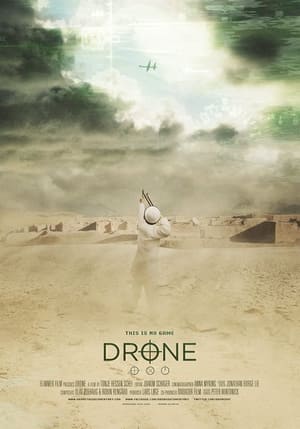
A worker drone, David Blunt undergoes psychotherapy sessions and through this comes to face the meaning of his own existence. His life is allegorically represented and visually juxtaposed to that of a worker bee (a 'drone'), dealing with issues of existentialism and individualism in a modern neo-liberalist society. An M&B Arts Productions film.
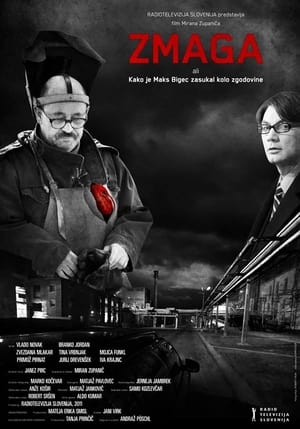
Worker Maks Bigec decides to take things in his own hands when he hears that his factory will be closed. He takes the factory director as a hostage and demands that the state should reopen the factory.
'The Statement’ is a wedge of realism; cold and current. A one-act play, with four characters locked in their own battle for control, and with the morality of their actions: they have been tasked with fueling a conflict in a distant country. Now, being asked to take responsibility for their actions in order to exonerate their superiors, a conflict is rising within their department. Writer - Johnathon Young. Choreographer - Crystal Pite.
Told in Graham Humphreys' own words and through a series of intimate conversations, Captured Souls explores the life and legacy of the UK's most iconic horror illustrator. From a childhood marked by a haunting Ladybird skeleton to the gouache-drenched goth era of Evil Dead and Nightmare on Elm Street, Graham reflects on a career that has defined horror for generations. Featuring discussions with Reece Shearsmith, Andy Nyman, Madeline Smith, Alan Jones, and more, the film charts a vivid time line through banned video sleeves, goth clubs, iconic posters, and the rediscovery of a lost original.
The grail is not the gold, nor the books of ancient wisdom, but the 3,000 year old DNA of the mummies, which may lead to a cure for malaria.
Sloan, shocked to discover a rumour that redheads are going extinct, does some investigating and discovers the truth.
In 2010, a wounded animal walked away from WWE. Now, Batista is back to reclaim his spot at the top of the food chain, whether you like it or not! Walk Batista's path from recovery to redemption and discover the real Dave Batista! Why did he really leave WWE? What conquests has he pursued since? What drives the "Animal"?
A short documentary about the classic Universal Monster actor, Lon Chaney, Jr.
The film features a conversation between Lucas and Francis Ford Coppola, producer of THX 1138. They discuss Lucas' vision for the film, including his ideas about science fiction in general and in particular his concept of the "used future" which would famously feature in his film Star Wars. Intercut with this discussion is footage shot prior to the start of production of THX 1138 showing several of its actors having their heads shaved, a requirement for appearing in the film. In several cases the actors are shown being shaved in a public location. For example, Maggie McOmie is shaved outside the Palace of Fine Arts in San Francisco, while Robert Duvall watches a sporting event as his hair is cut off. Another actor, Marshall Efron, who would later play an insane man in the film, cut off his own hair and was filmed doing so in a bathtub.
The Revolt of the Comuneros was an uprising by citizens of Castile against Charles I until they lost the Battle of Villalar on 23 April 1521, the leaders Juan de Padilla, Juan Bravo and Francisco Maldonado were captured and executed.