In his crusade for literacy, principal Ray Brown enlisted the help of the community and broke through the cycle of illiteracy in a small Newfoundland fishing village. He turned the struggling elementary school into a place where students were eager to learn and instilled in parents a sense of hope for their children's future.
Alice Waters, winner of the San Francisco Foundation 2006 Community Leadership Awards (The John R. May Award) - for transforming our relationship with food. Through her promotion of sustainable agriculture and the slow food movement, she fights obesity and fosters a clearer understanding of how the natural world sustains us. Alice and the Chez Panisse Foundation's Edible Schoolyard educates public school children on the importance of growing and cooking fresh, nutritional food.
Karl Dieter Gartelmann, a German photographer and filmmaker, arrived in Ecuador in the seventies, in the midst of the oil boom, with an old 16mm Bolex video camera, and began a journey through the Ecuadorian jungle, collecting the visual testimony of a life that is dying. This documentary brings together the director's permanent concerns: culture and nature wasted by extractivism. A conversation between two directors about the creation of memory through cinema.
84-year-old Maura is the guardian of a very particular tradition in danger of extinction. She is a singer of amorfinos, verses full of humor that will disappear forever with her departure.
This short documentary sifts through the pages of a woman's diary who has recently begun to write her memoir. As she looks back at her life and some of her memories, the film explores the ordinary act of writing and the value and meaning it may hold in mundane everyday life.
A meeting between the daughter and the grandmother of the director, Iván Mora Manzano, at a time when the memories of one, the girl’s, were taking shape, and the other’s the grandmother’s, were vanishing. This starting point is used as a pretext to talk about other topics such as the importance of family memories and the search for memory.
After 50 years in theatre, film and television, Carme Elias is diagnosed with Alzheimer's Disease. Together with Claudia Pinto, a director and friend, they decide to record her last conscious voyage. The characters played by Carme accompany this difficult period, while the borders between fiction and reality disappear. While You're Still You is a constant game of mirrors, a pact of love and friendship.
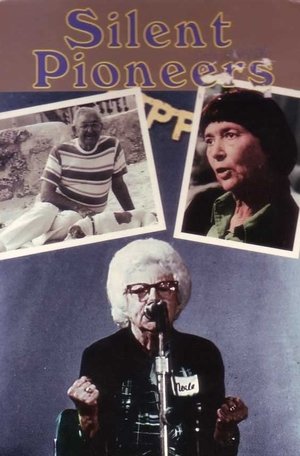
Contrary to the public stereotype of a youthful homosexual community, gay men and women do grow old. Silent Pioneers presents an upbeat focus on the lives of these people today, showing them living full and diverse lives and sharing concerns on ageing, health and housing, with other senior citizens. It also considers how support networks within the gay and lesbian community have enriched and strengthened their individual lives.
Can Homo sapiens evolve into Homo spatius? For over 50 years now, we have been testing our human nature in our effort to conquer outer space, and still 30 years away from a possible human exploration of Mars, a question remains: Can our body take such travels? Will it ever adapt? Combining human adventure and the exploration of the human body, this film offers unique insights into the physical and psychological effects of space travel on the Astronauts and measures the impact on medical sciences.
An intimate look at the human faces of America's current opioid epidemic. Seen through the eyes of a mother and the lens of a small town.
Alone in a small white house on the edge of national road 1, the Trans-Saharan road, which connects Algiers to Tamanrasset crossing the immensity of the desert, Malika, 74, one day opened her door to the director Hassen Ferhani, who came there to scout with his friend Chawki Amari, journalist at El Watan and author of the story Nationale 1 which relates his journey on this north-south axis of more than 2000 km. The Malika of Amari's novel, which Ferhani admits to having first perceived as a "literary fantasy", suddenly takes on an unsuspected human depth in this environment naturally hostile to man. She lends herself to the film project as she welcomes her clients, with an economy of gestures and words, an impression reinforced by the mystery that surrounds her and the rare elements of her biography which suggest that she is not from the region, that she left the fertile north of Algeria to settle in the desert where she lives with a dog and a cat.
Adopted Montreal filmmaker Adrian Wills discovers, on camera and in real time, the startling truths of his complex beginnings in Newfoundland. Shocking details drive Wills to the core of his birth mother’s resilience, and ultimately his own. In this moving feature documentary that combines 16mm footage and contemporary images with deeply personal conversations, Wills’ voyage transforms from an urgent search for identity into a quest to give a quiet girl her voice.
A documentary on the Z Channel, one of the first pay cable stations in the US, and its programming chief, Jerry Harvey. Debuting in 1974, the LA-based channel's eclectic slate of movies became a prime example of the untapped power of cable television.
Farmers in the Île-de-France region, they filmed life on the farm, working in the fields, and family and village celebrations on 8 mm or Super 8 film. From the 1950s to the 1980s, these testimonies unfold a history of rural life: we move away from a peasant and family model to industrial agriculture for export. Through these family images, I attempt to answer my own questions about our agricultural future. In the 1950s, the land of Île-de-France fed us.
Mabel Wallace is a woman from Shinrone, Ireland. She has just turned 100. This is her story.
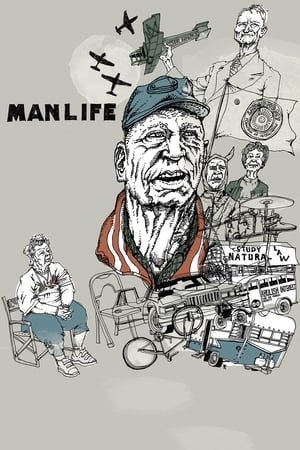
For over 80 years, Merle Hayden has crusaded to recruit members to the utopian movement Lawsonomy. Founded by aircraft pioneer Alfred Lawson, Lawsonomy advocates for economic reform and clean, communal living that transforms followers into a "New Species" that will benefit the human race either in this life or the next. Merle joined Lawson as a teenager and never looked back. His high school sweetheart Betty Kasch, however, is tired of Lawson coming between them. Reunited after over 60 years apart, non-believer Betty wants Merle to join her in Florida. Merle's commitment to preserving Lawson's legacy, artifacts currently rotting in a barn alongside a Wisconsin highway, has Betty worried Merle may leave her for Lawson once again.
Structured as a labyrinth-like game and inspired by Jorge Luis Borges, Aleph is a travelogue of experience, a dreamer's journey through the lives, experiences, stories and musings of protagonists spanning ten countries and five continents.
This film is a poetic composition of recorded history and non-recorded memory. Filmmaker Rea Tajiri’s family was among the 120,000 Japanese and Japanese Americans who were imprisoned in internment camps after the attack on Pearl Harbor. And like so many who were in the camps, Tajiri’s family wrapped their memories of that experience in a shroud of silence and forgetting. This film raises questions about collective history – questions that prompt Tajiri to daringly re-imagine and re-create what has been stolen and what has been lost.
The threat of dementia is affecting more and more people. As they slowly lose their memories and physical abilities, music proves to be a miraculous source of comfort, vitality, and hope. How is it, for example, that people with dementia often remember music longer than their own names?
A powerful cultural documentary about a Caribbean father and son who return to Grenada to reclaim ancestral stories. Blending folklore, myth, and underwater visuals, the film preserves Black heritage and reframes the feared Jab Jab as a symbol of resistance and identity.