A writer loses a very important idea when her phone rings. Personified as golden light, this lost idea is found by the writer’s inner child, who takes us on a journey through The World of Imagination. It is easy to lose touch with this world, but each of us can be inspired by it—if we just remember.
A humorous look at relationships and sex.
Heart set on becoming a princess, Lisa Simpson is surprised to learn being bad might be more fun.
Two friends try to survive an encounter with a couple of backwood cannibals.
An anxiety-ridden art dealer faces his worst nightmare.
A young girl, her dog and a stranger find themselves trying to hold onto their humanity when stranded together in a post apocalyptic world.
A tribute to all life drawing models, and to the passion of the craft; exploring form, figure, life and all that lies within.
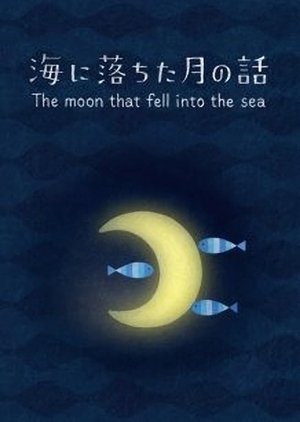
Opening its eyes, the moon that fell to the depths of the sea was met with complete darkness. Will the moon be able to return to its home in the sky?
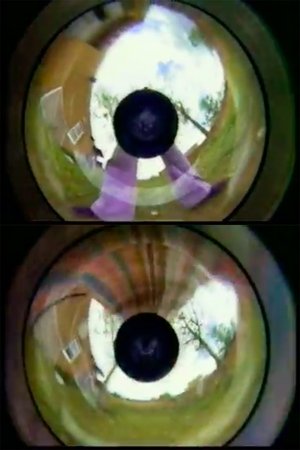
Using one half of a convex mirror mounted within a glass cylinder, Steina trains the video camera eye dead center as she records the space immediately around her. “Steina playfully does gymnastics with her camera and its mirrored lens attachment as a means of producing a 360-degree image of a torso wrapped around the camera lens . . . an exercise in an immersive space” for both maker and viewer. —Yvonne Spielmann
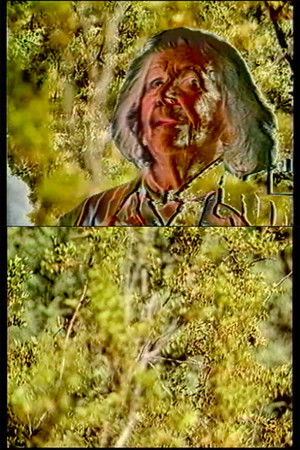
Against a field of swaying and halting yellow vegetation, another processed field: the image of the eponymous subject (performed by painter Doris Cross) riles and emits unintelligibly to the viewer. Conjuring the mystical biblical character Lilith, Steina's video layers both sound and image to produce an ever-shifting, frustrated presence.
Fellow violinist and artist Tony Conrad, in collaboration with software engineer Tom Demeyer, made for Steina the instrument seen in this title. Conrad and the Vasulkas all taught at the University at Buffalo in the Media Study Department from 1976 to 1979.
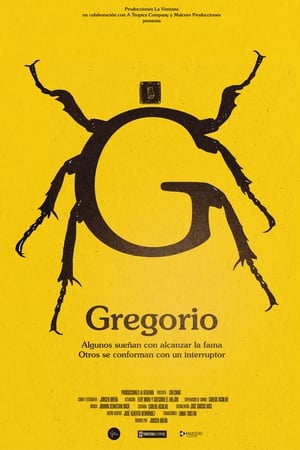
One morning, after a restless sleep, Gregorio wakes up a generous conversationalist who shares some of his biggest secrets.
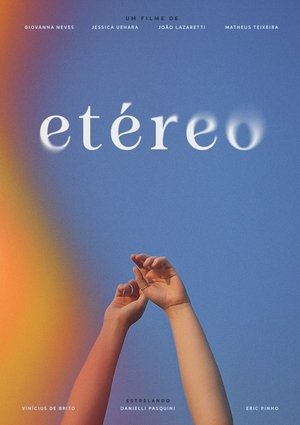
etéreo
A man is supine on a mountain side. Images rush past of nature and a stained glass saint. An infant is born. We see a lactating nipple. Images include a mountain peak, farm buildings, a tree stump, a fire, a crawling baby, and the sun. The man falls and rolls. Then, later, he swings his ax.
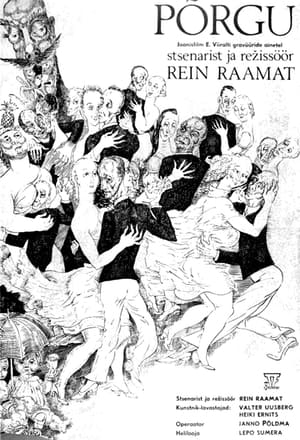
Rein Raamat’s Hell adapts the engravings of Estonian graphic artist Eduard Wiiralt into a surreal, grotesque, and heavily sexual animated short. Wiiralt’s three source works, “The Preacher,” “Cabaret,” and “Hell,” date back to the early 1930s and portray a cacophony of bacchanalia, hysteria, and violence in the final years of Estonian independence amid the unrest of the Great Depression and European instability.
Sexual intimacy. Three kinds of images race past, superimposed on each other sometimes: two bodies, a man and a woman's, close up, nude - patches of skin, wisps of hair, glimpses of a face and genitalia; strips of celluloid with lines and squiggles scratched on them; and, close-up shots of what appear to be the insides of living bodies - a heart beating, muscle and sinew and tissue wet with fluids. The exterior and interior of desire.
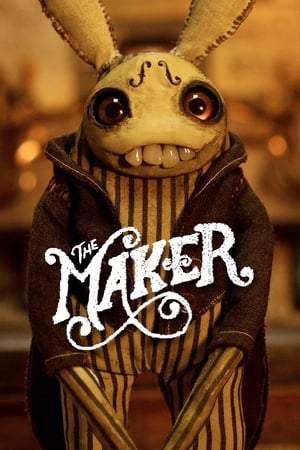
A strange creature races against time to make the most important and beautiful creation of his life.
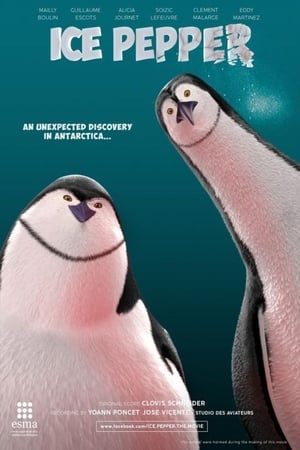
Two penguins friends wander on the sea ice. They discover something that may decide the fate of Antarctica.
In an old Brazilian legend, if someone happens to fall asleep in the woods, under a tree, the spirit of a boy appears and torments them until something truly bad happens.
The plot revolves around the mythical figure of Canyut, a central character whose mysterious legend resurfaces year after year along the coast.