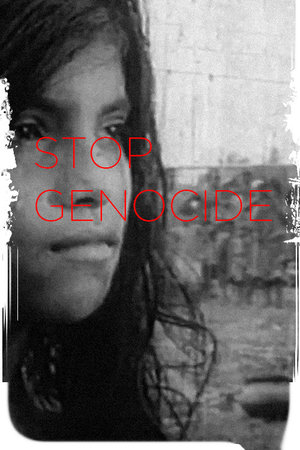
A documentary film about to resist the brutal action taken by Pakistan occupy army against general people of Bangladesh (previously East Pakistan) in between 26 March, 1971 and 16 Dec, 1971.
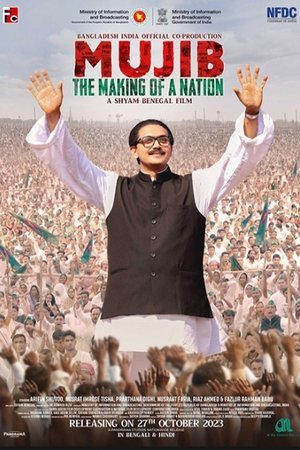
Biopic on the father of the nation of Bangladesh, Sheikh Mujibur Rahman. The film will showcase his growing up as a child to his standing up against all injustice in his youth to fighting for the independence of his country. How he led a country to it's independence with his inspirational presence and fight for the justice.
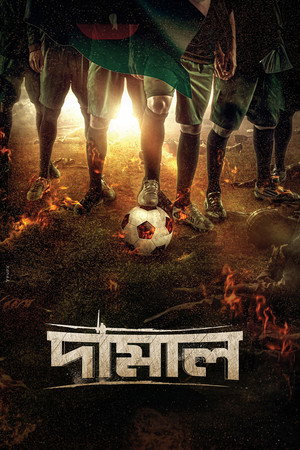
The film tells the story of the legendary 'Shadhin Bangla Football Team' founded during the 1971 Liberation War of Bangladesh. They played friendly matches across India to raise funds which would be used in the war. The film also portrays the personal lives of few players of the team and their struggle and losses during the war. Though the film is inspired by true events, it takes cinematic liberty and mixes fiction with reality as well.
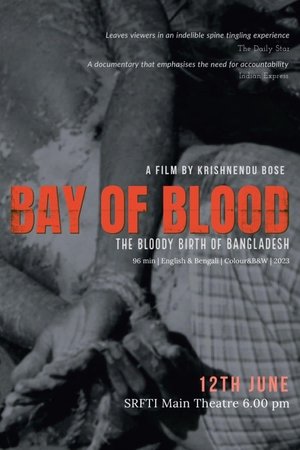
March 25th 1971, a horrific 'Genocide' was unleashed on the unarmed civilians of East Pakistan. This was done by their own Pakistani Army. An estimated 3 million people were killed, 10 million people were displaced to India as refugees and 400,000 women and girls were raped by the Pakistani soldiers. But Pakistan was not alone in perpetrating this violence. The then-American president and the National Security Advisor were supporting the Pakistani dictator. The cold war triggered this geopolitical escalation. Finally, India pressurized by the 10 million refugees within its borders, went to war with Pakistan. and joining forces with the local rebels, the Mukti Bahini, helped liberate Bangladesh. Cradled in the blood of innocents, a new nation was born in the closing days of 1971. "Bay of Blood", brings this 50-odd-year-old story to life.
A short documentary, charting Bangladesh's quest for freedom from Pakistan.
A Bangladeshi American undertakes a journey to learn about the liberation war in his native country, traveling there for the first time in nearly two decades, and uncovering the controversial role the U.S. played in a forgotten genocide that occurred there over 50 years ago. From 1971 to the present day, this is a story of Bangladesh’s independence, a family’s journey immigrating to America, and the cognitive dissonance of a person belonging to both homelands. Driven by interviews with his father and other family members, along with experts and witnesses, archival videos, declassified recordings, and animations, BENGAL MEMORY is a unique and untold oral history through a personal lens.
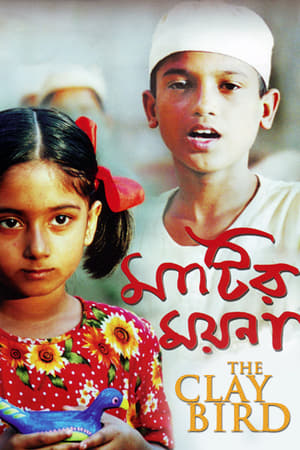
A family must come to grips with its culture, its faith, and the brutal political changes entering its small-town world.
A story of a family during the 1971 Liberation War in Bangladesh and their family getting punished by the ruthless Pakistani soldiers. Mahbub, a Bengali himself, is supporting Pakistan in order to save himself.
A short film honoring the 21 Coptic men martyred by ISIS in Libya in 2015, produced in the style of Coptic iconography by a global team of more than 70 artists from more than 24 countries. The film is narrated in English, with Arabic dialogue. Subtitles have been produced in English, Arabic, French, Spanish and Russian.
French YouTuber Inoxtag challenges himself on a survival adventure on a deserted island.
A president and his government are meeting in emergency after an enemy country launches a nuclear missile.
The film "Artyom Tomilov" tells the story of a modern-day Odysseus with an ironic and elegiac tone. Theater director Artyom Tomilov, who grew up in the marginalized outskirts of Omsk, returns to his hometown after 15 years to stage an autofictional play about himself. The events unfolding during the production become part of the play, alongside the myths, spirits, and memories of the hero's past and the people of Omsk.
This documentary is about 12 French teenagers (ages 10 to 15) who sail a large sailing ship (with the help of two or three adults), following the same course Columbus followed from Spain to the Yucatan Peninsula, with stops at various Caribbean islands.
The Great Turning: Fighting Hard in Shan Dong
The moral dimension of humanity's interaction with nonhuman animals and the industries that profit from their exploitation, as informed by world religions. A historical explanation of how the current global situation came to be.
Three people on their road to Gospic during Croatian war of independence, each traveling with own personal reasons.
The Great Turning: Push Forward into Mountain Da Bie Shan
Celebrating his 80th birthday, pioneer Brazilian filmmaker Humberto Mauro talks about his life, work, and the project "A Noiva da Cidade".
Sarajevo in the twentieth month of its besiegement. The situation is critical, but the city chooses to organise an international film festival. Dutch filmmakers Johan van der Keuken and Frank Vellenga present Van der Keuken's documentaries Face Value and Brass Unbound there, and one of the festival organisers asks a festival visitor: "What is the significance of film in war?" In Sarajevo Film Festival Film, a reflection on film, war and daily life, fictional images are juxtaposed in a disconcerting way with the gruesome reality of the life of a festival visitor.
Japanese war film.