Doing really well on your school assessment tests, but still having the school recommend that you go to preparatory vocational school. Going to a club with friends and having the bouncer keep you out. Having to endure jokes from classmates. These are examples of the sort of casual racism that the children of director Karin Junger and their friends have to face. In Ik alleen in de klas, director Karin Junger, white mother of three darker-skinned children, stands with her family to confront the racism they experience in their daily lives. Twelve adolescents meet at a mansion in France. The group consists of Junger’s children and their friends. All of them come from ethnic minority backgrounds and share a feeling of being excluded from Dutch society. Re-enactment is used to explore painful situations again. In this simple but effective documentary, we can see the impact of subtle and less subtle forms of racism on the lives of young Dutch people.
Paul Grignon's 47-minute animated presentation of "Money as Debt" tells in very simple and effective graphic terms what money is and how it is being created
The early struggles of the working class are placed under a microscope in Plutocracy III: Class War, the latest chapter in an exceptionally well produced series which explores the origins of America's growing economic divide.
This one hour documentary examines the life of the famed Sharp Shooter and Wild West performer, Annie Oakley from her birth in mid nineteenth century rural Pennsylvania to her death in 1926. Many myths are overturned and the program also features a little known trial when Annie Oakley had to sue The Hearst Newspaper chain all throughout the country for libel when they reported the activities of someone who was impersonating the famed sharpshooter and besmirching her reputation.
Filmed over four years, this documentary focuses on the impacts of gentrification as gay white professionals move into a largely black working-class neighborhood in Columbus, Ohio.
In 1971, after being rejected by Hollywood, Bruce Lee returned to his parents’ homeland of Hong Kong to complete four iconic films. Charting his struggles between two worlds, this portrait explores questions of identity and representation through the use of rare archival footage, interviews with loved ones and Bruce’s own writings.
Exploring the fallout of MIT Media Lab researcher Joy Buolamwini's startling discovery that facial recognition does not see dark-skinned faces accurately, and her journey to push for the first-ever legislation in the U.S. to govern against bias in the algorithms that impact us all.
An investigation of how Hollywood's fabled stories have deeply influenced how Americans feel about transgender people, and how transgender people have been taught to feel about themselves.
In Adios Amor, the discovery of lost photographs sparks the search for a hero that history forgot—Maria Moreno, a migrant mother driven to speak out by her twelve children’s hunger. Years before Cesar Chavez and Dolores Huerta launched the United Farm Workers, Maria picked up the only weapon she had—her voice—and became an outspoken leader in an era when women were relegated to the background. The first farm worker woman in America to be hired as a union organizer, Maria’s story was silenced and her legacy buried—until now.
Amidst the storm of Ferguson, 7 St. Louis college students evolve into advocates and activists as they demand change through policy and protest
The only people charged over the brutal police murder of Elijah McClain are community activists who organized mass peaceful demonstrations calling for justice. They are facing up to 48 years in prison - among the highest charges for peaceful political protest in recent history.
What if this next generation could transcend racism? One year, 12 teens, on a remarkable journey to face racism and white privilege, have the conversations most of us are too afraid to have. Once they push through naivete, guilt and tears, what they learn may change us all.
Historical documentary about the life of Victor Schoelcher, a French politician and abolitionist active from 1848 to 1893.
In 1937, tens of thousands of Haitians and Dominicans of Haitian descent were exterminated by the Dominican army, on the basis of anti-black racism. Fast-forward to 2013, the Dominican Republic's Supreme Court stripped the citizenship of anyone with Haitian parents, retroactive to 1929, rendering more than 200,000 people stateless. Elena, the young protagonist of the film, and her family stand to lose their legal residency in the Dominican Republic if they don't manage to get their documents in time. Negotiating a mountain of opaque bureaucratic processes and a racist, hostile society around, Elena becomes the face of the struggle to remain in a country built on the labor of her father and forefathers.
Chris, sous le pont Laënnec
Short film about racism.
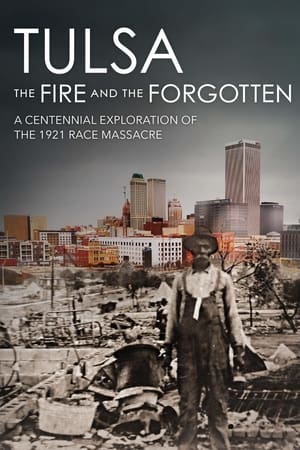
Learn about the 1921 Tulsa Race Massacre, on the one hundredth anniversary of the crime, and how the community of Tulsa is coming to terms with its past, present, and future.
This program, culled from the over 28 hours of interview footage between Sir David Frost and U.S. President Richard M. Nixon, was originally broadcast in May of 1977. Never before, nor since, has a U.S. President been so candid on camera. Even more intriguing is the fact that Nixon agreed to appear on camera with no pre-interview preparation or screening of questions.
On August 15th, 2006, filmmaker Ryan Dacko set out to get a 30-minute meeting with a major Hollywood producer by running on foot from Syracuse, New York to Hollywood, California.
Recy Taylor, a 24-year-old black mother and sharecropper, was gang raped by six white boys in 1944 Alabama. Common in Jim Crow South, few women spoke up in fear for their lives. Not Recy Taylor, who bravely identified her rapists. The NAACP sent its chief rape investigator Rosa Parks, who rallied support and triggered an unprecedented outcry for justice. The film exposes a legacy of physical abuse of black women and reveals Rosa Parks’ intimate role in Recy Taylor’s story.